


Quick answer
ESD Workbenches for Electronics Manufacturing in : The Complete Guide (2026) is important because singapore's electronics manufacturing sector is at an inflection point. The practical goal is to improve safety, productivity, and buying confidence before selecting equipment or requesting a quotation.
Practical next steps
- Confirm the load, workspace, workflow, and safety requirements.
- Compare the product fit against daily operating conditions, not just catalogue specifications.
- Speak with YK Toh for sizing, compatibility, and quotation guidance.
Singapore’s electronics manufacturing sector is at an inflection point. The global push toward higher-density semiconductor packaging, narrower node geometries, and tighter ESD sensitivity classifications means that electrostatic discharge controls that were adequate five years ago are no longer sufficient today. A single undetected discharge event — too small for a human to feel — can destroy a modern IC component. In a facility running thousands of units per shift, that is an unacceptable quality risk.
Key Standards for ESD Protected Areas in Electronics Manufacturing
- ANSI/ESD S20.20 compliance is the industry baseline for ESD control programs in electronics manufacturing
- All ESD workbenches must be grounded via dedicated grounding points connected to the facility main earth
- Personnel must pass ESD awareness training before being allowed access to ESD protected areas
- All insulators (coffee cups, plastic bags, personal items) must be kept at least 30cm from ESD-sensitive work
- Conduct quarterly ESD audits using surface resistance meters and charged device model (CDM) testing
- Maintain an ESD control plan document that is reviewed and updated annually or after any facility change
For electronics manufacturers in Singapore — from PCB assembly operations in Ang Mo Kio and Bendemeer to semiconductor backend packaging in Jurong — the ESD workbench is not optional equipment. It is the foundation of the production environment.
Why ESD Control Matters More in 2026 Than Ever Before

Components rated at Human Body Model (HBM) Class 0 — the most sensitive classification — can be damaged by discharge events as low as 250 volts. A human wearing cotton clothing and walking across standard industrial carpet generates 10,000–15,000 volts. A 250-volt discharge produces no sensation whatsoever.
The consequences: field failure rates that appear random, customer returns with no obvious root cause, yield loss that erodes margin, and audit failures when customers or regulators detect non-compliance.
What Defines a Compliant ESD Workstation for Electronics Manufacturing
A properly configured ESD workstation is a complete system — the workbench surface is one component of a broader ESD Protected Area (EPA) that includes grounding, personal protective equipment, air management, and verification protocols.
The ESD Work Surface
The work surface must meet two criteria simultaneously: surface resistance between 10⁶ and 10⁹ ohms (dissipative range), and grounding continuity connecting the surface to a verified earth ground via a grounding cord.
| Material | Resistance Range | Typical Use |
|---|---|---|
| ESD laminate | 10⁶–10⁸ ohms | General electronics assembly |
| Stainless steel | 10⁴–10⁶ ohms | Precision/semiconductor |
| Vinyl composite | 10⁶–10⁹ ohms | Light assembly; packing |
| Carbon-loaded polymer | 10⁴–10⁶ ohms | High-precision environments |
Operator Grounding: The Wrist Strap System
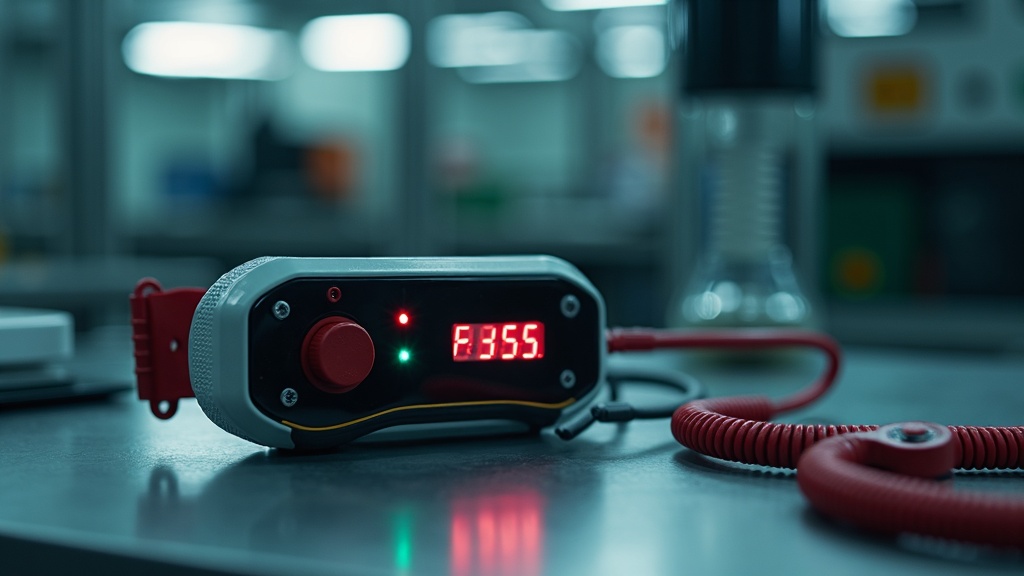
The wrist strap connects the operator’s skin to the bench ground via a coiled cord, maintaining equipotential grounding throughout the work session. Key requirements: adjustable bands with a 1MΩ current-limiting resistor inline (required for human safety); daily verification before the shift begins; coiled cord inspection as a common failure point; and heel grounders for operators who need to move away from the station during the shift.
Air Ionisation: Addressing Charges That Wrist Straps Cannot Reach
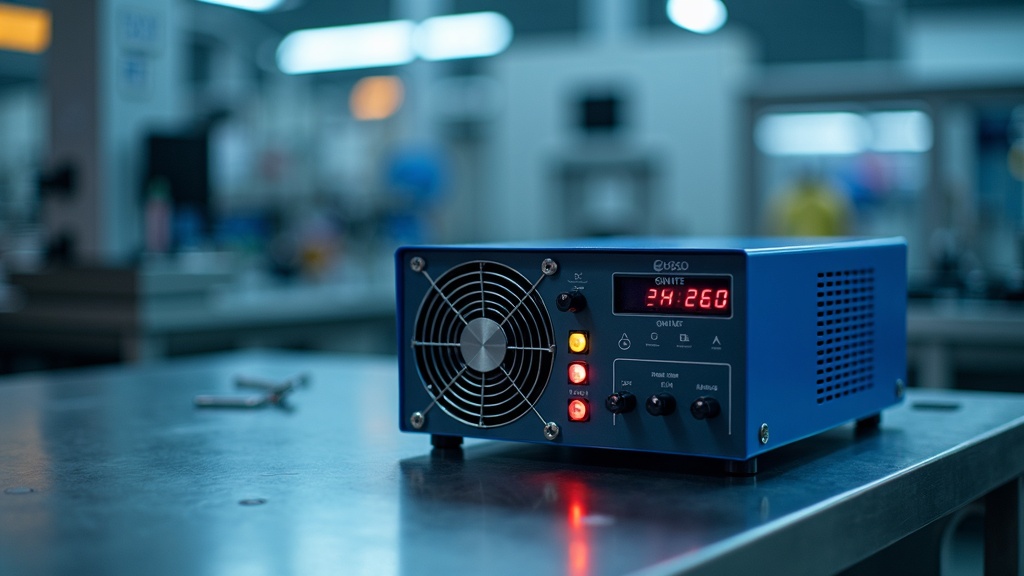
Wrist straps ground the operator and everything in direct contact. They cannot neutralise charge on non-conductive materials. Bench-top or悬臂式air ionizers positioned 300–600mm from the work surface solve this.
Singapore Standards for ESD Workbenches in Electronics Manufacturing
The governing standard is IEC 61340-5-1:2016. Singapore adopts this through the Singapore Standards Council and it is the reference standard used in customer audits by multinational electronics companies.
EPA classification: The facility must formally classify and demarcate its ESD Protected Area with entry point markings and enforcement of entry protocols.
Workbench grounding verification: Resistance between work surface and ground must be < 1.0 × 10⁹ ohms. Measurements quarterly as a minimum.
Configuring an ESD Workstation for Singapore Electronics Facilities
Baseline Configuration (PCB Assembly, Consumer Electronics)
| Component | Specification |
|---|---|
| Work surface | ESD laminate, 600mm deep × custom length, 10⁶–10⁹ ohms, grounded |
| Frame | Steel, powder-coated or stainless, grounded to bench ground |
| Wrist strap | Adjustable band + 1MΩ coiled cord, daily test required |
| Floor mat | ESD vinyl, connected to ground |
| Ionizer | Bench-top ionizer, 300–600mm from surface, positioned downwind |
| Signage | EPA boundary marking + entry protocol |
Enhanced Configuration (Semiconductor Backend, Precision Assembly)
| Component | Specification |
|---|---|
| Work surface | Stainless steel or premium ESD laminate |
| Ionizer | 悬臂式precision ionizer with heater |
| Humidity monitoring | Real-time RH display; alert if below 40% RH |
| Grounding | Dedicated earth ground bus bar, separate from building earth |
| Work surface monitoring | Continuous resistance logger for audit trail |
| Chair | ESD-safe caster chair with grounded seat and back |
Common ESD Workbench Mistakes in Singapore Electronics Facilities
Mistake 1: Grounding the surface but not the frame. A workbench surface connected to ground but with an ungrounded frame creates a Faraday cage effect — the frame holds charge that can discharge through the operator. The frame must be grounded.
Mistake 2: ESD bags that are not actually ESD-safe. A true ESD bag (metalized or static-shielding) prevents external fields from inducing charge inside. A simple anti-static bag only prevents triboelectric charging of the bag itself. For semiconductor-level components, only static-shielding bags are appropriate.
Mistake 3: Not verifying wrist strap function daily. A wrist strap that looks intact but has an internal wire break can pass visual inspection but fail electrically. Daily testing with a calibrated wrist strap tester is the only way to verify function. Record results — audit trails matter.
Mistake 4: Assuming ionizers need no maintenance. Ionizer emitter needles accumulate contamination over time, reducing ion output. Monthly cleaning is typically required. Include ionizer maintenance in your EPA management schedule.
Mistake 5: Adding ESD components to a non-ESD bench. A compliant ESD workstation requires a frame that can be grounded, a dedicated earth ground path, and a complete grounding system. The bench must be designed for ESD use from the start.
MOM WSH Considerations for Electronics Manufacturing Workstations
Under Singapore’s WSH (Risk Management) Regulations, employers must assess and control ergonomic risks at electronics assembly workstations: standing duration management (anti-fatigue footrests above 2 hours, sit-stand benches above 4 hours); repetitive motion considerations (soldering, board handling, component placement); and ESD chair specification for seated ESD work (test, inspection, rework).
What to Look for in an ESD Workbench Supplier in Singapore
Ask for the IEC 61340-5-1 test report for the specific workbench surface — not a general product brochure. Insist on a supplier who can specify the complete EPA grounding system, ionizer placement, and floor grounding. Confirm spare parts availability (wrist strap bands, coiled cords, ionizer emitter needles) and lead times (typically 4–8 weeks for configured ESD workstations in Singapore).
Treston ESD Workstations for Singapore Electronics Manufacturing
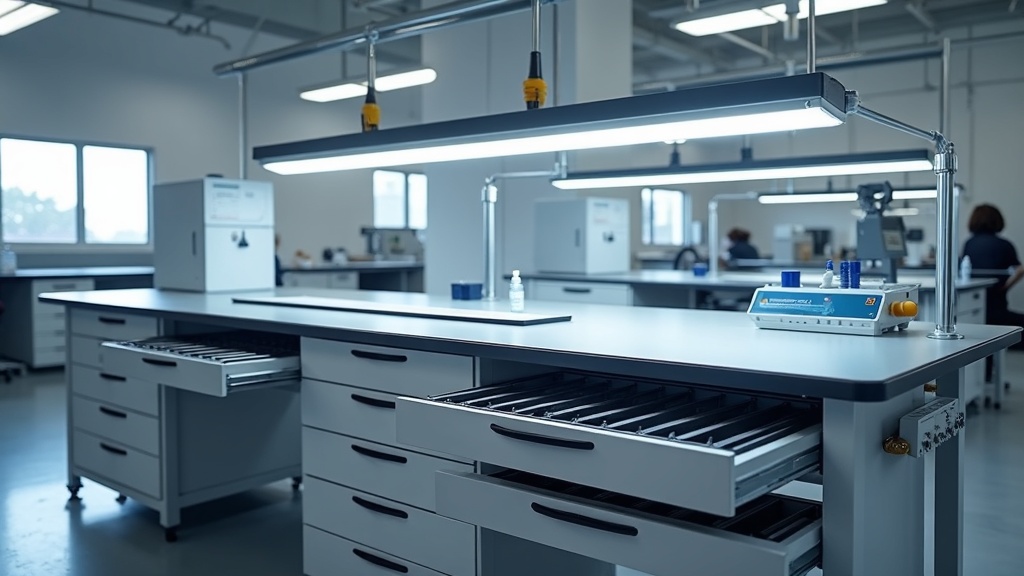
Treston’s Concept Ergo range is designed for electronics assembly and cleanroom environments, tested to IEC 61340-5-1, with configurable work surfaces, integrated drawer units with ESD-safe specifications, and compatibility with Treston’s full accessory ecosystem including ionizers and overhead lighting. Available through authorised Singapore distributors with EPA design support.
Frequently Asked Questions
Q: What is the difference between an ESD workbench and a standard industrial workbench?
A: An ESD workbench is designed with specific electrical properties — a dissipative work surface connected to a verified earth ground, a conductive or dissipative frame also connected to ground, and provisions for operator grounding. A standard industrial bench has no ESD properties; its steel frame may hold static charge and can be a discharge hazard in an EPA.
Q: Can I use a stainless steel workbench as an ESD workstation?
A: Yes, if properly grounded — but standard Type 304 stainless steel has resistance below 10⁴ ohms, which may be too conductive for some EPA applications. Verify the specific resistance rating before specifying.
Q: How often should ESD workstation resistance be tested?
A: Work surface-to-ground resistance at least quarterly. Daily checks recommended in high-volume production or where semiconductor-level components are handled. Records maintained for audit purposes.
Q: Does Treston offer ESD workstations suitable for Singapore electronics manufacturers?
A: Yes. Treston’s Concept Ergo range is designed for electronics assembly and cleanroom environments, tested to IEC 61340-5-1, with configurable ESD work surfaces, integrated drawer units, and full accessory ecosystem including ionizers and overhead lighting. Available through authorised Singapore distributors with EPA design support and IEC compliance documentation.
Next Steps
If you are equipping a new ESD workstation line, upgrading an existing EPA, or responding to a customer audit finding related to ESD controls, our team provides workstation specification support, EPA design consultation, and installation for Singapore operations.
Related Articles:
ESD Workbenches for Cleanroom | Pharmaceutical ESD Workbenches | Workbench Buying Guide
Y K Toh Marketing (S) Pte Ltd
Tel: (65) 6542 3232 | enquiry@yktoh.com | yktoh.com


