


Quick answer
Industrial Workbenches & Workstations in : The Complete Guide (2026) is important because singapore’s industrial landscape is changing. The practical goal is to improve safety, productivity, and buying confidence before selecting equipment or requesting a quotation.
Practical next steps
- Confirm the load, workspace, workflow, and safety requirements.
- Compare the product fit against daily operating conditions, not just catalogue specifications.
- Speak with YK Toh for sizing, compatibility, and quotation guidance.
Singapore’s industrial landscape is changing. E-commerce fulfilment centres in Jurong and Tuas are demanding faster throughput. Electronics manufacturers in Ang Mo Kio and Woodlands are tightening ESD control standards. Warehouses across the island are being optimised for narrower aisles, higher racking, and shorter cycle times. The industrial workbench — often an afterthought — is becoming a genuine operational constraint.
An industrial workbench is not just a table. In a properly designed operation, it is the workstation where quality is controlled, ergonomics are enforced, throughput is measured, and workers go home without injury. Choosing the wrong one — or under-specifying it — has consequences that compound across every shift, every operator, and every pallet moved.
1. What Is an Industrial Workbench?
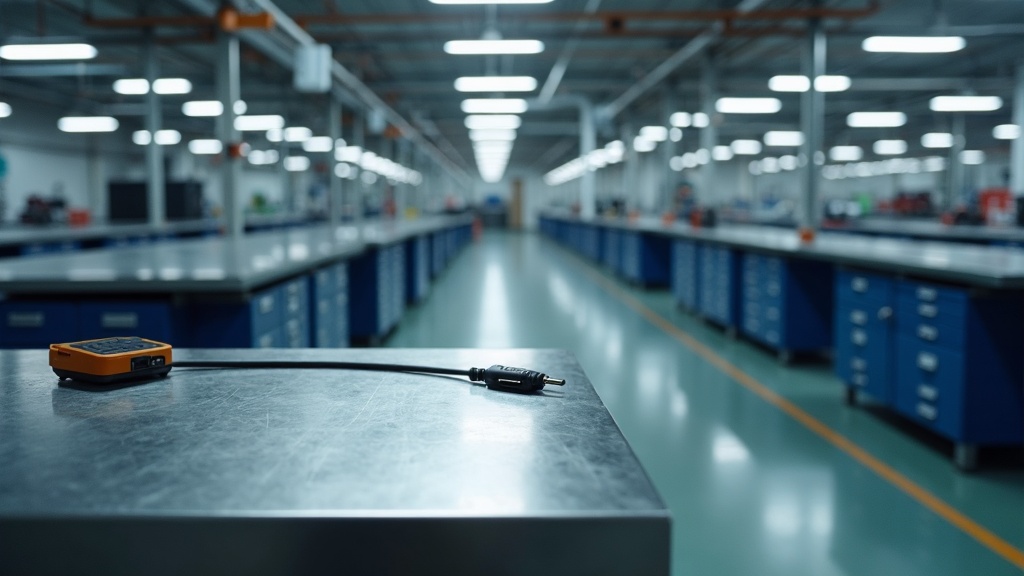
Key characteristics of a true industrial workbench:
- Heavy-gauge steel or aluminium frame — typically 40mm × 40mm square tube or 80mm channel section
- Load capacity from 300kg to 2,000kg+ — depending on frame design and intended use
- Modular or fixed construction — bolt-together frames allow reconfiguration; welded frames offer maximum rigidity
- ESD-safe or standard industrial finish — powder-coated, stainless steel, or anti-static surfaces
- Integrated accessories — drawer units, bin rails, lighting, power rails, monitor arms, shelving
- Height-adjustable or fixed height — manual crank, electric motor, or fixed-height depending on the application
2. Types of Industrial Workbenches in Singapore
2a. Clean Room / ESD Workbenches
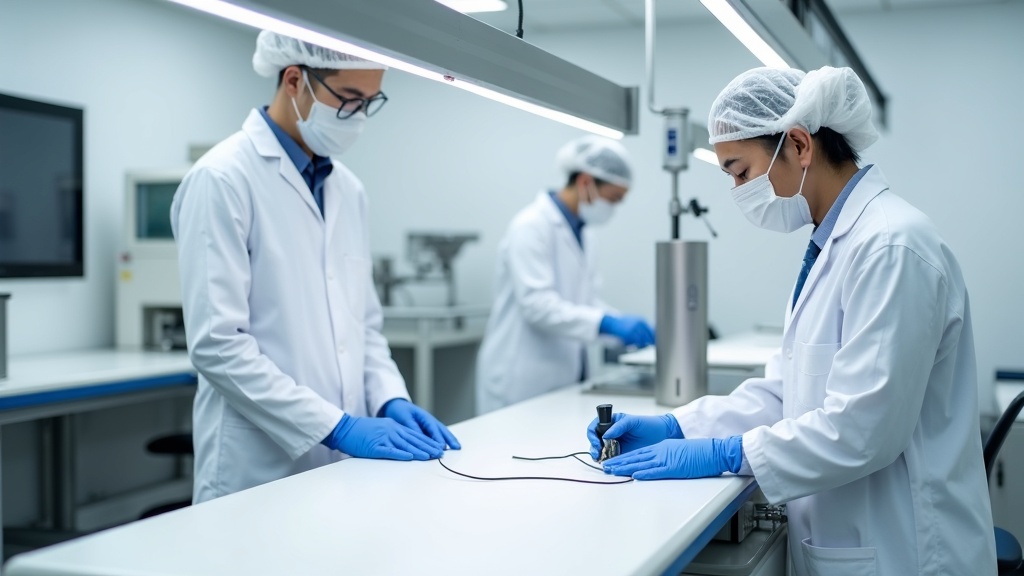
Singapore context: The Singapore Standards Council references IEC 61340-5-1 for ESD control. Electronics manufacturers supplying to multinational corporations face customer-mandated ESD compliance audits. Key industries: electronics contract manufacturers in Ang Mo Kio, Bendemeer, and Jurong; semiconductor backend packaging; medical device assembly for export; aerospace component handling.
2b. Heavy Duty Industrial Workbenches
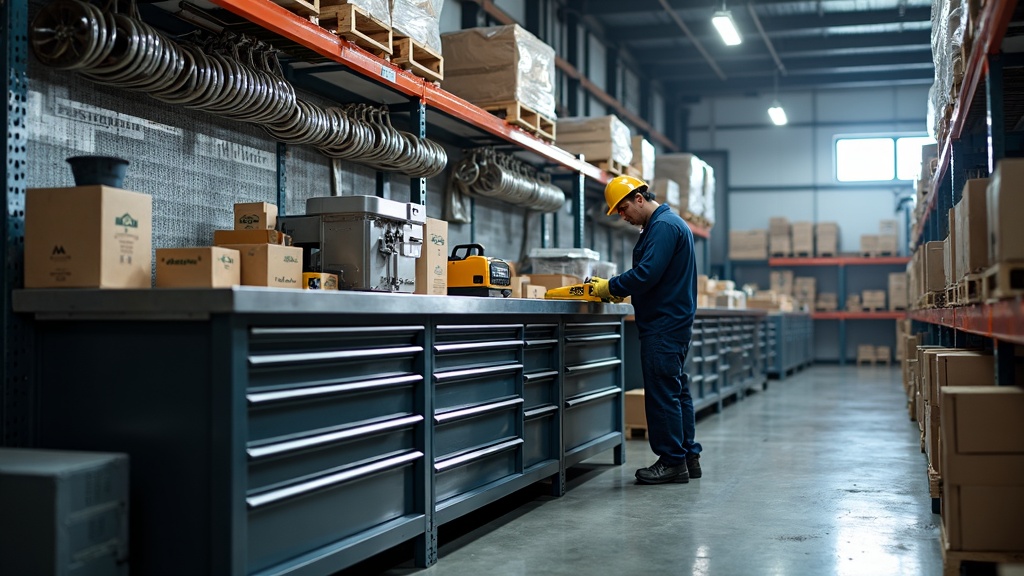
2c. Packing Workbenches
Packing stations are throughput machines. Every second lost compounds across hundreds or thousands of parcels per day. A proper packing workbench includes: roller conveyor section for smooth parcel sliding; built-in weighing scale integrated flush with the work surface; label and document holder; under-bench storage for packing materials; power rail with fused sockets for label printers and scanners; adjustable height for operator ergonomic comfort.
2d. Electric Height-Adjustable Workbenches

2e. Modular Storage Systems and Accessories
The principle is ecosystem compatibility. Treston’s advantage is that all accessories — drawer units, bin rails, lighting, castors — mount to the same 40mm slot-grid structural profile as the bench frame itself. This reduces installation time, improves adjustability, and simplifies spare parts management. Accessories from any Treston generation — including those purchased five or ten years ago — remain compatible with current bench frames.
3. Singapore Decision Framework
Step 1 — Define the environment: Electronics/cleanroom → ESD bench (IEC 61340-5-1). Pharmaceutical/medical → cleanroom bench (HSA licensing). Auto workshop/logistics → heavy duty bench (MOM WSH). E-commerce/3PL → packing workstation. Commercial office → electric height-adjustable. Food/F&B → stainless steel heavy duty (NEA licensing).
Step 2 — Size the load: Required capacity = (Maximum workpiece weight) + (Maximum tool/fixture weight) × 1.25 safety factor. A workstation where a technician assembles a 60kg pump housing using a 15kg fixture requires minimum 500kg-rated bench, not 300kg.
Step 3 — Match the frame to the layout: Fixed-layout operations → welded or bolt-together frames that will not be reconfigured. Flexible operations (contract manufacturers, 3PL, multi-product) → bolt-together for reconfiguration. Singapore note: many JTC factories in Jurong and Tuas have aisle widths of 1.5–2.0m — verify bench depth and drawer protrusion against aisle width before ordering.
Step 4 — Evaluate the ergonomics: Bench surface at elbow height for the task (850–950mm standing, 650–750mm seated). Frequently used items within 400–500mm without bending. Standing more than 2 hours per shift → footrest and anti-fatigue mat minimum.
Step 5 — Plan for growth: Singapore’s industrial leasing market is fluid. A bolt-together workbench can be disassembled and reconfigured. A welded-frame custom fabrication cannot.
4. Treston: The Singapore Standard for Configured Workstations
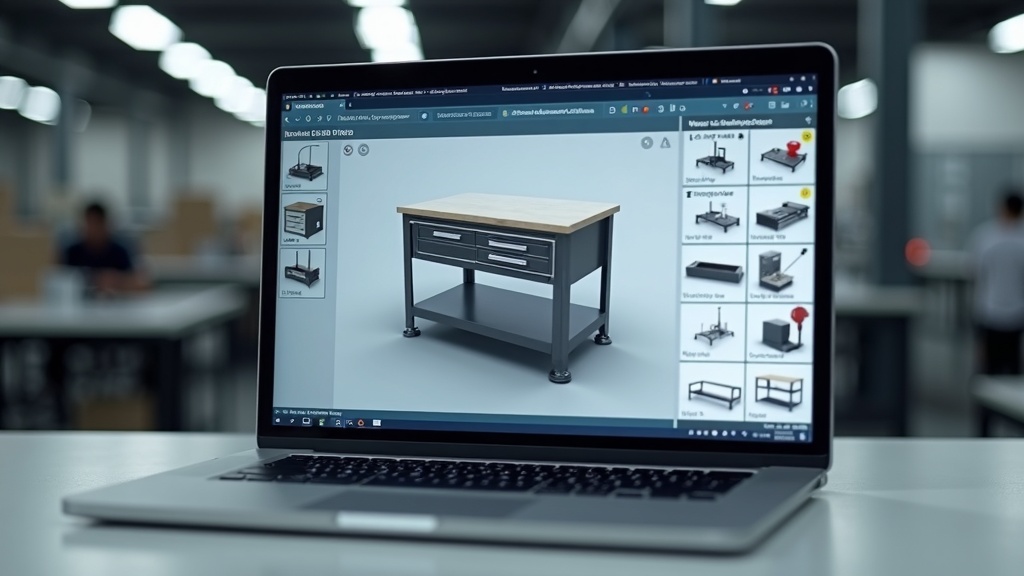
Why Treston leads in Singapore: Finnish engineering, ISO 9001 certified; full IEC 61340-5-1 compliance documentation for electronics sector customers; 40mm slot-grid structural profile ensures accessory compatibility across generations; authorised Singapore distributor network with site assessment, installation, and after-sales service.
5. Singapore Standards and Regulatory Context
MOM WSH Act: WSH (Risk Management) Regulations require documented risk assessments for all workstations including ergonomic risk. Prolonged standing without ergonomic intervention is a documented risk. WSH (Incident Reporting) Regulations: musculoskeletal injuries from workstation use must be reported to MOM if they result in more than 4 days incapacitation or medical treatment beyond first aid.
IEC 61340-5-1: Governs ESD Protected Areas (EPAs) in electronics manufacturing. A compliant ESD workstation requires the full system — ESD-safe work surface connected to ground, wrist strap system (tested daily), ground strap on bench frame, air ioniser, ESD floor marking. Buying an ESD bench without the full EPA system is like buying a fire extinguisher without the wall bracket.
NEA and Food Hygiene: In NEA-licensed food premises, workbenches must use non-corrosive, non-toxic surfaces — typically Type 304 stainless steel minimum. SFA regulations apply to food manufacturing and cold chain facilities.
6. Price Guide (Indicative, excl. GST)
| Workbench Type | Budget | Mid-Market | Premium |
|---|---|---|---|
| Manual heavy duty (basic) | S$400–S$800 | S$800–S$1,500 | S$1,500–S$3,000 |
| ESD workbench (configured) | S$1,200–S$2,500 | S$2,500–S$5,000 | S$5,000–S$12,000 |
| Packing workstation | S$800–S$1,800 | S$1,800–S$4,000 | S$4,000–S$10,000 |
| Electric height-adjustable | S$1,500–S$3,000 | S$3,000–S$7,000 | S$7,000–S$18,000 |
| Custom / project | Quotation required | ||
Price determinants: frame gauge, construction type, work surface material, load capacity, brand and certification level, accessory configuration, installation complexity. A fully loaded custom ESD workstation with accessories can exceed S$20,000 per station.
7. Common Mistakes Singapore Buyers Make
Mistake 1: Buying on price, not load capacity. Always apply the 1.25 safety factor. A bench rated at 300kg is inadequate for a 60kg workpiece plus 15kg of tools plus operator lean.
Mistake 2: Specifying fixed height in multi-user environments. A bench at 900mm is ideal for a 1.75m operator and inadequate for a 1.55m operator. Specify height-adjustable.
Mistake 3: Ignoring floor loading. A 1,000kg bench on a floor rated at 400kg/m² may exceed local limits. Verify before specifying.
Mistake 4: ESD bench without a full EPA system. Specify wrist straps, grounding, ionisers, and ESD floor marking — not just the bench.
Mistake 5: Not planning cable management. A bench without a power rail or cable management tray creates trip hazards and ESD risks. Specify as part of base configuration.
8. Frequently Asked Questions
Q: Do I need a licensed installer for workbenches in Singapore?
A: For standard workbenches, no. For electric height-adjustable benches requiring hard-wiring, a licensed electrical worker (LEW) is required under Singapore’s Electricity Act. Verify before purchase.
Q: What warranty should I expect?
A: Minimum 2-year structural warranty standard; premium brands (Treston) offer 5–10 year structural warranties. ESD performance warranties on work surfaces are typically 1 year.
Q: Can I get a custom-sized workbench in Singapore?
A: Yes — Treston and Singapore-based fabricators offer custom sizing. Custom dimensions add 3–6 weeks to lead time and 20–40% to base price. Specify early to avoid layout reworking.
Q: What is the expected lifespan of a quality industrial workbench?
A: Standard workshop: 10–15 years. ESD workbench in maintained EPA: 8–12 years before surface replacement. Electric height-adjustable: 8–12 years for mechanical frame; motors and electronics 5–8 years before component refresh.
9. What to Do Next
Regulated industries (electronics, pharmaceutical, medical device): Start with the ESD or cleanroom specification and work backwards — compliance requirements are non-negotiable.
Warehouse / logistics operations: Prioritise packing workstation configuration. Throughput per operator is the key metric. Specify roller sections, integrated weighing, and height adjustability as baseline.
Auto workshop or industrial maintenance: Heavy duty industrial workbench with steel plate work surface and drawer unit storage is the default. Confirm load capacity and floor loading before finalising.
Want to speak to a specialist: Our team provides site assessments, workstation audits, and specification support for Singapore operations across the full range of industries covered in this guide.
Related Articles:
Heavy Duty Workbenches | ESD Workbenches | Storage Systems | Workbench Buying Guide
Y K Toh Marketing (S) Pte Ltd
Tel: (65) 6542 3232 | enquiry@yktoh.com | yktoh.com


