


Quick answer
Industrial Workbench Buying Guide: Mistakes to Avoid & How to Choose in : The Complete Guide (2026) is important because buying an industrial workbench is a decision that should outlast the current product on your production line, the current layout of your facility, and the current team operating the workstation. The practical goal is to improve safety, productivity, and buying confidence before selecting equipment or requesting a quotation.
Practical next steps
- Confirm the load, workspace, workflow, and safety requirements.
- Compare the product fit against daily operating conditions, not just catalogue specifications.
- Speak with YK Toh for sizing, compatibility, and quotation guidance.
Buying an industrial workbench is a decision that should outlast the current product on your production line, the current layout of your facility, and the current team operating the workstation. A quality industrial workbench has a service life of 10–15 years in a standard workshop environment and 8–12 years in an ESD or cleanroom environment. The purchase decision compounds across that entire lifespan — in operator comfort, throughput, quality outcomes, compliance posture, and maintenance cost.
Most Singapore buyers approach the purchase with the right questions but in the wrong sequence. They ask “how much does it cost?” before they have defined what they need. This guide is a structured decision framework covering the seven sequential decisions that determine whether you get the right bench — and the eight mistakes Singapore buyers most commonly make.
The Seven Decisions That Determine the Right Workbench
Work through these decisions in order. Each decision constrains the options for the ones that follow. Skip a step and you will backfill assumptions — usually conservative ones that cost more than necessary or liberal ones that create operational problems.
Decision 1: Define the Operating Environment
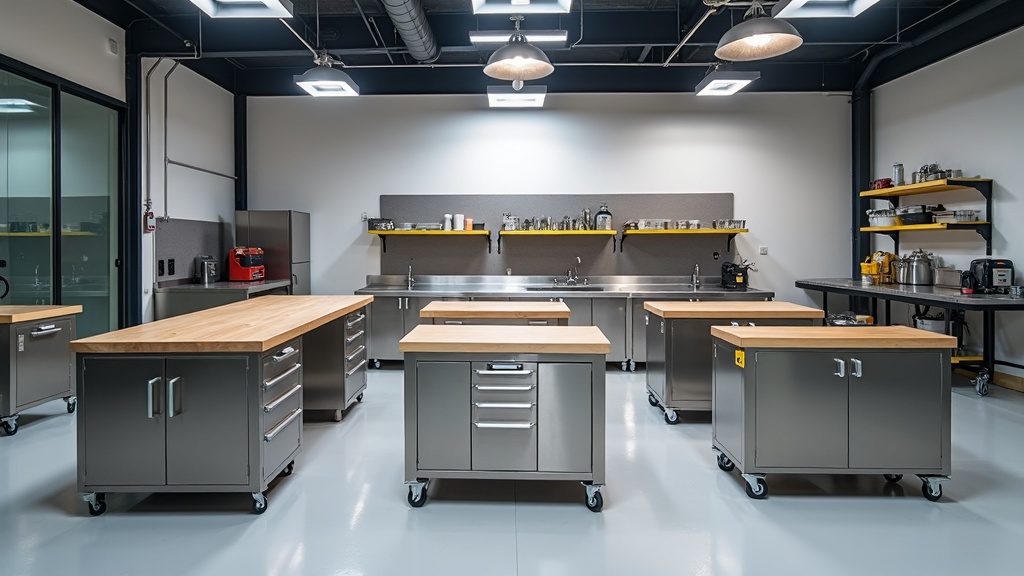
| Environment | Primary Bench Type | Key Compliance Driver |
|---|---|---|
| Electronics manufacturing / cleanroom | ESD workbench | IEC 61340-5-1; customer ESD audits |
| Pharmaceutical / medical device assembly | Stainless steel ESD workbench | HSA licensing; GMP; IEC 61340-5-1 |
| Food processing / food packing | Stainless steel workbench | NEA food hygiene regulations |
| Cold storage / frozen food | Stainless steel workbench (cold-rated) | SFA cold chain; NEA |
| Automotive workshop / motor service | Heavy duty industrial bench | MOM WSH ergonomic requirements |
| General manufacturing / assembly | Heavy duty industrial bench | MOM WSH ergonomic requirements |
| E-commerce / 3PL packing | Packing workstation (height-adjustable) | MOM WSH; throughput optimisation |
| Commercial office / design studio | Electric height-adjustable bench | MOM WSH ergonomic requirements |
Decision 2: Define the Load and Performance Requirements
Quantify the mechanical demands on the bench using the formula:
Required capacity = (Maximum workpiece weight) + (Maximum tool/fixture weight) + (75kg operator lean force) × Safety factor (1.25 minimum)
For heavy industrial applications (engine overhaul, structural assembly), use a 1.5× safety factor. For Singapore JTC factory floors rated at 500kg/m² to 1,000kg/m², verify that a heavily loaded bench does not create local floor loading that exceeds the floor rating.
Decision 3: Choose the Frame Configuration
Bolt-together is appropriate when: your facility is likely to change layout within 5 years; you operate as a contract manufacturer with changing customer requirements; you want the flexibility to reconfigure benches as your product mix changes.
Welded is appropriate when: the bench is in a fixed production line position; vibration control is critical; maximum rigidity is the primary requirement.
Stainless steel is appropriate when: the environment is food, pharmaceutical, medical device, or cleanroom.
Decision 4: Choose the Work Surface
| Surface | Load Rating | Chemical Resistance | ESD | Food Safe |
|---|---|---|---|---|
| MDF | Medium (to 500kg) | Low | No | No |
| Plywood | Medium (to 500kg) | Low | No | No |
| Steel plate | High (500–2,000kg+) | Medium | No | No |
| Stainless steel Type 304 | High (500–2,000kg+) | High | Optional | Yes |
| ESD laminate | Medium (to 500kg) | Medium | Yes | No |
| HDPE/Plastic | Low-Medium | High | No | Conditional |
Decision 5: Specify the Height and Adjustability
Fixed height is appropriate for single-operator, full-time, single-task workstations on level floors.
Manual crank height-adjustable is appropriate when: the workstation is used by multiple operators; the floor is uneven; electrical installation is impractical.
Electric height-adjustable is appropriate when: height changes are frequent (more than twice per shift); multiple operators share the bench; precise height presets are required.
Singapore note: For any workstation where an operator stands for more than 4 hours per shift, MOM WSH guidelines require sit-stand capability. A fixed-height bench in this scenario is non-compliant.
Decision 6: Define the Accessory Ecosystem
Essential accessories: Under-bench storage (drawer unit or shelving), cable management (power rail or cable tray), task lighting (bench-mounted LED at minimum 500 lux).
Industry-specific: Roller conveyor section for e-commerce packing; ESD grounding hardware for ESD environments; overhead shelving; bin rails and bins for component kitting.
Decision 7: Verify the Compliance Documentation
Request test reports, material certificates, and qualification packages before placing an order. For regulated environments (pharmaceutical, medical device, food, ESD), do not accept a supplier’s marketing brochure as compliance documentation.
The Eight Mistakes Singapore Buyers Most Commonly Make
Mistake 1: Buying on Unit Price Without Total Cost of Ownership
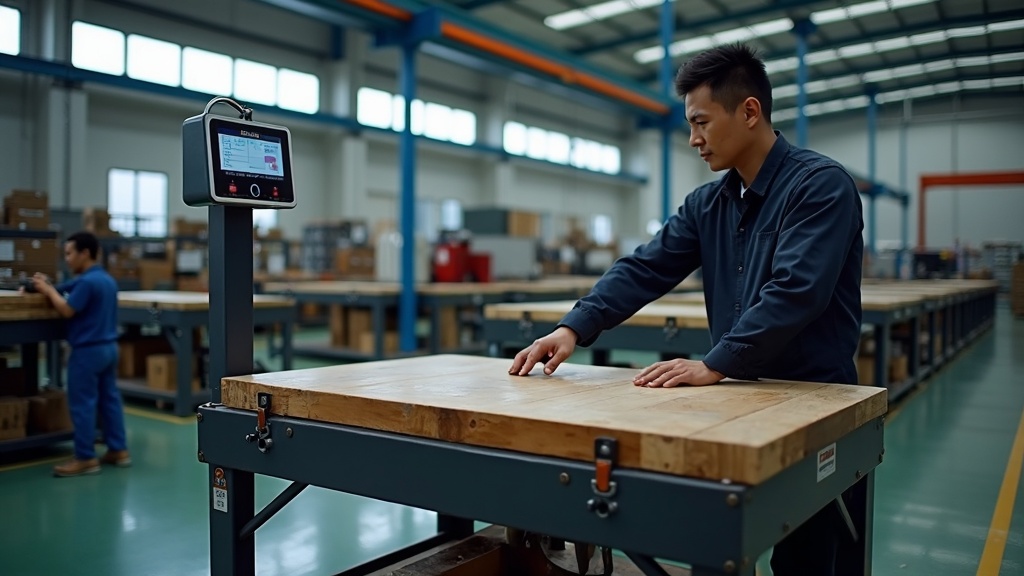
A quality bench purchased at a reasonable price and maintained for 10 years has a lower annual cost than a cheap bench replaced every 3 years.
Mistake 2: Specifying Load Capacity at the Anticipated Load Rather Than the Required Load
The required load capacity is the maximum combined load × 1.25. Specifying to the anticipated average load — rather than the maximum — creates chronic overloading that manifests as premature failure, safety hazard, and costly early replacement.
Mistake 3: Ignoring Floor Loading Capacity
A heavy bench on an inadequate floor is a structural risk. Verify the floor loading rating with your building management or JTC before specifying.
Mistake 4: Not Future-Proofing for Layout Changes
A bolt-together bench that can be reconfigured costs 15–20% more than an equivalent fixed bench. That premium is recoverable within 2–3 years if your layout changes — which it almost certainly will.
Mistake 5: Assuming All “Stainless Steel” Is Food-Grade
Type 430 stainless steel (ferritic, magnetic) is sometimes used in budget “stainless steel” workbenches. It is not approved for food contact. Verify mill certificates before purchasing for food or pharmaceutical applications.
Mistake 6: Not Specifying for the Singapore Climate
For coastal facilities or non-air-conditioned industrial premises, specify enhanced corrosion protection: hot-dip galvanised frames, Type 316 stainless steel in food environments, and regular maintenance schedules for powder-coated surfaces.
Mistake 7: Under-Specifying the ESD Workbench System
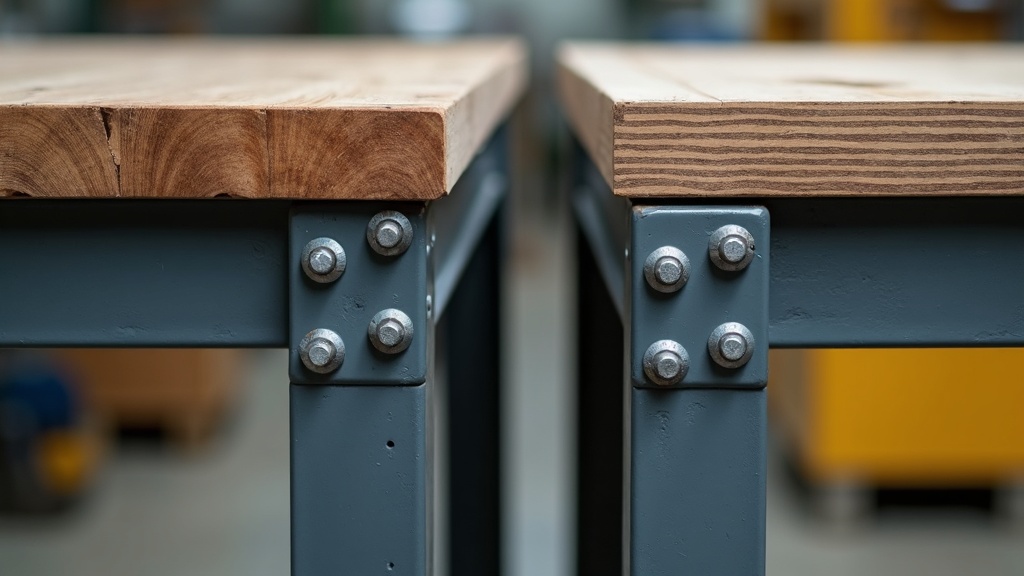
Buying an ESD workbench without a complete EPA system design — grounding, wrist straps, ionisers, floor grounding, verification protocols — is the most common ESD compliance failure. Specify the system, not just the bench.
Mistake 8: Accepting Delivery Without Inspection
Before accepting delivery, verify: dimensions and grade match the specification; no transit damage; all fasteners present and properly secured; bench is level on the floor. Document any discrepancy before signing delivery acceptance.
The Singapore Supplier Landscape
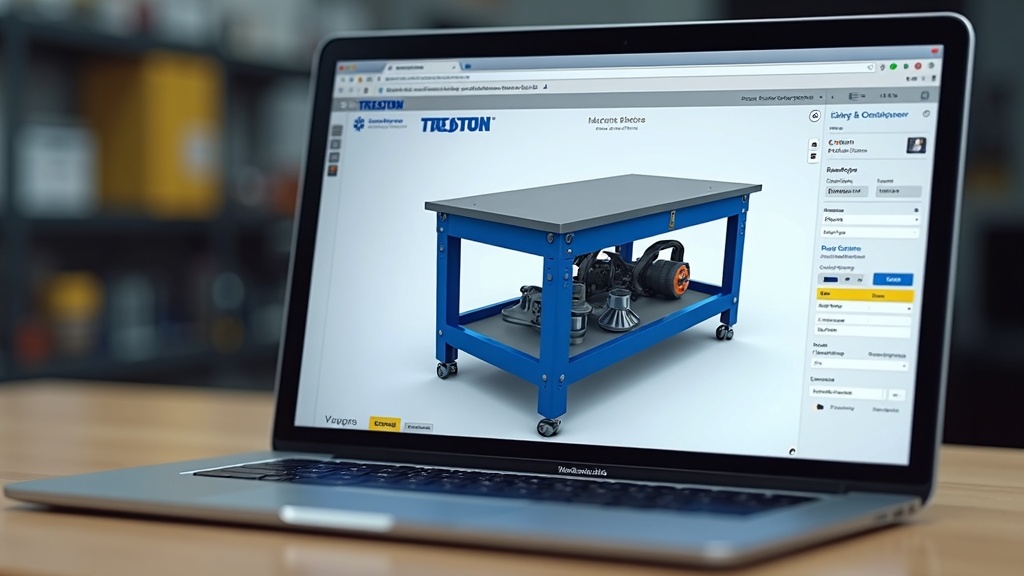
Premium European Brands (Treston, Bott, BITO): Engineered product systems with full accessory ecosystems, documented compliance, and 5–10 year structural warranties. Priced 30–50% above commodity alternatives but with significantly lower total cost of ownership over 10 years.
Regional Asian Brands: Taiwan, South Korea, and Malaysia — competitive pricing (20–40% below European equivalents) with acceptable quality for non-regulated industrial applications.
Budget/Import Products: Primarily from mainland China — appropriate for light-duty, non-regulated applications. For any application involving ESD control, food safety, ergonomic compliance, or heavy loads, the risks of budget specification outweigh the price saving.
Final Specification Checklist
Before placing your workbench order, confirm:
- [ ] Environment classification defined
- [ ] Load capacity calculated (maximum combined load × 1.25 safety factor)
- [ ] Floor loading verified
- [ ] Frame type chosen (bolt-together / welded / stainless steel)
- [ ] Work surface material chosen (to match environment)
- [ ] Height adjustability specified (fixed / manual crank / electric)
- [ ] Accessory ecosystem defined
- [ ] Compliance documentation identified
- [ ] Delivery timeline and installation requirements confirmed
- [ ] Warranty and after-sales support confirmed
Frequently Asked Questions
Q: How do I calculate the correct load capacity for my industrial workbench?
A: Use the formula: (Maximum workpiece + Maximum tools + 75kg operator lean) × 1.25 = Required capacity. For heavy industrial applications, use 1.5×. Then specify a bench rated above this figure — never at it.
Q: Should I buy bolt-together or welded frames for my Singapore facility?
A: Choose bolt-together unless the bench is in a permanent, fixed-position production line. Bolt-together frames can be reconfigured when your layout changes. The premium for bolt-together is recoverable within 2–3 years of a typical layout change.
Q: What documentation should I request from my workbench supplier in Singapore?
A: At minimum: material certificates for stainless steel, IEC 61340-5-1 test report for ESD workbenches, and a structural warranty certificate. For pharmaceutical and medical device environments, also request IQ/OQ documentation templates.
Q: Who supplies industrial workbenches in Singapore with full compliance documentation?
A: Treston is the reference brand for compliance-grade workstations in Singapore. Available through authorised Singapore distributors who provide full specification support, compliance documentation, and installation. For non-regulated applications, regional Asian brands offer acceptable quality at lower price points.
Q: What does MOM require for ergonomic compliance with industrial workbenches?
A: The WSH (Risk Management) Regulations require a documented ergonomic risk assessment. Key requirements: work surface at elbow height; sit-stand capability for workstations where operators stand more than 4 hours per shift; height-adjustable benches for multi-user environments. A fixed-height bench in a prolonged-standing or multi-user scenario does not meet the “reasonably practicable” standard.
Next Steps

If you are specifying industrial workbenches for a new facility, upgrading existing workstations, or addressing a MOM WSH compliance requirement, our team provides specification support, supplier evaluation, and installation for Singapore industrial operations.
Related Articles:
Heavy Duty Workbenches | ESD Workbenches | Industrial Workbenches | Electric Height-Adjustable
Y K Toh Marketing (S) Pte Ltd
Tel: (65) 6542 3232 | enquiry@yktoh.com | yktoh.com


