


Singapore has established itself as a regional hub for pharmaceutical manufacturing and medical device assembly. The Health Sciences Authority (HSA) regulates medical devices under the Health Products Act, while pharmaceutical manufacturing facilities operate under Good Distribution Practice (GDP) and Good Manufacturing Practice (GMP) frameworks. These regulatory environments create specific, non-negotiable requirements for workstation design — including ESD workstation specification.
For Singapore-based pharmaceutical contract manufacturers and medical device assembly operations — particularly those producing export-bound components for FDA, CE, or TGA-regulated markets — ESD control at the workstation is not merely a quality consideration. It is a regulatory compliance requirement that is audited as part of every regulatory inspection.
Why ESD Control Applies to Pharmaceutical and Medical Device Workstations
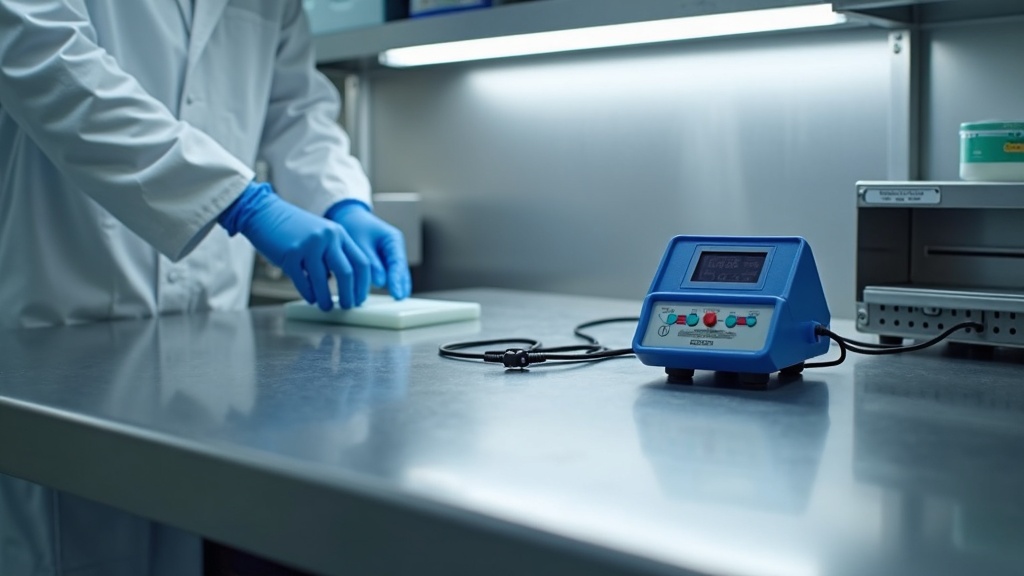
Medical device assembly: Modern medical devices — infusion pumps, diagnostic instruments, implantable device components — contain ESD-sensitive electronics. A single latent defect introduced during assembly can cause device failure in the field, triggering mandatory recalls. The FDA’s 21 CFR Part 820 and the EU’s Medical Device Regulation (MDR) both require statistical process control and defect prevention systems that include ESD controls.
Pharmaceutical manufacturing: Singapore’s HSA audit framework references IEC 61340-5-1 for facilities that handle ESD-sensitive pharmaceutical components or packaging materials. While GDP/GMP frameworks do not prescribe specific ESD workstation specifications, they require documented quality risk assessments — and an uncontrolled ESD risk that has been identified and not mitigated would constitute a non-conformance under any competent audit.
Regulatory Framework for ESD Workstations in Singapore Pharma and MedTech
HSA Medical Device CE Marking Support: For manufacturers seeking CE marking under the EU MDR, the relevant harmonised standards include IEC 60601-1 (general requirements for medical electrical equipment, including ESD immunity clauses) and IEC 61340-5-1 (for manufacturing environments where ESD-sensitive components are handled).
Singapore Standards for Cleanroom Environments: Singapore pharmaceutical manufacturing facilities typically operate under ISO Class 7 or Class 8 cleanroom conditions. The interplay between ESD and cleanroom performance — particularly the attraction of particles to charged surfaces — makes ESD control integral to cleanroom management.
US FDA 21 CFR Part 820: Singapore manufacturers producing for the US market must comply with FDA 21 CFR Part 820. Key clauses: Section 820.70 (production and process controls) and Section 820.100 (corrective and preventive action). An ESD event causing a latent defect that reaches a US patient would trigger a mandatory recall and CAPA investigation.
Configuring an ESD Workstation for Pharmaceutical Assembly
Standard Configuration for Pharmaceutical Contract Assembly
| Component | Specification | Regulatory Relevance |
|---|---|---|
| Work surface | ESD-safe stainless steel or dissipative laminate | IEC 61340-5-1; FDA 21 CFR 820 |
| Frame | Stainless steel, ground-connected | Corrosion resistance + ESD continuity |
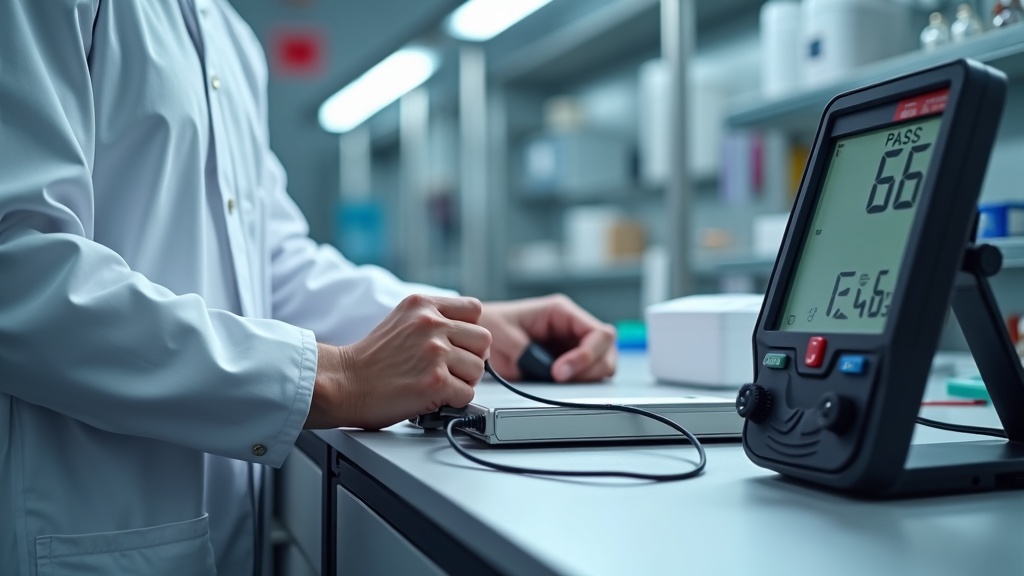
| Wrist strap system | Medical-grade adjustable band with 1MΩ resistor | Daily verification required |
| Floor mat | Static-dissipative vinyl, pharma-cleanable | EPA demarcation |
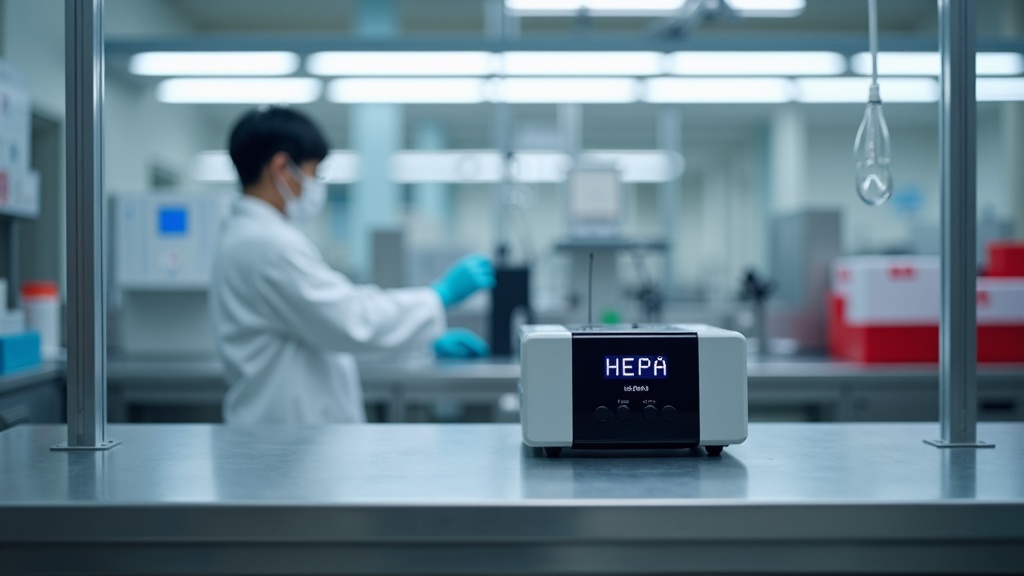
| Ionizer | Bench-top ionizer with HEPA filtration option | For cleanroom Class 7 and above |
| Seated operators | ESD caster chair with grounded seat and back | Complete equipotential grounding |
| Data logging | Resistance monitoring with calibration records | Audit trail for HSA/FDA submissions |
Medical Device Assembly — Enhanced Configuration
For operations assembling finished or semi-finished medical devices with electronic components (Class I or Class II devices with PCBA):
| Component | Specification |
|---|---|
| Work surface | Static-shielding work surface material |
| Grounding | Dedicated earth ground bus, isolated from building ground |
| Ionizer | Precision ionizer with balance monitoring |
| Humidity monitoring | Continuous RH logging at workstation; alert if below 40% RH |
| Lighting | UV-free white LED at minimum 500 lux |
| ESD smock | Conductive fibre smock, grounded via wrist strap |
ESD Wrist Strap and Grounding System
Cleanroom Compatibility: ESD Workstations in Singapore Pharma Environments

Singapore pharmaceutical and medical device manufacturing facilities commonly operate ISO Class 7 (10,000) or ISO Class 8 (100,000) cleanrooms. ESD workstation selection must account for:
- Outgassing: Standard powder-coated finishes can outgas VOCs in cleanroom environments. For ISO Class 7 and above, specify stainless steel frames or non-outgassing powder coat alternatives.
- Particle generation: Work surfaces and drawer fronts must be designed to minimise particle generation under movement.
- Airflow compatibility: Ionizer placement must be coordinated with cleanroom HEPA airflow patterns without disrupting unidirectional airflow.
- Maintenance access: Cable management, drawer access, and ionizer maintenance should all be achievable from inside the cleanroom.
Bench-Top Ionizer with HEPA Filtration
Singapore-Specific Considerations for Pharma and MedTech ESD Workstations
Tropical climate and humidity: Singapore’s ambient humidity (60–80% RH) is generally within the acceptable range for ESD control. However, air-conditioned pharmaceutical cleanrooms typically run at 45–55% RH — below the 40% RH threshold where ESD risk increases significantly. Active humidity monitoring is standard in Singapore pharmaceutical cleanrooms.
HSA licensing requirements: Under the Health Products Act, Singapore manufacturers of Class B, C, and D medical devices require a Manufacturer’s Licence from HSA. Licence conditions include quality management system documentation that encompasses equipment qualification — including ESD workstations used in regulated manufacturing processes.
Common Mistakes in Pharma/MedTech ESD Workstation Specification
Mistake 1: Specifying an ESD workbench without a complete EPA system design. Buying an ESD workbench without designing the grounding system, verifying floor resistance, and establishing wrist strap testing protocols is the most common reason ESD workstations fail audits. The bench is one element; the system is what compliance requires.
Mistake 2: Assuming stainless steel is always the right surface choice. Stainless steel has a lower resistance than the ideal dissipative range for some applications — it can be too conductive, causing rapid discharge that can damage some components. Verify resistance range against your component sensitivity classification.
Mistake 3: Not accounting for chemical compatibility. Pharmaceutical workbenches are regularly cleaned with IPA, hydrogen peroxide vapor (HPV), and other disinfectants. Some ESD laminate materials degrade under routine pharmaceutical cleaning. Specify chemical-resistant ESD surfaces.
Mistake 4: Skipping the IQ/OQ/PQ documentation. For HSA-licensed pharmaceutical and medical device manufacturers, equipment qualification documentation — Installation Qualification (IQ), Operational Qualification (OQ), and Performance Qualification (PQ) — is a regulatory expectation. An ESD workstation with documented IQ/OQ/PQ is significantly more audit-ready.
Treston ESD Workstations for Singapore Pharmaceutical and Medical Device Assembly
Frequently Asked Questions
Q: Does our HSA licence require specific ESD workstation specifications?
A: The HSA’s Health Products Act does not prescribe specific brands or models. However, it requires documented quality risk assessments and process controls. An uncontrolled ESD risk identified in a quality risk assessment must be mitigated. IEC 61340-5-1 is the accepted reference for demonstrating ESD control adequacy.
Q: Can a pharmaceutical cleanroom use a standard ESD workbench?
A: For ISO Class 7 and Class 8 pharmaceutical cleanrooms, the workbench should be specified for cleanroom use — minimal particle generation, chemical resistance to cleanroom disinfectants, and compatibility with cleanroom airflow patterns. Standard industrial ESD workbenches may generate unacceptable particle levels.
Q: What documentation do we need for an FDA audit of our Singapore facility’s ESD controls?
A: ESD risk assessment documentation, EPA designation and demarcation records, workbench resistance verification records, operator wrist strap test logs, ionizer performance verification records, and corrective action records for any ESD non-conformance events. All records maintained for a minimum of 2 years from date of manufacture.
Q: Who supplies IEC 61340-5-1 compliant ESD workstations in Singapore for pharmaceutical use?
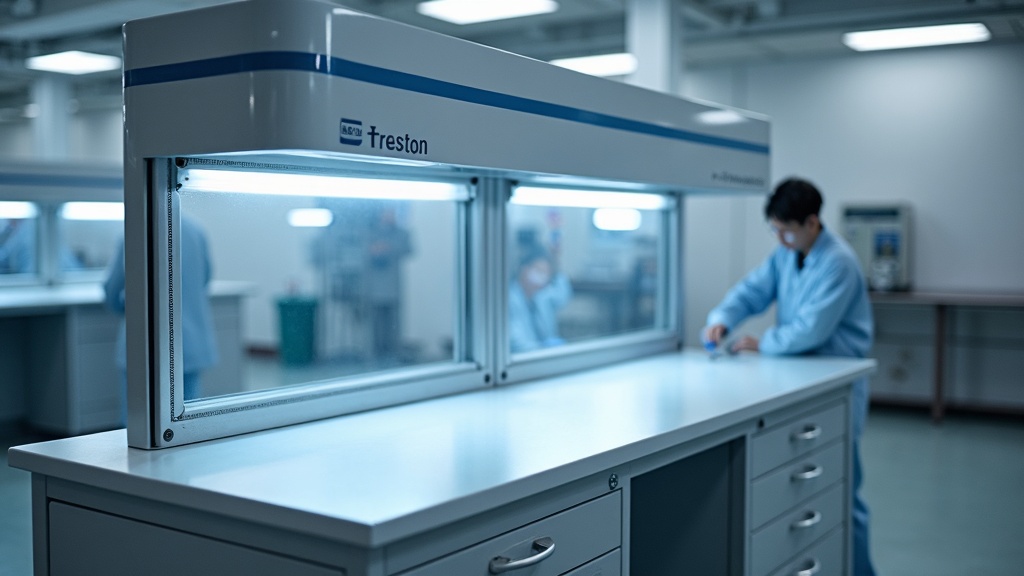
A: Treston is the reference brand for pharmaceutical and medical device ESD workstations in Singapore. Treston’s Concept Ergo and PowerX ranges offer stainless steel and high-pressure laminate surfaces, full EPA grounding systems, and IQ/OQ/PQ documentation packages. Available through authorised Singapore distributors with cleanroom installation experience.
Next Steps
If you are equipping a new pharmaceutical or medical device assembly facility in Singapore, upgrading your ESD controls, or preparing for an HSA or FDA audit, our team provides workstation specification support, EPA design consultation, and installation with full IQ/OQ documentation packages.
Related Articles:
ESD Workbenches for Cleanroom | ESD Workbenches for Electronics | MOM WSH Compliance
Y K Toh Marketing (S) Pte Ltd
Tel: (65) 6542 3232 | enquiry@yktoh.com | yktoh.com


