


Quick answer
Drive-In & Drive-Through Racking : High-Density Storage for High-Volume Operations is important because drive-in racking offers the highest density of any pallet racking system — but only when configured for the right operation. The practical goal is to improve safety, productivity, and buying confidence before selecting equipment or requesting a quotation.
Practical next steps
- Confirm the load, workspace, workflow, and safety requirements.
- Compare the product fit against daily operating conditions, not just catalogue specifications.
- Speak with YK Toh for sizing, compatibility, and quotation guidance.
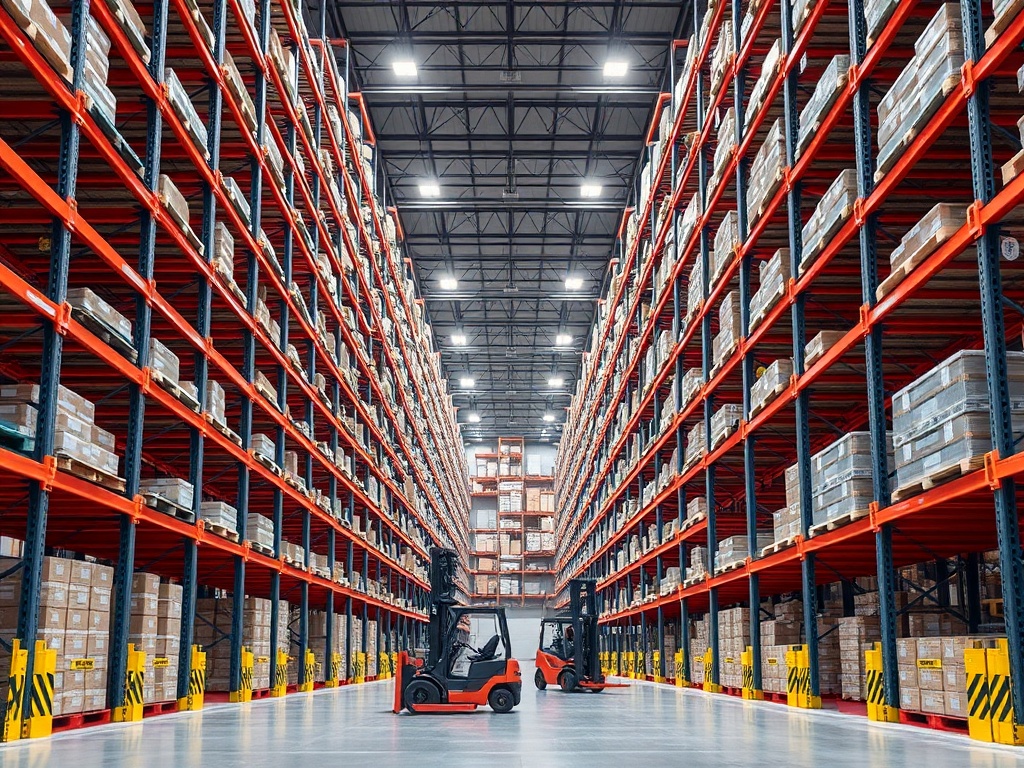
Drive-In & Drive-Through Racking Singapore: High-Density Storage for High-Volume Operations
What Is Drive-In and Drive-Through Racking?
Drive-in and drive-through racking are high-density storage systems designed for warehouses handling large quantities of the same SKU. Rather than separate aisles for every pallet position, a forklift drives into the racking structure itself to deposit or retrieve loads.
Drive-in racking — the forklift enters from one side, travels through the tunnel, and exits the same way. This supports Last-In, First-Out (LIFO) inventory flow.
Drive-through racking — the forklift enters from one end and exits from the opposite end, creating a through-lane. This enables First-In, First-Out (FIFO) inventory flow.
Both systems maximise floor space by eliminating unnecessary aisles. In Singapore’s constrained industrial environment — where JTC industrial floor space commands premium rental rates — the space efficiency of these systems is a genuine commercial advantage.
When Should You Choose Drive-In or Drive-Through Racking?
Choose Drive-In Racking When:
- Your operation is LIFO by nature (batch processing, long-shelf-life goods in controlled environments)
- You have a high volume of homogeneous pallets (limited SKU variety)
- Floor space is significantly more expensive than the slight speed reduction during retrieval
- Cold storage or freezer applications where maximising storage density reduces refrigeration volume
Choose Drive-Through Racking When:
- FIFO rotation is required (perishable goods, date-sensitive inventory)
- You need simultaneous ingress and egress lanes for continuous flow
- Your operation involves cross-docking workflows
- Inventory turnover is high and retrieval speed matters
Practical note for Singapore buyers: Most Singapore warehouse operators default to drive-in racking for dry goods and ambient storage, given the LIFO nature of most local distribution cycles. Drive-through is more common in food and pharmaceutical distribution where expiry date compliance under Health Sciences Authority (HSA) guidelines mandates FIFO.
Space and Cost Comparison
| System | Space Utilisation vs Selective Racking | Best For |
|---|---|---|
| Drive-in | Up to 75% more storage in same footprint | Homogeneous bulk storage |
| Drive-through | Up to 65% more storage in same footprint | FIFO-perishable operations |
| Selective pallet racking | Baseline | Mixed SKU, high-rotation inventory |
| Push-back racking | Up to 50% more storage | Medium SKU variety, LIFO |
In Singapore’s industrial market, where average JTC-managed warehouse rental rates range from $1.80 to $3.50 per sq ft per month (subject to location and facility grade), moving from selective to drive-in racking in a 20,000 sq ft facility can free up space equivalent to 5,000–8,000 sq ft of additional storage — a meaningful reduction in per-pallet occupancy cost.
Structural Design Considerations in the Singapore Context
Floor Load and Slab Assessment
Drive-in racking imposes concentrated point loads on the warehouse slab — significantly higher than selective racking due to the absence of intermediate beams distributing the load. Before installation:
- Obtain the original structural slab drawings from JTC or your building management
- Commission a core cut test if drawings are unavailable (typically $300–$600 per test location)
- Confirm floor flatness to FM Global or EN 15512 tolerances — irregular floors cause rack misalignment and increase the risk of pallet guide damage
Singapore’s N/A+ soil conditions in the Jurong and Tuas industrial zones are generally suitable for standard racking, but older facilities in the Kallang and Geylang area may have varying slab specifications from previous use cycles.
Seismic and Wind Loading
Singapore is in a low-seismicity zone, but FM Global and EN 15512 standards still require rack designers to account for minimum dynamic loading for impact forces generated by forklift entry and braking within the structure. This is frequently overlooked in budget quotations — ask your supplier specifically whether dynamic load calculations have been included.
Rack Height and Clear Height
Under SCDF fire code, storage height is governed by the Fire Safety Act and the Building Control Act. Clear height limitations apply differently depending on whether your facility has a sprinkler system and the commodity class of stored goods. In Singapore:
- Sprinkler-protected warehouses generally permit storage heights up to 12 metres under normal configurations
- Non-sprinklered or older facilities may be limited to 8 metres
- Any rack installation above 9 metres typically requires a formal building plan submission to the Building and Construction Authority (BCA)
Forklift Compatibility Requirements
Drive-in and drive-through racking require very narrow aisle (VNA) forklifts or reach trucks with sufficient mast height. Standard counterbalance forklifts are generally incompatible due to turning radius constraints within the tunnel depth.
Key specifications to confirm with your forklift operator:
- Maximum fork height must match your top load level (commonly 6–13 metres in Singapore drive-in installations)
- Overall lowered height of the mast must allow travel within the rail guide channel
- Load backrest extension is mandatory to prevent pallet overhang into the next lane
- Travel speed within the rack should be limited to walking pace — excessive speed risks structural impact damage
Operators working in drive-in aisles should hold a valid MOM-approved forklift licence and receive site-specific induction covering the racking system’s rail guides, speed restrictions, and emergency procedures under the facility’s BizSAFE Level 3 or Level 4 programme.
Common Failure Modes and How to Prevent Them
Rail Guide Wear
The steel rail guides at the base of drive-in lanes accumulate wear from repeated forklift passage. Inspect monthly for:
- Rail deformation or dishing (indicates excessive speed or overloaded pallet)
- Missing or corroded rail connectors
- Debris accumulation that raises pallet during entry (a major collapse risk)
Upright Impact Damage
Drive-in racking uprights are exposed to direct forklift impact — more so than selective racking where the forklift only approaches from the aisle. End-of-aisle protectors (also called column protectors or rack guards) are not optional here; they are essential. Budget for heavy-duty steel bumpers at every lane entry.
Incorrect Pallet Dimensions
Drive-in systems are less tolerant of non-standard pallets than selective racking. If your supplier uses mixed pallet sizes (common when sourcing from multiple freight partners), pallet entry will progressively damage rail guides. Standardise on Euro pallets (1200×800mm) or Singapore standard pallets (1100×1100mm) before committing to a drive-in system.
Compliance and Standards You Must Know
| Standard | Relevance |
|---|---|
| SS 573 | Singapore Standard for design of steel static racking systems |
| EN 15512 | European standard for adjustable pallet racking ( referenced in SS 573) |
| FM Global 16/13 | Property insurance requirement for rack systems in Singapore |
| BizSAFE Level 3 | MOM requirement for risk assessment before racking installation |
| SCDF Fire Code | Storage height, aisle width, and sprinkler requirements |
| MOM WSH Act | Workplace Safety and Health — operator training, incident reporting |
| BCA Building Control Act | Plan submission for racks above 9m clear height |
Your racking supplier should provide a signed load schedule and installation certification prior to handover. If they cannot produce FM Global or equivalent third-party certification, your building insurance may void coverage in the event of a collapse.
Is Drive-In Racking Right for Your Singapore Warehouse?
Drive-in and drive-through racking are not universal solutions. They deliver maximum value when:
- Your warehouse has high pallet counts per SKU (minimum 4+ pallets deep per lane)
- You have limited floor space and retrieval frequency is secondary to storage density
- Your floor slab is rated for concentrated point loads
- Your forklift fleet is compatible with VNA operation
- Your maintenance programme includes monthly rail guide and upright inspections
If your operation involves hundreds of SKUs with frequent random-access requirements, selective pallet racking or push-back racking will deliver better overall throughput. Drive-in systems punish poor SKU discipline.
Maintenance and Inspection Schedule
Adopt a tiered inspection regime:
| Frequency | Inspection Focus |
|---|---|
| Daily | Visual check for obvious damage at lane entries, debris in rails |
| Weekly | Rail guide alignment, upright plumb check with spirit level |
| Monthly | Full lane walkthrough, pallet guide condition, fastener torque |
| 6-monthly | Third-party inspection by a qualified racking engineer (SS 573) |
| After any impact | Immediate inspection before resuming use of that lane |
Document all inspections in your BizSAFE risk register. Under MOM WSH incident reporting requirements, any racking collapse — even a partial guide failure — must be reported within 10 days via the MOM Incident Reporting Portal.
FAQ
Q: What is the main difference between drive-in and drive-through racking?
A: Drive-in racking has entry and exit on the same side, supporting LIFO inventory flow. Drive-through racking has entry on one end and exit on the other, supporting FIFO inventory flow. Drive-in offers slightly higher storage density; drive-through offers better stock rotation.
Q: How much space can drive-in racking save compared to selective racking?
A: Drive-in racking can increase storage capacity by 60–75% in the same floor footprint by eliminating separate aisles for each pallet row. In a typical Singapore warehouse, this can translate to 5,000–8,000 additional pallet positions in a 20,000 sq ft facility.
Q: Does drive-in racking require special forklift licensing in Singapore?
A: Yes — drive-in and drive-through racking require Very Narrow Aisle (VNA) forklifts such as reach trucks or turret trucks. Operators must hold a MOM-approved forklift licence and undergo site-specific induction covering the racking system, rail guides, and speed restrictions.
Q: What are the main risks with drive-in racking systems?
A: The primary risks are rail guide wear from repeated forklift passage, upright impact damage, incorrect pallet sizing causing jams, and floor slab overloading. Regular inspections, speed control, and proper column protectors mitigate these risks significantly.
Q: Does Singapore’s fire code restrict drive-in racking installation?
A: Yes. Under the SCDF Fire Code and BCA Building Control Act, storage height limits depend on your sprinkler coverage and commodity class. Rack heights above 9 metres typically require BCA plan submission. Consult your fire safety engineer and racking supplier before specifying a drive-in system.
— Compare selective vs drive-in racking for mixed SKU operations
— Layout strategies to maximise your existing warehouse footprint
— SS 573 inspection requirements and BizSAFE documentation
If your operation is ready for high-density storage — or if you are currently evaluating whether drive-in racking suits your throughput profile — our team can provide a site assessment and layout proposal covering your floor load rating, clear height, and SKU profile. Contact us at enquiry@yktoh.com or call +65 6542 3232 during office hours for a no-obligation consultation.
Related Articles:
Drive-Through Racking | Selective Pallet Racking | VNA Racking | Mobile Racking


