


Quick answer
Carton Flow & Gravity Flow Racking : A Practical Guide to High-Speed Order Picking is important because carton flow and gravity flow racking are the backbone of high-speed e-commerce pick-and-pass operations. The practical goal is to improve safety, productivity, and buying confidence before selecting equipment or requesting a quotation.
Practical next steps
- Confirm the load, workspace, workflow, and safety requirements.
- Compare the product fit against daily operating conditions, not just catalogue specifications.
- Speak with YK Toh for sizing, compatibility, and quotation guidance.
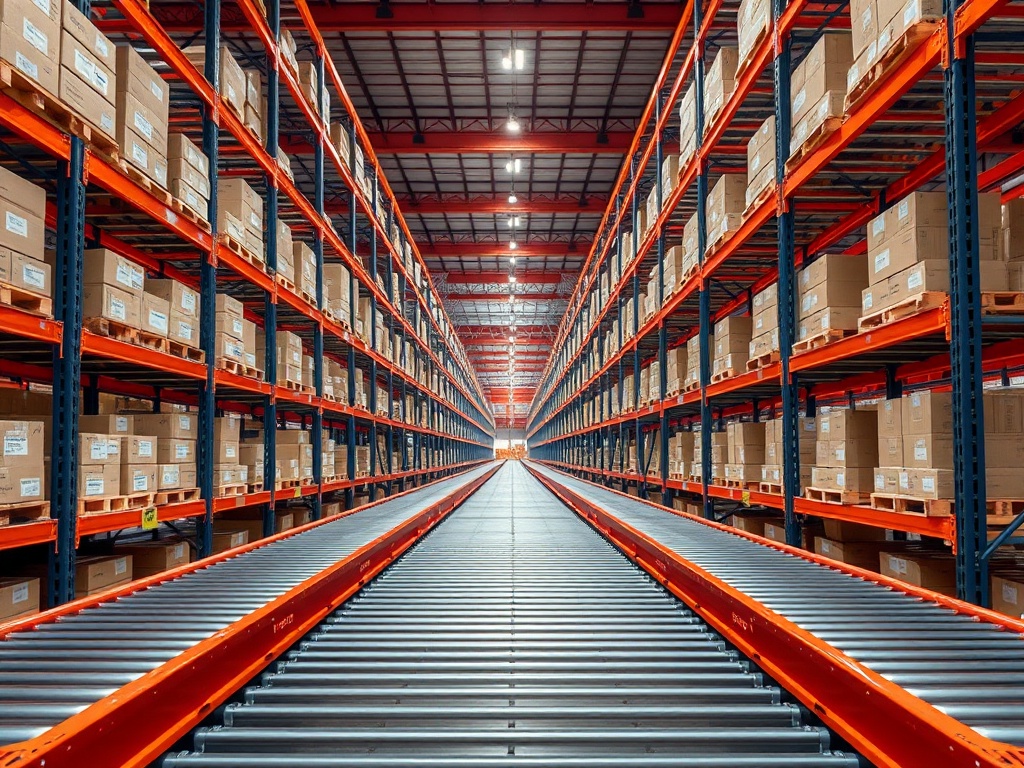
Carton Flow & Gravity Flow Racking Singapore: A Practical Guide to High-Speed Order Picking
What Is Carton Flow Racking?
Carton flow racking — also called gravity flow racking — is a pick-face storage system where product moves forward on inclined rollers or skate tracks, powered purely by gravity. Operators load from the rear, and cartons or totes slide forward to the pick lane, presenting items at an ergonomic picking position without manual pushing or searching.
The result is a first-in-first-out (FIFO) rotation model built into the racking itself, faster pick rates, and a dramatically reduced pick path compared to static shelving.
How Gravity Flow Racking Works in a Singapore Warehouse
The Mechanics
A carton flow rack lane consists of:
- Inclined rollers or skate tracks set at a precise pitch (typically 5–12° depending on load weight and carton surface friction)
- Lane dividers that keep products in single-file order
- Brake tracks or speed controllers that prevent cartons accelerating uncontrollably down the slope
- Front stop lips or pick ledges that hold the load at the operator pick position
When a carton is removed from the front, the next one behind it advances automatically. No reach truck, no reach truck driver, no walking.
Load Capacity per Lane
Gravity flow lanes in Singapore warehouses typically handle:
– Carton weights: 5 kg to 50 kg per unit (lighter goods like FMCG, electronics components, pharmaceuticals)
– Lane depths: 3 to 10 pick faces per lane
– Widths: Standard lane widths from 300 mm to 600 mm, adjustable via lane dividers
Heavy items require steeper pitches or full-width skate tracks. Light items work well on narrow roller间距.
When to Specify Carton Flow Racking in Singapore
Carton flow is not universal. It earns its premium over static shelving in specific conditions:
Ideal for Carton Flow:
- High-velocity SKUs with consistent demand — picked multiple times per day
- Pick-and-pack operations — e-commerce, 3PL, pharma, food & beverage
- FIFO rotation required — date-sensitive inventory, perishables, short-shelf-life goods
- Order accuracy critical — gravity flow eliminates picking from the wrong lane
- Seasonal peaks — adjustable lane widths accommodate SKU profile changes between seasons
Not Ideal For:
- Low-velocity, high-SKU-count inventory — static shelving or mobile racking is more cost-effective
- Oversized or irregular cartons — uneven surfaces create jams on skate tracks
- Very heavy loads above 60 kg — consider pallet live storage (dynamic racking) instead
- Facilities with heavy forklift traffic — carton flow is an operator-access pick face, not a bulk storage system
Singapore Standards That Apply to Gravity Flow Racking
Before specifying or installing carton flow racking, a Singapore warehouse operator must account for several regulatory frameworks:
SS 573 — Racking System Design
The Singapore Standard SS 573 sets structural design requirements for industrial racking, including gravity flow systems. Key requirements:
– Structural integrity — rack frames, beams, and bracing must be designed to Singapore’s seismic loading requirements (though moderate compared to Japan/Taiwan)
– Load capacity signage — every bay must display its rated load capacity in kilograms
– Installation certification — a Singapore-registered Professional Engineer (PE) must certify the rack installation
– Annual inspection — SS 573 mandates annual inspections by a competent person (often a racking supplier with BizSAFE certification)
Workplace Safety and Health Act (WSHA) — MOM
The MOM WSH (Work at Heights) and general provisions apply:
– Operator ergonomics — carton flow lanes must be set so pick heights do not exceed shoulder height for the dominant task (typically 1.2–1.6 m from floor level)
– Aisles must remain clear — minimum clear aisle width of 750 mm for single-level picking, 1,000 mm for double-deep configurations
– PPE — where picking involves dusty environments or chemical agents (e.g., in DG stores), operators must wear appropriate PPE
BizSAFE Requirements
Any warehouse operator undertaking a racking installation or modification should hold at minimum BizSAFE Level 3 certification. MOM-aligned risk assessments must cover:
– Installation phase hazards (heavy lift, bolt torque, working at height)
– Operational phase hazards (jam clearance, aisle obstruction, manual handling)
SCDF Fire Code — Clearances
Carton flow installations must maintain:
– Minimum 1.5 m clear access aisle between rack rows for fire escape routes
– Sprinkler clearance — top of load must be minimum 450 mm below sprinkler deflectors
– Rack end-of-aisle protection — open-ended racks near fire exits require guarding to prevent structural collapse blocking egress
Carton Flow vs Pallet Live Racking: Which to Choose?
| Factor | Carton Flow Racking | Pallet Live (Dynamic) Racking |
|---|---|---|
| Load type | Cartons, totes, trays | Pallets |
| Typical weight | 5–50 kg | 200–1,000 kg |
| FIFO guaranteed | Yes (gravity + lane design) | Yes |
| Throughput | High (pick face replenishment) | High (pallet-level replenishment) |
| Floor space efficiency | High | Very High |
| Installation complexity | Moderate | Higher (structural steel + skate wheels) |
| Cost per pick position | Moderate | Higher |
| Best for | E-commerce, 3PL, pharma pick-and-pack | High-volume pallet storage, cold storage |
For Singapore’s constrained warehouse market — particularly in JTC flatted factories and HDB industrial premises where floor area is at a premium — carton flow is the more accessible choice for operators who need fast order picking without the structural loading requirements of pallet live systems.
Designing a Carton Flow Pick Face: Key Parameters
If you’re planning a carton flow installation, these are the numbers your racking supplier should confirm with you before specifying lane pitch and roller spacing:
- Carton dimensions — width, depth, height (measure your 80th-percentile carton, not your largest)
- Carton weight — empty weight + typical fill level
- Carton bottom surface — cardboard, plastic, shrink-wrapped, textured
- Pick velocity — picks per SKU per day
- Replenishment frequency — how often the rear lane is refilled
- Aisle width — available pick aisle width determines picking cart and operator flow
- Lane depth — how many cartons deep the lane must hold
Getting these wrong is the primary cause of carton flow jams. A reputable Singapore supplier will conduct a carton flow trial with your actual SKU range before confirming the specification.
Common Mistakes in Carton Flow Implementation
Overloading the lane rear. Loading too many cartons into the back before picking empties the front creates a “brick wall” jam where brake tracks can’t control the mass. Use lane end stops and enforce maximum lane fill quantities.
Incorrect pitch for light loads. A 10° pitch works for 20 kg cartons. For 5 kg cartons, that same pitch may accelerate them dangerously fast. Specify adjustable pitch or multiple lane options.
Mixing SKUs with vastly different depths in the same lane. If SKU A is 200 mm deep and SKU B is 450 mm deep, lane width must accommodate the deeper carton — wasting space on the smaller SKU. Keep lanes SKU-matched or use adjustable lane dividers.
No spare brake tracks. Brake tracks wear out. Specify at least two spare brake tracks per 20 lanes in your maintenance inventory.
Ignoring the replenishment workflow. Carton flow only works if operators consistently replenish from the rear. Design the receiving process so rear access is never blocked by parked pallets or equipment.
Cost Considerations for Singapore Warehouse Operators
A typical carton flow racking installation in Singapore:
– New installation (single-level, 20 lanes): SGD 8,000–18,000 depending on roller type and lane length
– Refurbished / modular lanes: SGD 4,000–10,000 for a comparable configuration
– Annual inspection (per SS 573): SGD 500–1,200 per bay row
– Breakdown call-out: SGD 200–400 per incident
While the per-metre cost is higher than static selective racking, the labour savings in picking efficiency typically deliver payback within 8–18 months for high-velocity operations.
Maintenance and Inspection Checklist
Post-installation, operators should conduct:
- Weekly: Visual check for jammed cartons, broken lane dividers, debris in roller tracks
- Monthly: Brake track function test (release one carton and observe controlled descent)
- Quarterly: Lane alignment check — misaligned lanes cause accelerated roller wear
- Annual (SS 573): Full inspection by a competent person, update load signage, issue inspection certificate
Frequently Asked Questions
Q: Can carton flow racking be used for FIFO rotation in a 3PL warehouse with many clients?
Yes. The lane-based FIFO design means each client’s SKU can occupy its own lane. As long as replenishment is managed from the rear and picking from the front, FIFO rotation is automatic. Multi-client 3PL operators typically colour-code lanes by client for visual management.
Q: Does carton flow work for Singapore’s humid warehouse environment?
Yes — but note that humid cardboard cartons can increase surface friction on skate tracks, requiring a steeper pitch or wider roller spacing. Some operators switch to plastic totes or apply a silicone spray to carded items to maintain consistent flow speed in humidity. Stainless steel roller axles are recommended for humid or cold storage environments.
Q: What is the difference between carton flow and pallet live storage?
Carton flow handles individual cartons or totes at the pick face — ideal for order picking operations. Pallet live storage handles full pallets on rails, typically used for bulk storage and dispatch. Pallet live systems require higher structural loading and are more suited to cold storage or high-volume pallet throughput, not fast-pick e-commerce operations.
Q: Is a Professional Engineer (PE) required to certify carton flow racking in Singapore?
SS 573 requires structural certification for industrial racking by a PE. For standard carton flow systems (non-seismic, under 3 m clear height), a PE-stamped design calculation is typically sufficient. Check with your racking supplier and a registered PE before installation, particularly if your facility is in a JTC or HDB industrial building with additional building control requirements.
— Expand Picking Area Without Relocating
If your warehouse team is constrained by floor space, a mezzanine floor can double your picking area above existing racking. Pair mezzanine floors with carton flow racking on the upper level for a high-throughput pick-and-pack operation that fits within a single-tenant JTC flatted factory.
— When You Need Even Higher Density
Mobile racking systems eliminate fixed aisles by mounting racks on floor tracks. For slow-moving SKUs that still need FIFO, a mobile compactus combined with carton flow at the picking level delivers maximum density.
— Pair with the Right Equipment
Carton flow racking works best when paired with the right picking equipment. Compare manual pallet jacks, electric pallet trucks, and order pickers to find the right fit for your picking workflow.
Ready to Cut Your Pick Time?
Carton flow racking is one of the most effective investments a Singapore warehouse operator can make for high-velocity SKU management. The combination of FIFO automation, ergonomic pick faces, and compact floor space utilisation makes it particularly well-suited to Singapore’s dense industrial environment.
Whether you’re running an e-commerce 3PL in Changi, a pharma distributor in Tuas, or an F&B co-packer in Woodlands, gravity flow racking can meaningfully reduce your per-pick labour cost and improve order accuracy.
Specify your carton flow system based on your actual carton dimensions and pick velocity — not catalogue averages. A reputable Singapore supplier will trial your SKUs before you commit.
For a full site assessment and rack layout design, contact us at enquiry@yktoh.com or call +65 6542 3232 during office hours for a no-obligation consultation.
Slot 19 | 2026-04-01 | Carton flow / gravity flow racking Singapore
Related Articles:
Pallet Live Storage | Selective Pallet Racking | VNA Racking | Drive-In Racking


