


Quick answer
High-Density Storage Solutions for Constrained Floor Space in : A Practical Guide is important because when floor space is limited, high-density storage systems can dramatically increase capacity. The practical goal is to improve safety, productivity, and buying confidence before selecting equipment or requesting a quotation.
Practical next steps
- Confirm the load, workspace, workflow, and safety requirements.
- Compare the product fit against daily operating conditions, not just catalogue specifications.
- Speak with YK Toh for sizing, compatibility, and quotation guidance.
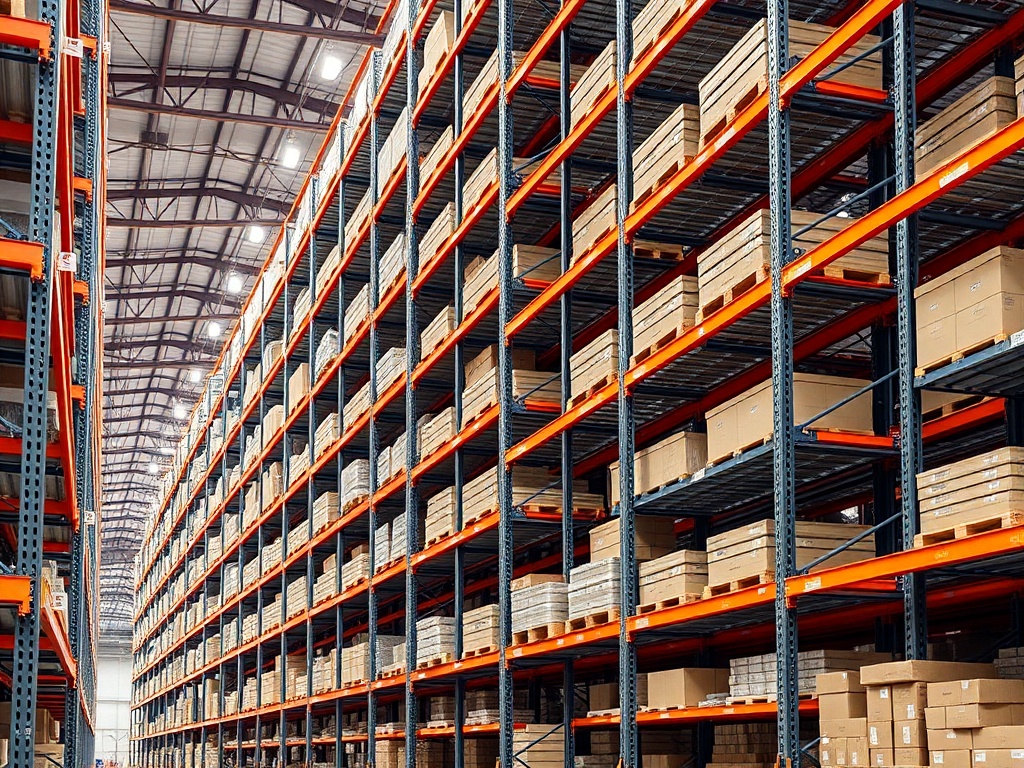
High-Density Storage Solutions for Constrained Floor Space in Singapore: A Practical Guide
Introduction
Floor space in Singapore is not getting cheaper. Industrial land in Jurong, Tuas, and Ang Mo Kio commands some of the highest lease costs in Southeast Asia, and for warehouse operators, every unused square metre represents pure waste. If your racking layout is leaving wide aisles, low shelving, or vast clear zones between zones, you are effectively paying rent twice for the same footprint.
High-density storage solutions are the systematic response to this constraint. They are not a single product — they are a design philosophy that trades aisle width for vertical or spatial capacity, combining racking geometry, materials handling equipment, and workflow design into a coherent storage system.
This guide walks through the main high-density options available to Singapore warehouse operators, with specific reference to the standards, regulations, and practical conditions that apply on the ground.
What Is High-Density Storage?
High-density storage is any configuration that increases the number of pallet or storage positions within a given floor area, compared to a conventional selective racking layout. The density gain comes from three dimensions:
- Vertical utilisation — going taller with rack height
- Aisle compression — reducing the space between racking rows
- Spatial compaction — using mobile, compactus, or multi-tier layouts to eliminate fixed aisles
The trade-off is typically increased equipment dependency and more complex operations. In a Singapore context, where labour costs are high and ceiling heights in JTC-built facilities often max out at 8–10 metres, the calculus between density and operational complexity matters more than in overseas markets with cheaper labour and taller builds.
The Main High-Density Options
1. Very Narrow Aisle (VNA) Racking
VNA racking compresses aisle widths to 1.5–1.8 metres — roughly half the width needed for a standard counterbalance forklift. This is achieved by using turret trucks or VNA forklifts with a rotating or side-shifting mast that allows the operator to pick from either side of the aisle without turning the truck.
Key advantages for Singapore:
– Achieves 30–40% more storage positions versus standard selective racking in the same floor area
– Compatible with existing SS 15512-compliant racking designs
– Works well in HDB industrial and JTC flatted factories where floor area is capped but ceiling heights reach 8–10m
Key constraints:
– Requires specialist turret trucks (e.g., Atlet, Combilift) — capital cost significantly higher than standard forklifts
– Operators need certified training; MOM-approved training providers exist in Singapore
– Aisle width tolerances are tight — floor flatness must be to precise specification (typically ≤3mm over 3m)
Singapore compliance note: VNA racking installations must be designed in accordance with SS 15512 (Steel static storage systems — Adjustable pallet racking systems) and verified by a qualified racking engineer. Any rack taller than 9m will also trigger SCDF fire code requirements for fire-rated structure and sprinkler coverage.
2. Mobile Racking / Compactus Systems
Mobile racking (also called compactus) mounts racking rows on rails, allowing entire rows to be mechanically moved sideways to create a single access aisle. When not in use, racks are compacted together, eliminating all but one aisle.
Best use case in Singapore: Cold stores, cool rooms, and temperature-controlled environments where every opened aisle represents energy cost. Several Singapore third-party logistics (3PL) operators running cold chain operations in Tuas and Benoi use compactus systems to maximise their per-square-metre cold storage capacity.
Key data:
– Density gain of up to 100% versus static selective racking (one aisle vs. N aisles)
– Requires concrete floor with reinforced rail channels — important for older HDB industrial properties where floor loading may not have been designed for rail loads
– Mobile mechanisms must be inspected half-yearly under MOM WSH regulations for mechanical lifting equipment
3. Mezzanine Floors / Multi-Tier Racking
A structural mezzanine floor effectively doubles or triples the usable floor area within the same building envelope. For warehouses in single-storey JTC or HDB industrial premises, a mezzanine is often the only path to meaningfully increasing storage capacity without relocating.
Structural and regulatory considerations in Singapore:
– Mezzanine floors require approval under the Building Control Act — a qualified PE (Professional Engineer) must design and sign off
– SCDF fire code requires mezzanine structures to be treated as separate fire compartments if they exceed certain area thresholds
– Floor loading must be verified — JTC industrial floors are typically rated at 20–25 kN/m²; a mezzanine with heavy pallet racking may exceed this without additional structural support
– Enterprise Singapore’s productivity grants have, in prior cycles, offered co-funding for space-efficiency investments including mezzanine systems under the Automation/readiness grants
Operational fit: Best for slow-to-medium-moving SKUs. Fast-moving items requiring frequent ground-level access should stay on the main floor; slower movers, bulk reserve stock, or non-priority SKU categories are ideal for mezzanine levels.
4. Drive-In Racking (High-Density Pallet Flow)
For homogenous pallet loads with FIFO or LIFO rotation requirements, drive-in racking allows pallets to be entered from one side and stored up to 6–8 deep. Forklifts enter the rack structure directly, eliminating aisle space within the rack block.
Singapore fit: Common in food and beverage distribution where pallet-level FIFO is critical and SKU variety is limited. Drive-in racking can achieve storage density 60–70% higher than selective racking in the same space.
Constraint: Loading and retrieval are sequential (last-in-first-out for single-entry configurations). For true FIFO, drive-through configurations allow entry from one end and exit from the other — but these require more space at both ends of the rack.
5. Vertical Lift Modules (VLM)
A VLM is an automated storage and retrieval system (AS/RS) that uses a vertical column of trays with a retrieval extractor that extracts the correct tray to an operator workstation. Densities are extremely high — typically 3–5 times that of conventional shelving — and the footprint can be as small as 20 m².
Singapore context: VLMs are increasingly seen in pharmaceutical, electronics, and precision manufacturing component stores in Singapore due to their small footprint and high pick accuracy. While the capital cost is high (S$150,000–S$500,000+ depending on size), the labour savings and accuracy gains for high-value, fast-moving SKUs can deliver payback within 3–5 years.
Regulatory note: Automated storage equipment falls under MOM’s WSH (Automation) guidelines. A risk assessment (RAMS) must be completed before commissioning, and operators must be trained on lockout-tagout procedures for the extraction mechanism.
How to Choose the Right System
There is no universal “best” high-density system. The right choice depends on:
| Factor | What to Look For |
|---|---|
| Available floor area | Fixed footprint vs. expandable layout needed |
| Ceiling height | VNA and mobile racking need 8m+; VLMs work in 4–5m |
| SKU velocity | Fast-movers suit VNA; slow-movers suit mobile/comactus |
| SKU similarity | Homogenous pallets suit drive-in; varied SKUs need selective access |
| Labour availability | Automated systems (VLM, AGV) reduce headcount dependency |
| Capital budget | Mobile/comactus = mid-cap; VLM = high-cap |
| Floor loading | Verify with PE for JTC/HDB properties before installing rail systems |
| Fire code | SCDF requirements escalate with rack height and storage density |
A structured space audit — mapping current m² utilisation against theoretical capacity — is the starting point. Many Singapore warehouse operators are running at 55–65% space utilisation without realising significant gains are available through layout optimisation alone before any capital equipment investment is needed.
Common Mistakes to Avoid
Over-racking without floor assessment. Mobile racking and VNA both impose point loads on the floor that can exceed design ratings in older industrial properties. A structural survey before installation is non-negotiable.
Choosing density over accessibility. High-density configurations that store the wrong SKUs at the wrong access frequency will slow operations and increase handling damage. Slotting optimisation (assigning the right SKU to the right storage format) must precede — not follow — rack investment.
Ignoring fire code. SCDF sets maximum storage heights and clearances that vary by commodity class and rack type. Non-compliant high-bay racking can result in stop-work orders from SCDF. BizSAFE Level 3 certification requires operators to have a risk management plan that includes storage configuration hazards.
Skipping operator certification. VNA turret trucks and order pickers require specific operator training. Using uncertified operators on VNA equipment invalidates insurance coverage and violates MOM WSH (Workplace Safety and Health Act) requirements.
FAQ
Q: What is the most space-efficient storage system for a small Singapore warehouse under 5,000 sq ft?
A: For warehouses under 5,000 sq ft, a mezzanine floor is often the highest-ROI option because it multiplies usable area without requiring the specialised equipment or floor modifications that VNA or compactus systems demand. A properly designed mezzanine can add 80–100% more usable floor area within the same building footprint.
Q: Can I install VNA racking in a JTC industrial property without special floor preparation?
A: VNA racking requires an extremely flat floor (typically ≤3mm deviation over 3m) and adequate floor loading to handle point loads from the narrow-aisle trucks. Most JTC-built industrial properties meet standard floor flatness specs, but you should commission a floor survey before committing to a VNA installation. A structural engineer should also verify that floor loading is sufficient for the specific truck model being considered.
Q: How do SCDF fire regulations affect high-bay racking installations in Singapore?
A: SCDF’s Fire Code specifies maximum storage heights, minimum clearances between the top of stored goods and sprinkler heads, and fire compartment sizes that vary by commodity hazard class. High-bay racking above 9m typically requires enhanced fire protection systems. Any high-density racking installation should be reviewed against the applicable SCDF fire code requirements before installation to avoid costly compliance issues post-construction.
Q: WhatBizSAFE level is required for warehouse operators installing new high-density racking?
A: BizSAFE is not directly mandated for racking installation specifically, but it becomes relevant because any significant change to warehouse layout, storage configuration, or materials handling equipment requires a risk assessment under the MOM WSH Act. Operators holding BizSAFE Level 3 or higher are better positioned to demonstrate that their risk management process meets MOM expectations during any workplace safety inspection.
Conclusion
High-density storage is not a luxury — for Singapore warehouse operators operating in a high-land-cost environment, it is often the difference between a profitable operation and one that is simply paying rent. The good news is that the options are well-proven, the standards are clear (SS 15512, SCDF fire code, MOM WSH Act), and the ROI case is straightforward when the right system is matched to the right operation.
Before signing any equipment contract, do the floor survey, do the space audit, and get a racking engineer to model your density gain against operational throughput. The capital is significant but recoverable — the wrong choice compounded over a five-year lease is not.
CTA: Planning a high-density storage expansion in your Singapore warehouse? Our team can provide a no-obligation space utilisation assessment and system recommendation. Contact us at enquiry@yktoh.com or call +65 6542 3232 during office hours for a no-obligation consultation.
Related Articles:
Drive-In Racking | Selective Pallet Racking | VNA Racking | Mobile Racking


