


Quick answer
Mobile Racking & Compactus Systems : High-Density Storage That Doubles Capacity Without Expanding Your Warehouse is important because mobile racking and Compactus systems eliminate forklift aisles by mounting racking on rails. The practical goal is to improve safety, productivity, and buying confidence before selecting equipment or requesting a quotation.
Practical next steps
- Confirm the load, workspace, workflow, and safety requirements.
- Compare the product fit against daily operating conditions, not just catalogue specifications.
- Speak with YK Toh for sizing, compatibility, and quotation guidance.
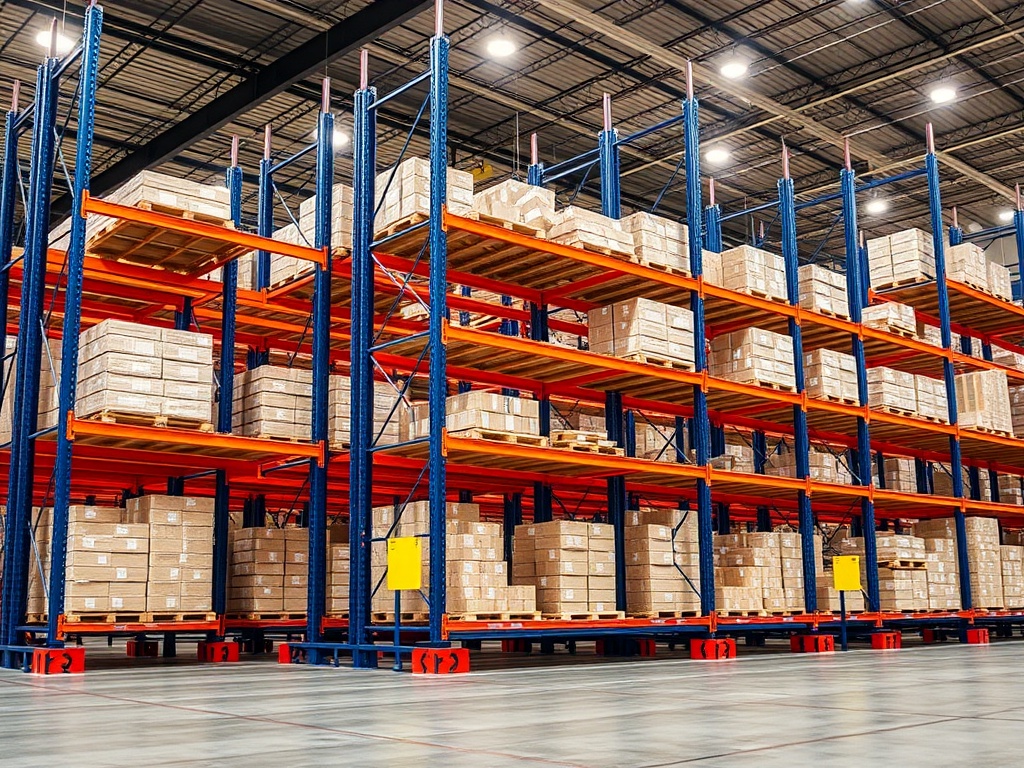
Mobile Racking & Compactus Systems Singapore: High-Density Storage That Doubles Capacity Without Expanding Your Warehouse
Introduction: When Floor Space Is the Bottleneck
Singapore’s industrial land is among the most expensive in Southeast Asia. For warehouse managers in Jurong, Tuas, or any of the city-fringe industrial estates operated by JTC or HDB, the challenge is identical: more SKUs, more pallet positions, and no option to expand sideways because the walls are already there.
If your aisles feel wider than they need to be, you’re not wrong. Static racking demands fixed access aisles — typically 2.5m to 3.5m per aisle depending on equipment type. Multiply that across a 20-aisle warehouse and you’ve dedicated more square footage to movement lanes than to actual storage.
Mobile racking systems — also called compactus racking — eliminate that compromise. By mounting pallet racking on electrically powered rail tracks, a single access aisle can serve an entire battery of racking. When you need to load or pick, the system slides the required bay into alignment, creating an aisle on demand.
The result: storage density increases by up to 100% in the same footprint. For a Singapore warehouse paying $12–$18 per square foot per month in prime zones, that is a compelling economic argument.
How Mobile Racking Systems Work
A mobile racking installation consists of three components:
1. Base Units (Racking)
Standard selective pallet racking — typically single or double deep — mounted on steel chassis fitted with motorized wheel assemblies.
2. Rail System
recessed steel rails embedded flush with the concrete floor slab. Rail load capacity must be specified to match the fully loaded weight of the racking system plus load, which can exceed 20 tonnes per bay in heavy-duty configurations.
3. Control System
Each battery of mobile racking is operated via a wall-mounted keypad, remote control, or in newer systems, an integrated warehouse management system (WMS) interface. Safety interlock sensors prevent movement if a operator, forklift, or load is detected in the aisle.
On command, motors drive the racking along the rails using a rack-and-pinion or chain drive system. Travel speed is typically 5–8 metres per minute loaded, 10–12 metres per minute unloaded.
Types of Mobile Racking Systems
Heavy-Duty Mobile Pallet Racking
Designed for full pallet storage of heavy unit loads — typically up to 1,000kg to 6,500kg per pallet position. Common in food and beverage, chemical (DG-class), and general merchandise warehouses in Singapore. Requires 3-phase power supply and reinforced floor slabs.
Mobile Shelving / Compactus (Archive / Light Duty)
Manual push or mechanical assist compactus shelving for cartons, archive boxes, small parts, and low-weight SKUs. Typically used in pharmaceutical, electronics assembly, and retail distribution back-of-house. Not suitable for forklift access.
Mixed Configuration
Some Singapore installations combine mobile pallet racking at floor level with a fixed mezzanine or elevated platform above — effectively doubling the storage volume in a single structural envelope.
Why Singapore Warehouses Are Adopting Mobile Racking
Land cost pressure. JTC’s latest industrial vacancy rates in the Tuas and Jurong West clusters hover below 4%. When space is scarce and expensive, wasting 35–40% of your floor area on aisles becomes indefensible.
Operations that cannot relocate. Cold storage operators in Singapore face some of the highest energy costs per square metre. A mobile racking conversion can add 40–60% more pallet positions within the same cooled envelope — avoiding the cost of commissioning additional cold room chambers.
Mixed-use floor requirements. Some operations require wide aisles for simultaneous forklift and pedestrian traffic. Mobile racking lets you have the best of both: full-density storage when the aisle is dedicated to one function, and wide clearance when safety demands it.
Regulatory and Compliance Considerations
Floor Loading and Rails
Singapore’s JTC Corporation specifies minimum floor slab requirements for industrial properties: typically 3 kN/m² for light storage, 5 kN/m² for medium-duty, and 10–25 kF/m² for heavy-duty racking zones. Mobile racking installations require a structural engineering assessment of the existing slab, as point loads under rails can exceed 50 kN/m².
Under SS 573:2020 (Singapore Standard for Design, Installation, and Operation of Industrial Steel Racking), mobile racking systems must be certified by a qualified racking engineer, and rail foundations must be designed by a professional engineer (PE) registered in Singapore.
Fire Code and SCDF Requirements
Storage height limits under the SCDF Fire Code apply to the maximum storage height within 1.5m of the ceiling. Mobile racking bay heights, rack-to-rack spacing when retracted, and sprinkler head clearance must all be reviewed against the SCDF Fire Code 2018 (amended), particularly for high-bay installations above 8m.
For warehouses storing DG (dangerous goods) goods under the Fire Safety Act, mobile racking configurations must be declared to SCDF and are subject to specific separation distance requirements between rack batteries.
WSH and BizSAFE
Mobile racking operations involve mechanical equipment with moving masses exceeding several tonnes. The risk of crush injuries during racking travel is a recognized hazard under the MOM WSH Act. Operators must be trained in safe operating procedures, and the installation must be covered by a current Safe Work Procedure (SWP) and risk assessment documented under BizSAFE Level 3 or above.
MOM inspectors have specifically flagged unplanned movement of mobile racking systems during loading operations as a leading near-miss scenario. Interlock systems, floor markings, and strict no-entry protocols during movement are mandatory.
Electrical Safety
Mobile racking motors are typically powered by 3-phase 415V industrial supply. Earthing, motor protection, and emergency stop systems must comply with the Electricity Act (Cap. 89A) and be inspected by a licensed electrical worker (LEW) upon installation.
Design Considerations Before You Specify
Floor flatness. Mobile racking is unforgiving of uneven floors. A tolerance of ±3mm over 3m is typically required. Older HDB industrial premises may require floor grinding or self-levelling screed before rail installation.
Forklift compatibility. Mobile racking changes the aisle geometry. Standard counterbalance forklifts may not be able to navigate safely when aisles are created dynamically. VNA (Very Narrow Aisle) forklifts, reach trucks, or combi trucks are typically specified for mobile racking installations. Budget accordingly — equipment upgrades can add $25,000–$60,000 per unit.
Future expansion. Mobile racking is not infinitely modular. Adding a new bay to an existing battery often requires the entire system to be taken offline and realigned. Specify a system with at least 20% growth capacity if expansion is anticipated within 5 years.
Backup power. In a power outage, mobile racking on rails may not be manually movable without the motor drive. Some installations include a manual override crank — confirm this is included in your specification.
Cost Overview: Is It Worth It?
| Factor | Static Racking | Mobile Racking |
|---|---|---|
| Storage density (pallets/m²) | 0.7–1.2 | 1.4–2.4 |
| Floor space utilization | 60–65% | 85–95% |
| Capital cost premium | Baseline | +40–80% |
| Installation complexity | Standard | High (rails, engineering cert) |
| Ongoing maintenance | Low | Moderate (motors, rails, control system) |
| Best for volume/pallet | Low–Medium | High |
A typical 500-pallet-position mobile racking installation in Singapore runs approximately $180,000–$350,000 including supply, installation, rail works, engineering certification, and WMS integration. Against a 5-year NPV calculation of avoided relocation or additional warehouse lease, the payback can be under 3 years in high-density Singapore locations.
Maintenance: Keeping Mobile Racking Operating Safely
Like any mechanical system, mobile racking requires scheduled maintenance:
- Monthly: visual inspection of rail condition, debris clearing, check safety interlock operation
- Quarterly: motor drive lubrication, roller/bearing inspection, electrical connection check
- Annual: full system inspection by a SS 573-certified racking inspector, rail alignment check, motor torque verification
Operators should maintain a maintenance log as part of BizSAFE documentation. Failure to produce maintenance records during a MOM WSH inspection can result in improvement notices or stop-work orders.
FAQ
Q: Can mobile racking be installed in an existing warehouse without major floor modifications?
A: In most cases, yes — but the floor will need structural assessment. Rails are typically recessed into the slab (50–80mm depth) which requires floor cutting. In some HDB industrial buildings with thin concrete slabs, rail mounting may require surface-fixed rail plates rather than recessed installation.
Q: What happens during a power failure — can we still access the racking?
A: Most modern mobile racking systems include a manual emergency override crank that allows the racking to be moved by hand. However, this can be physically demanding for heavy bay loads. Always confirm manual override is included in the specification and that operators are trained on the procedure.
Q: Is mobile racking suitable for cold storage environments?
A: Yes, mobile racking is well-suited to cold storage. The energy efficiency gain is particularly valuable in cold environments where adding new cold room chambers costs $800–$1,500 per square metre. However, motors and control systems must be specified for the operating temperature range, and condensate management in rail channels is critical.
Q: How does mobile racking interact with a WMS?
A: Some mobile racking manufacturers offer WMS integration that allows the system to pre-position the correct aisle before pickers arrive, reducing travel time. Integration is typically via dry-contact signals or API depending on the WMS platform. Confirm integration capability early in the procurement stage.
Q: What is the typical lead time for a mobile racking installation in Singapore?
A: From order to fully operational installation: 10–16 weeks. This includes manufacturing (often 6–8 weeks from European or Taiwanese manufacturers), shipping, site survey, rail installation, and commissioning. Plan accordingly for peak season.
— For context on static racking comparisons
— For raised storage above mobile racking
— For narrow aisle forklift equipment to pair with mobile racking
If your warehouse is operating at above 85% pallet capacity utilization and you’re paying premium rent for space you’re effectively wasting on aisles, a mobile racking feasibility study is worth 30 minutes of your time. Contact us at enquiry@yktoh.com or call +65 6542 3232 during office hours for a no-obligation consultation.
Related Articles:
Drive-In Racking | Selective Pallet Racking | Mezzanine Floors


