


Quick answer
Selective Pallet Racking : The Adjustable System That Cuts Your Per-Pallet Storage Cost by Up to 30% is important because selective pallet racking is the workhorse of Singapore's industrial storage landscape. The practical goal is to improve safety, productivity, and buying confidence before selecting equipment or requesting a quotation.
Practical next steps
- Confirm the load, workspace, workflow, and safety requirements.
- Compare the product fit against daily operating conditions, not just catalogue specifications.
- Speak with YK Toh for sizing, compatibility, and quotation guidance.
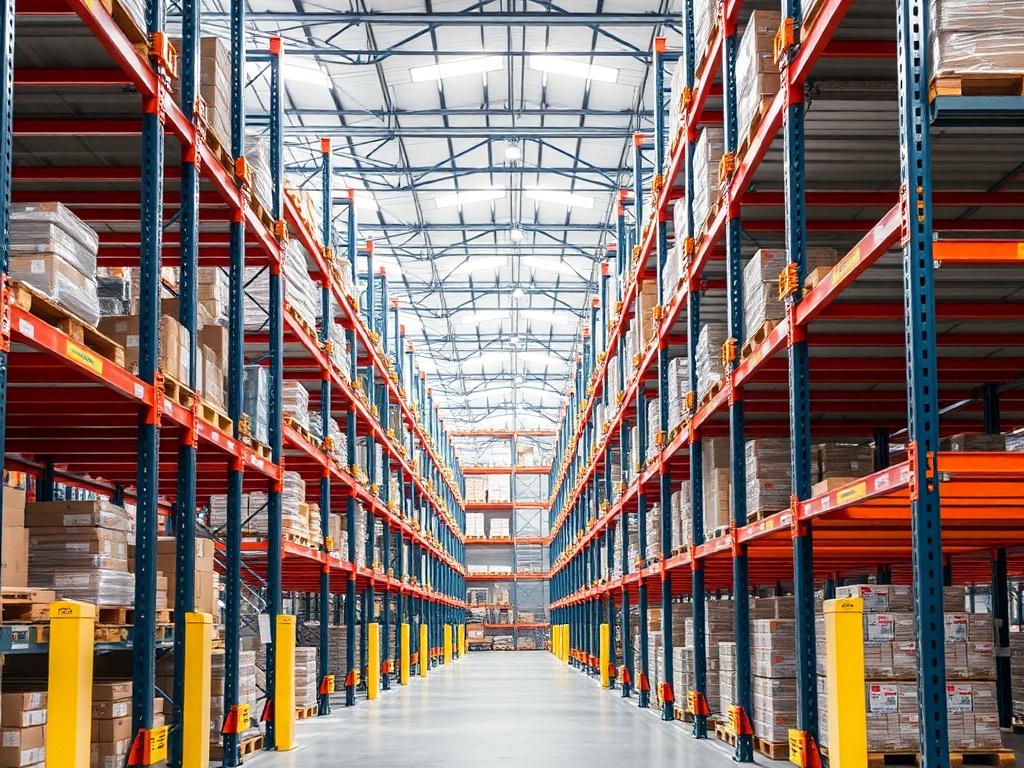
Selective Pallet Racking Singapore: The Adjustable System That Cuts Your Per-Pallet Storage Cost by Up to 30%
What Is Selective Pallet Racking – and Why Singapore Warehouses Depend On It
Selective pallet racking is the workhorse of Singapore’s industrial storage landscape. It’s the system you see in everything from JTC flatted factories in Jurong to HDB ground-floor warehouses in Kallang. The reason is brutally simple: it works.
| Racking Type | Selectivity | Space Efficiency | Fork Truck Required | Best Use Case |
|---|---|---|---|---|
| Selective Pallet Racking | 100% – direct access | Medium (25-40%) | Counterbalance | Low-to-medium SKU variety, high turnover |
| Drive-In Racking | Low – last-in-first-out | High (60-75%) | Reach truck | High volumes of same SKU, bulk storage |
| Push-Back Racking | Medium – 2-4 deep LIFO | High (50-65%) | Counterbalance | Multiple SKUs per lane, medium selectivity needed |
At its core, a selective racking system gives you direct access to every single pallet without having to move others first. Each beam level accepts pallets at a defined height; each pallet sits on a specific pair of beams. You know exactly where your stock is, you can get to it immediately, and you can load or dispatch it without reshuffling half your inventory.
That’s not a small thing in a market where industrial floor space commands SGD $18-$35 per square foot per annum in prime zones, and where a misallocated pallet can cost you hours of labour searching through a drive-in or push-back system.
How Selective Racking Works: The Adjustable Beam Principle
Selective pallet racking is an adjustable pallet racking system – which is precisely where much of its value lives. Upright frames come in standard depths (1,200mm, 1,500mm, 1,800mm for Singapore pallet sizes) and heights up to 12 metres in multi-tier installations. Horizontal beams slot into the uprights at pre-drilled hole positions, typically in 50mm or 75mm increments.
That adjustability means:
- You can reconfigure beam levels in under 15 minutes per pair – no tools beyond an Mabru connector key
- You can accommodate mixed pallet heights (1,200mm, 1,400mm, 1,600mm) on the same run of racks by simply relocating beams
- You can scale the system upward as your inventory grows – most Singapore-approved selective racking frames are extension-ready with the same beam profile
For warehouse managers running BizSAFE-certified operations, this also means your racking can be re-certified under SS 573 after any reconfiguration, maintaining your safety compliance documentation without a full system replacement.
Selective vs Drive-In vs Push-Back: When Selective Is the Right Call
Singapore procurement decision-makers often ask: why not just use drive-in racking for maximum density?
The answer is throughput. Drive-in racking – where pallets sit on rails and you drive the forklift into the rack lane – can achieve storage densities of 85% or more. But it sacrifices selectivity. Last-in, first-out (LIFO) becomes your default, which is a serious problem for FIFO-rotated stock, perishables, or any product with an expiry date.
Selective pallet racking delivers first-in, first-out (FIFO) access with a typical warehouse storage utilisation of 40-55%. That sounds lower than drive-in – and it is. But if your forklift can access any pallet in under 90 seconds, you don’t need the density. What you need is speed, accuracy, and the ability to handle 200-400 pick lines per day without a specialist operator ticket.
In Singapore’s 3PL sector, where third-party logistics operators handle mixed client inventories in shared facilities, selective racking’s universality of access is effectively non-negotiable.
Key Design Considerations for Singapore Installations
Floor Load and Structural Compliance
Singapore industrial floors – whether in JTC developments, private flatted factories, or HDB ground-level warehouses – typically carry rated loads of 20-30 kN/m2. A fully loaded selective pallet racking system, especially at six metres or above, can impose point loads of 50-80 kN per upright. You must obtain a structural engineer (PE) endorsement before installation in any JTC or HDB-managed facility. This is not optional – it is a condition of occupancy compliance.
SS 573 (Singapore Standard for Design, Installation, and Operation of Industrial Steel Racking Systems) governs the structural design requirements, including seismic loading coefficients applicable to Singapore’s geology. Any reputable pallet racking supplier in Singapore will provide a calculation package stamped by a Professional Engineer.
Rack Height and Forklift Compatibility
Singapore’s common forklift fleet – reach trucks, counterbalance forklifts, and narrow-aisle turret trucks – dictates your aisle width. For a standard counterbalance forklift operating in a selective racking aisle, clear aisle width of 3.5-4.0 metres is typically required for safe operation. If you’re running VNA turret trucks, aisle width drops to 1.6-1.8 metres – but your racking must be VNA-rated and your operators MOM-licensed for turret truck operation.
Factor in your maximum lift height carefully. Reach trucks commonly used in Singapore 3PL operations have a maximum lift height of 8-10 metres. If you need storage above 10 metres, you’re looking at very narrow aisle (VNA) configurations or automated systems – not standard selective racking with a counterbalance truck.
Upright Protection and End-of-Aisle Safety
MOM’s Workplace Safety and Health (WSH) Act and BizSAFE Level 3 requirements mean your selective racking installation must include adequate rack protection. Column protectors – steel sleeves or impact-absorbing barriers at each rack end – are standard practice. End-of-aisle guards prevent forklift impact damage to uprights, which is the leading cause of sudden rack collapse in Singapore warehouses according to MOM incident data.
Under SS 573, any upright showing visible deformation exceeding the manufacturer’s allowable limit must be taken out of service immediately and replaced. Do not patch, reinforce, or continue using a damaged upright. The cost of replacement is a fraction of a structural failure.
Maintenance and Inspection Cadence Under Singapore Standards
SS 573 mandates regular documented inspections of industrial racking systems. The minimum requirement:
- Weekly: Visual check by warehouse supervisor – obvious damage, displaced loads, missing safety pins
- Monthly: Detailed inspection by a competent person – beam levels, upright verticality, base plate condition, anchor bolt tension
- Annual: Professional inspection by a SS 573-certified racking inspector, with written report retained for BizSAFE documentation
In practice, Singapore warehouses operating under MOM’s WSH Act should treat this as a minimum – not a ceiling. Incident reports filed with MOM’s Workplace Safety and Health Division (WSHD) show that the majority of racking failures in Singapore between 2018-2024 involved uprights that had previously shown impact damage and been left unrepaired.
Cost Snapshot: Selective Racking in Singapore
A typical single-depth selective pallet racking installation in Singapore – 6-metre rack height, 3-bay x 4-level configuration, approximately 120 pallet positions – costs between SGD $8,000 and SGD $22,000 supply and install, depending on steel gauge, protective finish, and site access complexity.
Key cost drivers:
– Frame height and steel thickness (heavier gauge = higher cost, but also higher load rating)
– Beam load capacity (2-tonne vs 3-tonne per level)
– Anticorrosive treatment (epoxy powder coat for humid environments; standard galvanised for dry stores)
– Site access complexity (high-rise delivery, crane-assisted install)
– PE endorsement and permit fees (typically SGD $800-2,500 for a standard installation)
Frequently Asked Questions
Q: Can selective pallet racking be installed in a HDB industrial building?
A: Yes, but you need HDB’s written approval for any structural installation, a PE-endorsed load calculation, and fire safety clearance from SCDF if your stored goods include hazardous materials. Your pallet racking supplier should handle the submission process as part of the installation package.
Q: What is the maximum weight per pallet position in a standard selective racking system?
A: Standard industrial selective racking beams are rated from 1,500kg to 3,000kg per level per pair of beams in Singapore-approved systems. Heavier-duty configurations (4,500kg+ per level) are available for steel coil or heavy machinery storage but require a custom engineering specification.
Q: How do I ensure my selective racking stays BizSAFE compliant after reconfiguration?
A: Any beam-level change, upright addition, or layout modification triggers a requirement to update your racking register and arrange a post-installation inspection by a competent person. Retain all inspection records in your BizSAFE Level 3 documentation file. A reputable Singapore racking supplier will provide updated load certificates and as-built drawings after each reconfiguration.
Q: Is selective racking suitable for cold storage environments in Singapore?
A: Selective racking is widely used in Singapore’s cold chain facilities (typically 0-5°C for chiller storage, -18°C for blast freeze). Special considerations include stainless steel or hot-dip galvanised components to resist condensation corrosion, and ceiling-suspended installations for multi-tier cold store configurations. Enterprise Singapore’s cold chain guidelines and SS 573 cold store annexes govern these installations.
Ready to Optimise Your Singapore Warehouse?
Selective pallet racking is not a one-size-fits-all product – it’s a system that must be engineered for your floor, your forklift fleet, your throughput profile, and your compliance obligations. Whether you’re fitting out a 5,000 sq ft 3PL bay in Changi or a 50,000 sq ft distribution centre in Jurong, the right selective racking configuration can reduce your per-pallet handling cost, improve pick accuracy, and keep your BizSAFE documentation current.
Talk to a Singapore-based racking specialist before you buy. Contact us at enquiry@yktoh.com or call +65 6542 3232 during office hours for a no-obligation consultation.
Related Articles:
Drive-In Racking | Mobile Racking | VNA Racking | Pallet Live Storage


