


Quick answer
Pallet Live Storage & Dynamic Racking : A Practical Guide to High-Speed FIFO Operations is important because pallet live storage uses gravity to create high-speed FIFO flow — ideal for high-turnover SKUs. The practical goal is to improve safety, productivity, and buying confidence before selecting equipment or requesting a quotation.
Practical next steps
- Confirm the load, workspace, workflow, and safety requirements.
- Compare the product fit against daily operating conditions, not just catalogue specifications.
- Speak with YK Toh for sizing, compatibility, and quotation guidance.
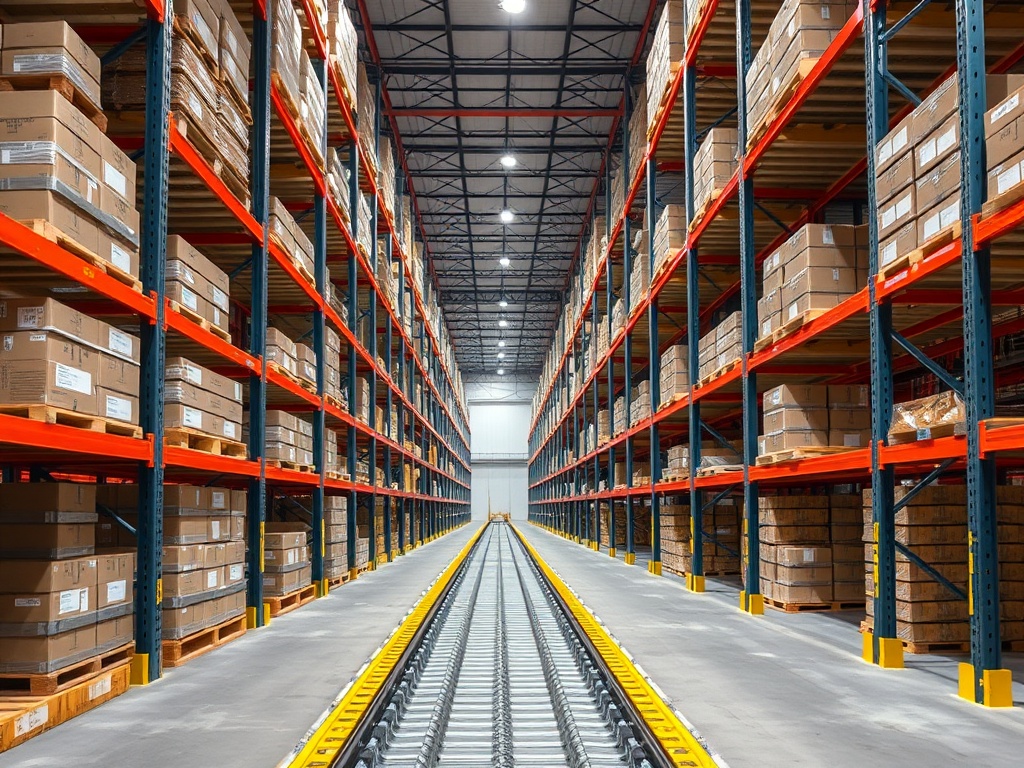
Pallet Live Storage & Dynamic Racking Singapore: A Practical Guide to High-Speed FIFO Operations
Introduction
When your operation runs on first-in, first-out inventory rotation — whether food, pharmaceuticals, or time-sensitive consumer goods — static racking creates a fundamental problem. Stock sits. Picks happen at the front. The back stagnates. Before you know it, you’re writing off expired inventory while your pickers race against the clock in congested aisles.
Pallet live storage and dynamic racking systems are purpose-built to solve this. By replacing static beam levels with inclined gravity rollers or skate wheels, these systems create a continuous flow of pallets toward the pick face — automatically replenishing without manual intervention.
For Singapore warehouse operators working within JTC flatted factories or multi-storey industrial facilities, where every square metre carries a real cost, dynamic racking offers a way to increase storage density without sacrificing FIFO discipline.
This guide covers how gravity-flow pallet systems work, where they fit in a Singapore operation, what compliance considerations apply, and how to evaluate whether they’re the right fit for your warehouse.
What Is Pallet Live Storage?
Pallet live storage — also called dynamic pallet racking — arranges pallets on inclined roller lanes. Each pallet is loaded at the higher end and moves forward by gravity alone (or with subtle roller assistance) toward the pick face at the lower end. A brake roller or lane divider at the front prevents pallets from cascading off the rack.
The defining operational benefit is FIFO enforcement: the oldest pallet is always nearest the aisle. No LIFO creeping into cold storage. No hidden expired stock behind newer arrivals. This makes pallet live storage particularly valuable for:
- Perishable goods (food, beverages, chemicals with shelf-life constraints)
- Pharmaceutical and medical supply storage
- Consumer goods with batch-traceability requirements
- Any operation where inventory rotation discipline directly impacts cost
How Dynamic Racking Differs from Standard Pallet Racking
Static selective pallet racking — the most common system in Singapore warehouses — gives direct access to every pallet position. That flexibility is a strength whenSKU variety is high and stock levels are low. But it uses floor space inefficiently: every pallet requires its own aisle access.
Dynamic racking trades that individual access for density. Multiple pallet positions share a single pick aisle. Pallets queue in the lane. Operators load at one end, pick at the other, and the system does the rest.
The trade-off table:
| Factor | Selective Static Racking | Dynamic Pallet Live Storage |
|---|---|---|
| Floor space utilisation | Moderate | High |
| SKU variety | High | Moderate (lanes are product-specific) |
| FIFO enforcement | Manual/disciplined | Automatic |
| Throughput speed | Moderate | High (no search time) |
| Pallets per lane | 1 per position | 4–12 typically |
| Installation complexity | Standard | Moderate–High |
| Cost per pallet position | Lower | Higher |
Key Design Considerations for Singapore Warehouses
Floor Load and Structural Compliance
Dynamic racking lanes are significantly heavier than static systems. The structure must support not only static pallet weights but also the dynamic forces generated as loaded pallets roll down inclined rollers. Before installation in a JTC or privately leased industrial facility, a structural assessment is required. Singapore’s Fire Code (administered by SCDF) also imposes floor load limits per occupancy classification — confirm these against your facility’s certificate of statutory requirements.
Lane Configuration and Product Suitability
Each lane is dedicated to one SKU or a tightly constrained product family. Before committing to dynamic racking, validate:
- Pallet quality: Only consistent, undamaged pallets with standard dimensions run reliably on gravity rollers. Misshapen or mixed pallet sizes cause jams and stoppages. Singapore’s ISPM 15 heat-treated pallet standard applies for any import/export; ensure your pallets meet dimensional tolerances.
- Throughput volume: Dynamic racking shines when a lane runs multiple deep — 6 to 12 pallets per lane. If your fastest-moving SKU only needs 3-deep, you may be paying for capacity you won’t use.
- Weight: Heavy pallets rolling on gravity rollers generate more impact force at the pick face. Lane design must account for maximum loaded weight to specify appropriate brake rollers.
Inclination Angle
Gravity flow lanes typically slope between 3% and 8%. The exact angle depends on pallet weight, roller type, and floor condition. Too shallow and pallets stall. Too steep and they run too fast — a safety hazard. Professional racking suppliers in Singapore will conduct a site assessment before specifying angle and roller grade.
Safety Requirements Under Singapore Standards
MOM WSH Act and BizSAFE
Dynamic racking installations fall under the MOM Workplace Safety and Health Act (WSH Act). Any new racking installation, modification, or reconfiguration should be reviewed by a qualified racking engineer. Operators pursuing BizSAFE Level 3 or above must demonstrate that racking safety is integrated into their risk management system.
Key safety controls:
- Brake rollers or impact Absorbers at the pick face to prevent pallets from running off
- Lane dividers to stop pallets drifting sideways into adjacent lanes
- Anti-jump devices on roller tracks to prevent pallets lifting off the rollers at speed
- Load signs on every lane indicating maximum pallet weight and dimensions — a requirement under Singapore’s SS 573 racking design standard
- Pedestrian segregation at the load and pick ends; ideally separate traffic aisles for forklift delivery and order picker retrieval
Fire Safety and SCDF Requirements
Dynamic racking lanes affect sprinkler coverage patterns. The arrangement of pallets and rollers can create sheltered spaces that obstruct sprinkler reach. Under Singapore’s Fire Code, rack installations in warehouses above certain size thresholds require sprinkler system design review. Consult a Fire Safety Engineer early in the planning stage.
Typical Applications in Singapore Operations
Food and beverage distribution: FIFO rotation is non-negotiable for products with short shelf lives. Dynamic racking in ambient or cold store environments enforces rotation without relying on picker discipline.
Pharmaceutical third-party logistics (3PL): Batch traceability requirements under Health Sciences Authority (HSA) guidelines make FIFO documentation easier when the physical system enforces it.
Electronics components: High-value, time-sensitive components benefit from reduced dwell time and faster replenishment cycles.
E-commerce fulfilment: Fast-moving SKUs allocated to dynamic lanes dramatically reduce pick time per order line compared to static selective racking.
What to Look for in a Supplier
Singapore-based racking suppliers offering dynamic pallet live storage should provide:
- On-site survey and structural load assessment before quoting
- CAD layout drawings showing aisle widths, lane counts, and integration with existing racking
- Compliance with SS 573 (Singapore Standard for design of industrial steel racking)
- Evidence of BizSAFE certification or equivalent WSH management system
- References from comparable operations in the food, pharma, or logistics sector
- Post-installation inspection and operator training
Avoid suppliers who quote solely on rack hardware cost without addressing floor assessment, sprinkler compatibility, and traffic management layout.
Is Dynamic Racking Right for Your Warehouse?
Dynamic pallet live storage delivers the strongest ROI when:
- You operate with dedicated SKU lanes (not high-mix, low-volume pick profiles)
- Your fastest-moving products justify multi-deep lanes of 6+ pallets
- FIFO rotation failures are costing you money in expired or obsolete stock
- Your facility can accommodate the floor load and sprinkler requirements
If your operation is high-mix, low-volume, or relies heavily on LIFO for non-perishables, the dedicated-lane constraint of dynamic racking will be a limitation rather than an advantage.
A pragmatic starting point: identify your top 10 SKUs by throughput volume and model those lanes first. Even a partial dynamic racking installation — covering your fastest-moving lines while retaining selective racking for slower movers — can materially improve pick efficiency and reduce FIFO failures.
Frequently Asked Questions
What is the difference between pallet live storage and carton flow racking?
Pallet live storage handles full pallet loads on gravity roller lanes. Carton flow racking — sometimes called gravity flow shelving — uses lighter skate wheels or rollers to move individual cartons or totes. Carton flow operates at the pick level within a racking bay; pallet live storage replaces entire beam levels. The choice depends on whether you’re handling full pallets or split-case picks.
Can dynamic racking be used in cold storage environments?
Yes, but the roller system must be specified for low-temperature operation. Standard steel gravity rollers can become sluggish in cold store conditions (below -20°C). Polyamide or stainless-steel roller options are available for cold chain applications. Lane inclination may also need adjustment to compensate for increased pallet-to-roller friction at low temperatures.
How many pallets can typically fit in one dynamic racking lane?
Most commercial gravity flow pallet lanes accommodate between 6 and 12 pallets, depending on pallet length, lane width, and available headroom. A standard Singapore 1200 x 1000mm pallet at 6 deep per lane is common. Your racking supplier will confirm lane depth based on your pallet dimensions and available racking depth.
What happens if a pallet jams in a gravity flow lane?
Professional dynamic racking installations include anti-jam features such as lane dividers, brake rollers, and anti-lift clips. However, jams can still occur with damaged pallets or incorrect loading. Operators should never reach into an active lane while pallets are in motion. A designated stop button or chord at the pick face allows the lane to be safely cleared.
Does dynamic racking require a forklift to load pallets?
Yes — pallets are typically loaded at the higher rear of the lane using a forklift or reach truck. At the pick face, an order picker or pallet jack retrieves individual pallets for dispatch. This means your loading and picking ends need adequate aisle space for truck operations — an important layout constraint in space-constrained Singapore industrial premises.
Conclusion
Pallet live storage and dynamic racking systems offer Singapore warehouse operators a practical path to higher density storage with built-in FIFO enforcement — but only when the operational profile fits. Dedicated SKU lanes, consistent pallet quality, and adequate floor structural capacity are prerequisites, not optional nice-to-haves.
For operations where speed, rotation discipline, and storage density matter simultaneously, gravity-flow dynamic racking is one of the most effective investments available in industrial storage systems today.
— Explore how mezzanine floors complement dynamic racking to add pick-level capacity in space-constrained facilities.
— Understand how selective racking works alongside dynamic systems for high-mix operations.
— Measure the throughput improvement after dynamic racking installation with the right pick-rate and accuracy KPIs.
Looking to evaluate whether pallet live storage is the right fit for your Singapore warehouse? Our team provides site assessments, structural analysis, and racking layouts tailored to JTC and private industrial premises. Contact us at enquiry@yktoh.com or call +65 6542 3232 during office hours for a no-obligation consultation.
Related Articles:
Carton Flow Racking | Selective Pallet Racking | Drive-In Racking


