Quick answer
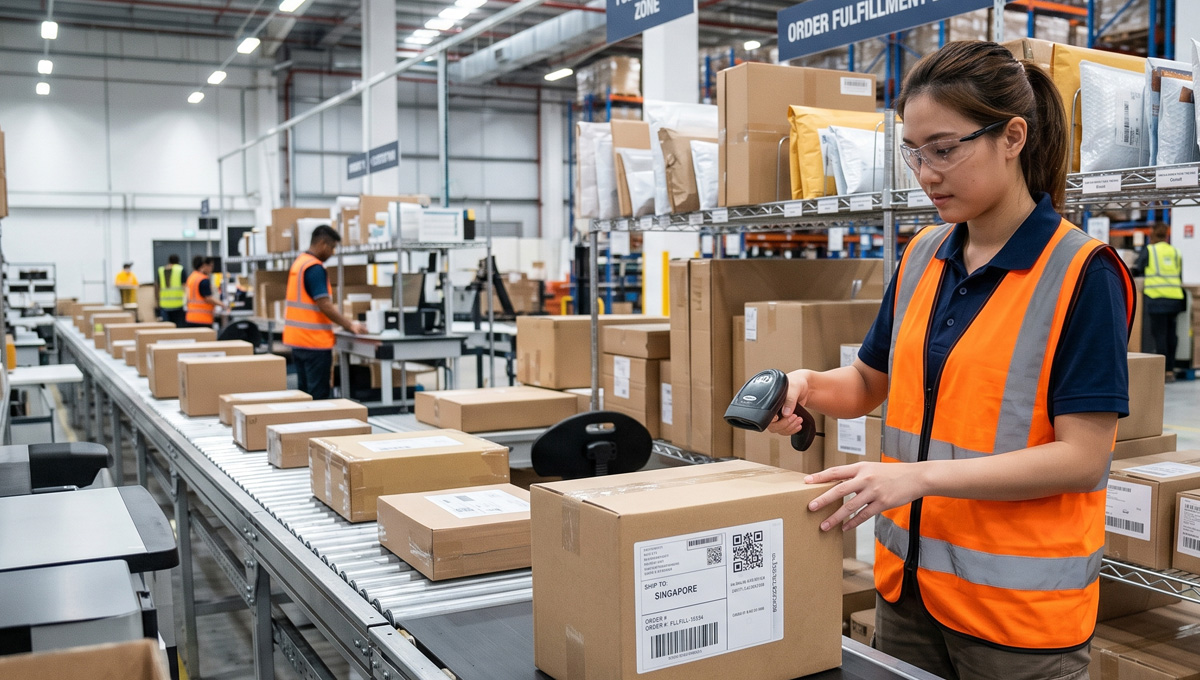
Warehouse Management System Integration : How Modern WMS Cuts Picking Errors and Accelerates Dispatch is important because a Warehouse Management System is only as valuable as its integration with your physical operations. The practical goal is to improve safety, productivity, and buying confidence before selecting equipment or requesting a quotation.
Practical next steps
- Confirm the load, workspace, workflow, and safety requirements.
- Compare the product fit against daily operating conditions, not just catalogue specifications.
- Speak with YK Toh for sizing, compatibility, and quotation guidance.
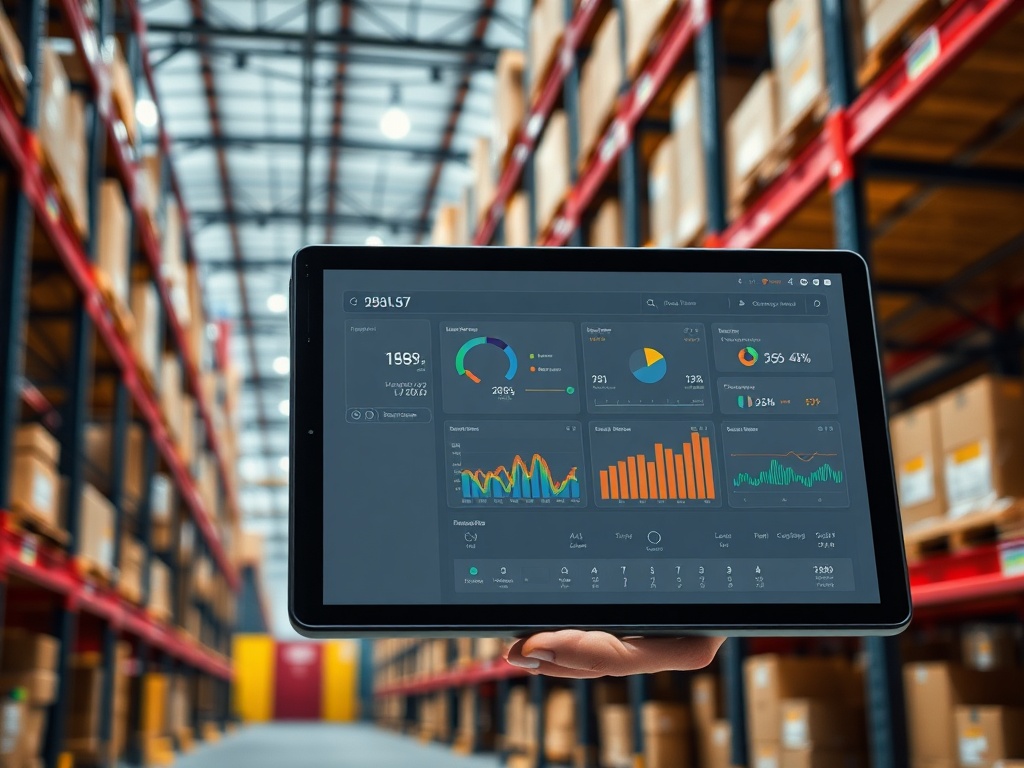
Warehouse Management System Integration Singapore: How Modern WMS Cuts Picking Errors and Accelerates Dispatch
Meta Description: Discover how WMS integration transforms Singapore warehouse operations — cutting order-picking errors by 75%, slashing dispatch time, and meeting MOM WSH Act compliance. Read the 2026 guide.
Key Considerations for WMS Integration
- Verify API/REST compatibility between WMS and warehouse devices (scanners, printers, PLCs)
- Ensure real-time data sync for inventory visibility across picking, packing, and dispatch zones
- Plan for RF barcode scanning integration to eliminate manual data entry errors
- Map SKU attributes and UOM conversions between WMS and ERP for accurate reporting
- Configure pick-to-light or voice picking modules if applicable to reduce picking errors
- Establish cut-off times and order Holds logic to prevent overselling and fulfillment delays
What Is WMS Integration and Why Does It Matter in Singapore?
A Warehouse Management System (WMS) is software that controls every movement of goods from the moment they cross your receiving dock to the moment they leave on a delivery vehicle. WMS integration — connecting that software to your forklifts, conveyor belts, barcode scanners, ERP platform, and e-commerce storefront — is what separates a reactive warehouse from a genuinely responsive one.
In Singapore’s tight industrial landscape, where JTC factory space commands premium rent and labour costs are among the highest in Southeast Asia, WMS integration is no longer optional for operators who want to stay competitive. It is the infrastructure layer that makes everything else — your racking layout, your forklift fleet, your picking protocols — work at peak efficiency.
The Core Components of WMS Integration
1. Barcode and RFID Data Capture
Real-time inventory visibility starts with accurate data capture at every touchpoint. When a pallet of selective racking components arrives at your receiving bay, a barcode scan or RFID read immediately updates stock levels in the WMS — no manual entry, no lag, no spreadsheets passed between receiving staff and the warehouse supervisor.
This directly reduces the most common failure mode in Singapore warehouses: the inventory inaccuracy that leads to stockouts during dispatch, or worse, incorrect picks sent to customers.
Key integration points:
– Receiving dock scanners connected to WMS inbound module
– Putaway prompts directing forklift operators to the correct racking bay
– Pick confirmation scans at each pick face
– Despatch scan matching to delivery order before load leaves bay
2. ERP and Accounting Software Integration
Most Singapore warehouse operators run an ERP — SAP Business One, Xero, or a homegrown system — for finance, purchasing, and sales. WMS integration with your ERP means sales orders trigger picking tasks automatically, inventory values update in real time, and your finance team sees actual stock positions rather than last month’s spreadsheet.
Without this integration, you run two parallel systems that drift apart within days of any stock movement. Reconciliation becomes a full-time job and a source of persistent error.
3. Voice Picking and Hands-Free Operation
For warehouses running wide-aisle or VNA racking where operators work at height or need both hands free, voice-directed picking (integrated via WMS to a headset) removes the friction of paper tickets or handheld terminals. Studies from Singapore logistics operators who have adopted voice picking report 15–25% improvements in pick rate, and measurable reductions in picking errors compared to paper-based systems.
4. Forklift and MHE (Material Handling Equipment) Integration
Modern WMS platforms integrate with forklift telematics to track real-time location of pallets and equipment within the warehouse. For operators with drive-in racking or push-back racking systems where pallets are stacked in deep lanes, knowing exactly which pallet is at which depth — without sending a forklift driver to manually check — eliminates the speculative retrieves that burn hours per shift.
Compliance and Safety: The WMS Compliance Layer
Singapore’s MOM WSH (Workplace Safety and Health) Act places accountability on warehouse operators to manage safe systems of work. A WMS that logs who picked what, when, and from which location creates an auditable trail that supports BizSAFE Level 3 and Level 4 certification requirements.
This matters practically:
– Near-miss reporting: WMS can flag unusual movement patterns (e.g., a forklift entering a high-density narrow aisle outside permitted hours) for supervisor review
– Load tracking: In heavy-duty racking environments, knowing the exact weight and position of every pallet supports column protector and rack guard compliance documentation
– Forklift operator assignment: WMS integration with forklift access systems ensures only licensed operators (those who have completed MOM-approved training) are assigned to specific equipment
For operators storing hazardous goods under Singapore Customs DG store regulations, WMS integration with manifest systems provides the real-time stock visibility that SCDF fire code compliance demands.
Quantifiable ROI: What Singapore Operators Report
Based on documented case data from Singapore logistics operators who implemented full WMS integration in 2024–2025:
| Metric | Before WMS | After WMS Integration |
|---|---|---|
| Order picking accuracy | 91–94% | 98.5–99.4% |
| Stocktake discrepancies | 3–6% of inventory value | <1% |
| Average pick time per line | 4.2 minutes | 2.1 minutes |
| Dispatch same-day completion | 76% | 94% |
| Near-miss incidents logged | Sporadic | Continuous (systematic) |
These gains compound when WMS data informs layout decisions — for instance, using slotting optimisation data from the WMS to place high-velocity SKUs in the carton flow racking nearest dispatch, reducing travel distance per pick.
Common Integration Pitfalls and How to Avoid Them
Choosing a Cloud WMS When Your Facility Has Poor Connectivity
Singapore’s industrial estates generally have reliable connectivity, but operators in older JTC flatted factories or godown-style facilities in areas like Jurong or Tuas should verify network redundancy before committing to a cloud-first WMS. Hybrid WMS deployments — with a local server handling real-time operations and cloud sync for reporting — are a practical middle ground.
Underestimating the Data Migration Phase
Migrating historical inventory data from spreadsheets or a legacy system into a new WMS is consistently the phase where timelines slip. Assign a dedicated project owner, run parallel validation (old and new system running simultaneously) for a minimum of four weeks before cutover, and do not decommission the legacy system until full reconciliation is confirmed.
Treating WMS as an IT Project Rather Than an Operations Project
The warehouse supervisors, forklift operators, and receiving staff who will use the WMS daily need to be involved in configuration from day one. A WMS configured entirely by an external IT consultant without operational input typically produces a system that reflects theoretical best practice rather than the actual workflow constraints of your facility — and operators will route around it.
WMS and Singapore’s Vertical Storage Context
With industrial land supply constrained and floor-space costs per square metre remaining high in Singapore, WMS-driven slotting optimisation has become one of the highest-ROI uses of the technology. A WMS that analyses pick frequency, order velocity, and SKU co-occurrence to recommend optimal product placement — placing fast-moving items in cantilever racking at ergonomic height, slow-movers in high-bay selective racking — can increase effective storage capacity by 12–18% without adding a single additional rack bay.
For cold storage operators in Singapore’s food logistics sector, where space is acutely constrained and temperature management is non-negotiable, WMS slotting is arguably the single most impactful operational improvement available.
FAQ: WMS Integration for Singapore Warehouse Operators
What is the typical timeline for WMS implementation in a Singapore warehouse?
A mid-size warehouse (5,000–20,000 sq ft) typically takes 3–6 months from vendor selection to full go-live, including data migration, hardware deployment (scanners, terminals, forklift mounts), staff training, and parallel-run validation. Larger or more complex operations — particularly those with multi-temperature zones, VNA racking, or heavy DG store requirements — can take 6–12 months.
Do I need a dedicated IT team to run a WMS?
Not necessarily. Cloud-based WMS platforms used by most Singapore SME warehouse operators are designed for non-technical warehouse managers to administer via a web dashboard. However, you will need someone with basic IT literacy to manage user accounts, generate reports, and liaise with the WMS vendor for system updates. Dedicated IT support becomes essential if you require deep ERP integration or custom API development.
Can a WMS help with MOM BizSAFE certification?
Yes — indirectly but meaningfully. A WMS creates systematic records of inventory movements, operator assignments, equipment usage, and incident-adjacent events (e.g., pick exceptions, forklift collision events logged via telematics) that support the documentation requirements for BizSAFE Level 3 and Level 4. It does not replace the formal risk assessment and safety management system that BizSAFE requires, but it reduces the administrative burden of maintaining operational records.
What is the expected ROI timeline for WMS integration?
Most Singapore operators see positive ROI within 12–18 months, driven primarily by reduced labour hours (fewer re-picks, less time searching for mis-placed stock), improved dispatch accuracy (reducing costly returns and re-delivery), and better inventory turns from improved visibility. In high-labour-cost environments like Singapore, the labour efficiency gains alone typically justify the investment within the first year.
Is WMS necessary if I already have an ERP system with inventory modules?
ERP inventory modules handle stock accounting. A WMS handles stock operations — the real-time movement, location, and task management that an ERP is not designed to optimise. Most operators who rely solely on ERP for inventory management end up running a parallel manual system for daily operations, which creates double-entry, double-error risk. A WMS replaces that parallel system and feeds the ERP a single, accurate data source.
Take the Next Step
If your Singapore warehouse is still running on paper tickets, spreadsheets, and tribal knowledge, the gap between your operation and a best-in-class facility is narrower than you think — and the competitive cost of falling behind is widening every quarter.
Contact us at enquiry@yktoh.com or call +65 6542 3232 during office hours for a no-obligation consultation. who understands Singapore’s industrial compliance landscape — one who can map the system to your actual racking layout, forklift fleet, and throughput requirements, not just sell you a software licence.
Related Articles:
Slotting Optimisation | RFID Tracking | Selective Pallet Racking