Quick answer
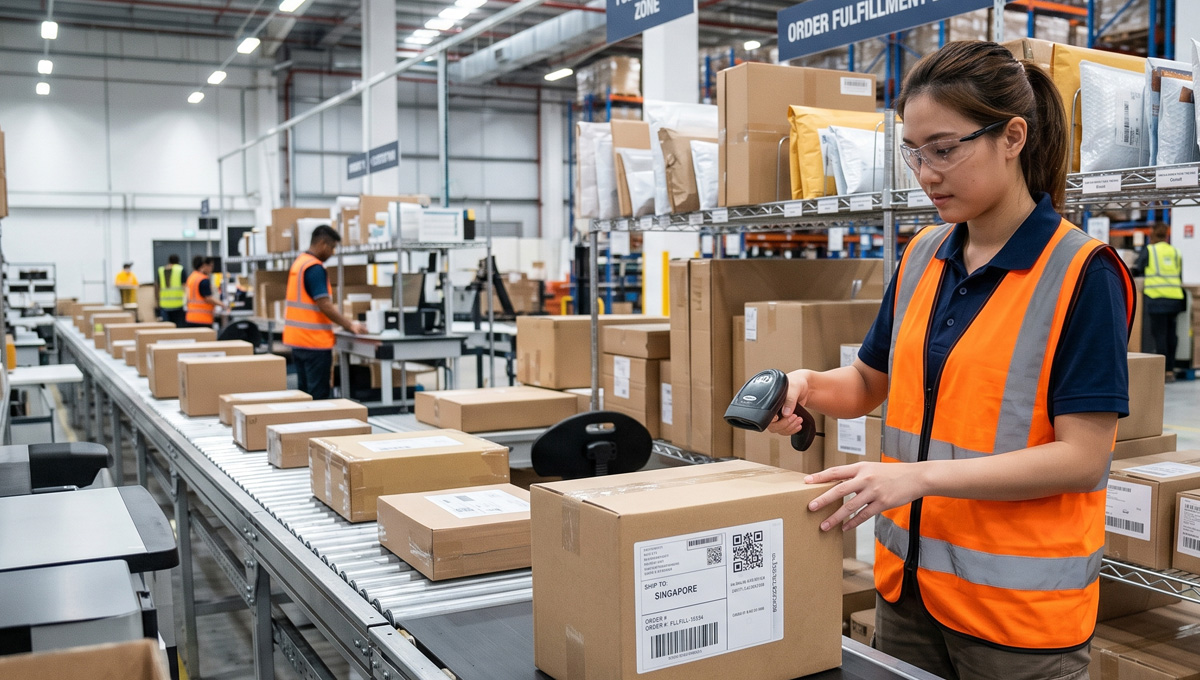
RFID Tracking in Warehouses: A Practical Guide to Real-Time Inventory Visibility is important because rFID can deliver real-time inventory visibility across your entire Singapore warehouse. The practical goal is to improve safety, productivity, and buying confidence before selecting equipment or requesting a quotation.
Practical next steps
- Confirm the load, workspace, workflow, and safety requirements.
- Compare the product fit against daily operating conditions, not just catalogue specifications.
- Speak with YK Toh for sizing, compatibility, and quotation guidance.
RFID Tracking in Singapore Warehouses: A Practical Guide to Real-Time Inventory Visibility
MOM (Ministry of Manpower Singapore), Enterprise Singapore, JTC Corporation, BizSAFE, Singapore Customs, SPRING Singapore, SS 507 (Workplace Safety and Health for Warehousing), WSH (Workplace Safety and Health) Act.
Introduction: Why Manual Stock Tracking Fails Singapore Warehouses
If your warehouse team is still running weekly cycle counts with clipboards and barcode scanners, you already know the pain: mismatched stock figures, phantom inventory, missed dispatch deadlines, and staff hours consumed by reconciliation rather than value-adding work.
For Singapore warehouse operators — operating under tight JTC floor load specifications, MOM manning constraints, and compressed dispatch windows — manual tracking is not just inefficient. It is a competitive liability.
RFID (Radio-Frequency Identification) tracking offers a fundamentally different model. Instead of line-of-sight scanning, RFID reads tags automatically as goods move through the warehouse — no operator intervention required, no scanner range limits, and inventory data that updates in real time rather than at the end of a shift.
This article breaks down how RFID warehouse systems work in the Singapore context, what they actually cost, which operations benefit most, and the practical steps to implementation.
How RFID Tracking Works in a Warehouse Environment
The Core Components
A warehouse RFID system has three foundational layers:
- RFID Tags — attached to pallets, cartons, or individual items. Passive UHF tags are most common in logistics; they carry no battery, are inexpensive (S$0.10–S$0.80 per tag), and last the working life of the item.
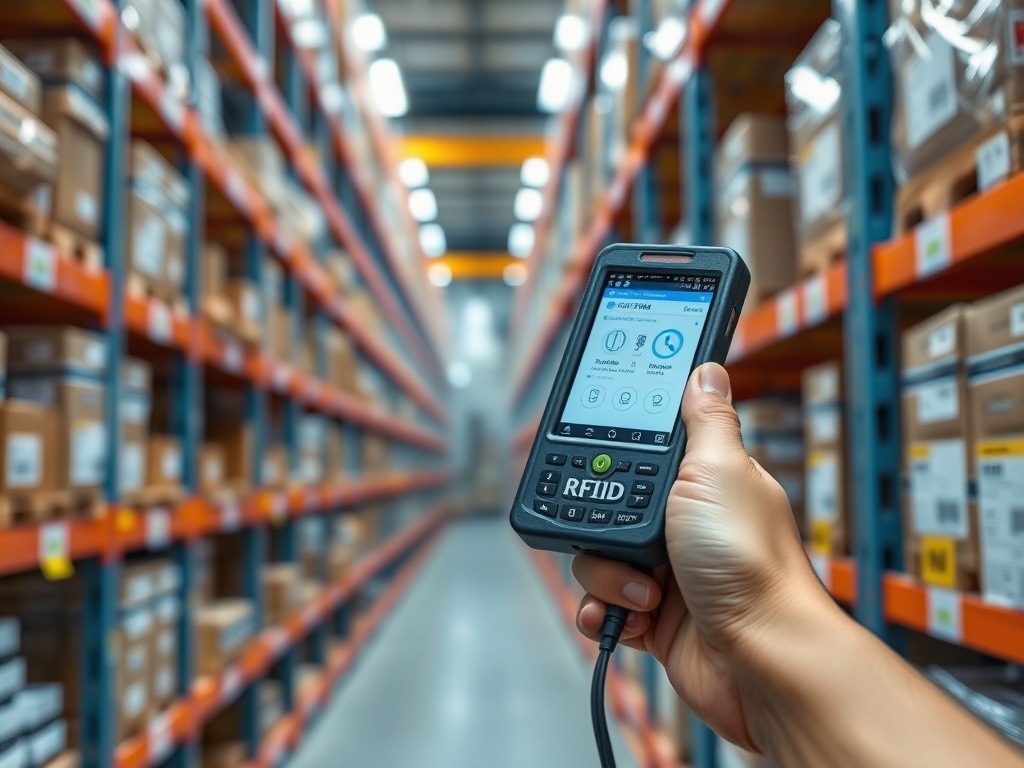
- RFID Readers / Antennas — fixed portals at dock doors, conveyor junctions, and aisle entrances; handheld readers for mobile cycle counts; and vehicle-mounted units for forklift-tracked inventory.
- RFID Middleware / WMS Integration — the software layer that captures tag reads, resolves them against your warehouse management system, and triggers workflow events (receipt confirmation, putaway directives, dispatch verification).
The Read Process
When a tagged pallet passes through a dock door reader field — typically a 2–4 metre UHF detection zone — the reader broadcasts a radio signal that powers the passive tag momentarily. The tag responds with its unique ID and any encoded data (batch number, expiry, supplier code). This happens in milliseconds, without line-of-sight, and simultaneously across dozens of tags in the reader field.
For comparison: a barcode scanner requires a trained operator to physically point and scan each item. An RFID portal reads everything in its zone automatically.
Why Singapore Warehouses Are Adopting RFID Now
The MOM and WSH Compliance Driver
MOM’s Workplace Safety and Health Act places accountability on operators to maintain accurate records of hazardous substances, DG (dangerous goods) movements, and incident-related inventory. RFID provides an auditable, timestamped movement log that satisfies WSH inspection requirements — reducing the manual paperwork burden during BizSAFE audits and MOM compliance reviews.
Labour Cost Constraints
Singapore’s median warehouse labour cost has risen sharply. Operators are incentivised to reduce time spent on manual data entry and reconciliation. RFID eliminates the repetitive scan step in receiving and dispatch — staff can focus on physical handling rather than standing at a workstation logging numbers.
E-commerce Fulfilment Accuracy Expectations
Same-day and next-day dispatch expectations in Singapore’s B2C market tolerate near-zero picking error rates. RFID-based order verification catches mis-picks at the pack-out stage rather than at the customer’s door — a significant cost and reputational saving.
RFID vs Barcode Scanning: Which Is Right for Your Warehouse?
| Factor | Barcode Scanning | RFID Tracking |
|---|---|---|
| Read method | Line-of-sight, one item at a time | No line-of-sight, bulk reads (dozens/second) |
| Labour per scan | Operator must physically scan | Automatic — no operator needed |
| Cost per tag | Negligible (printed label) | S$0.10–S$0.80 (specialised tag) |
| Data capacity | 1D/2D — product ID only | Read-write: batch, expiry, location, count |
| Tag durability | Degrades with moisture, abrasion | Ruggedised tags available for harsh environments |
| Cold storage suitability | Limited | UHF tags perform in deep-cold environments |
| Implementation complexity | Low | Higher — requires middleware and WMS integration |
For most Singapore mid-scale warehouses, a hybrid approach makes the most sense: RFID at high-traffic choke points (dock doors, cold storage entry, dispatch sortation) combined with barcode for item-level pick verification. This reduces upfront capital while capturing the biggest accuracy and speed gains.
Practical Applications of RFID in Singapore Warehouses
1. Receiving and Putaway Verification
When a delivery truck docks, the fixed RFID portal automatically reads all inbound tags and matches them against the expected purchase order — flagging discrepancies before the goods are putaway. This prevents incorrect stock from entering the system undetected.
2. Cold Storage Track-and-Trace
Cold storage operators in Singapore (particularly those operating blast freezers and cold rooms for F&B and pharmaceutical clients) face strict temperature logger requirements. RFID works reliably at -30°C and below. Combined with temperature data loggers, RFID provides a full chain-of-custody record for regulatory compliance and customer audits.
3. Dispatch Verification
At the dispatch bay, RFID readers confirm that loaded pallets match the outbound order — reducing incorrect deliveries, which are costly to rectify in Singapore’s dense urban delivery environment.
4. Cycle Counting and Inventory Accuracy
Instead of shutting down a zone for a full stocktake, warehouse managers can run targeted RFID cycle counts during live operations. Handheld readers capture full bin-level data in a fraction of the time of a barcode sweep.
5. Pallet and Container Tracking
In JTC multi-tenanted warehouses where multiple occupiers share loading bays and yard space, RFID prevents pallet mix-ups between tenants — a persistent operational pain point.
Implementation Considerations for Singapore Operators
Integration with Your WMS
RFID is not a standalone system — its value is realised only when tag-read events feed your WMS in real time. Most enterprise-class WMS platforms (including SAP EWM, Manhattan Associates, and Reflex Systems commonly used in Singapore) support RFID event ingestion via middleware adapters. Validate integration capability before purchasing hardware.
Tag Selection for the Singapore Climate
Singapore’s high-humidity, air-conditioned warehouse environments are relatively tag-friendly. However, for unconditioned yard storage or cold-then-ambient transitions, specify tags rated to IP67 or higher to prevent moisture ingress.
Pilot Before Full Rollout
Enterprise Singapore’s manufacturing and logistics productivity grants can offset pilot costs for qualifying SMEs. A focused pilot in one zone — for example, your highest-volume dispatch bay — typically costs S$15,000–S$40,000 and delivers enough accuracy data to build a business case for full deployment.
Data Privacy Considerations
RFID tags on outbound shipments should be deactivated or removed at dispatch to avoid unintended tracking beyond your facility boundary — a basic data governance practice aligned with Singapore’s PDPA requirements.
How Much Does RFID Warehouse Tracking Cost in Singapore?
| Cost Element | Approximate Range (SGD) |
|---|---|
| Passive UHF tags | S$0.10–S$0.80 per tag |
| Fixed RFID reader (portal) | S$2,500–S$8,000 per unit |
| Handheld RFID reader | S$1,500–S$4,500 per unit |
| Middleware software (annual) | S$5,000–S$20,000 per year |
| WMS integration (one-time) | S$8,000–S$30,000 |
| Full installation and commissioning | S$10,000–S$25,000 |
A typical mid-scale Singapore warehouse (5,000–10,000 pallet positions) can expect a Phase 1 investment of S$60,000–S$120,000 for a zone-focused RFID deployment, with ongoing tag consumption costs of S$3,000–S$8,000 per month depending on throughput.
Frequently Asked Questions
What is the main advantage of RFID over barcode scanning in a warehouse?
RFID can read multiple tags simultaneously without line-of-sight, meaning a dock door reader captures an entire pallet’s worth of tagged items in a single pass. Barcode scanning requires an operator to scan each item individually. This makes RFID significantly faster for high-throughput operations and reduces human error from missed scans.
Can RFID tags be used in Singapore cold storage environments?
Yes. Passive UHF RFID tags operate reliably at temperatures down to -40°C, making them well-suited to cold storage and blast freezer applications common in Singapore’s F&B and pharmaceutical warehouse sectors. Specialised cold-storage tag housings prevent condensation from affecting read performance.
How long does it take to implement an RFID tracking system in a Singapore warehouse?
A focused pilot implementation typically takes 6–10 weeks from site survey to go-live, covering hardware installation, middleware configuration, WMS integration testing, and staff training. A full warehouse rollout across multiple zones can take 4–8 months depending on site complexity and WMS integration scope.
Is RFID tracking suitable for small Singapore warehouses with under 1,000 pallet positions?
RFID is most cost-effective at higher throughput volumes. For small warehouses, the per-tag cost and fixed reader infrastructure may not deliver a sufficient ROI. A well-implemented barcode system with mobile scanning may be more appropriate. However, if the operation handles high-value goods, regulated products, or strict FIFO requirements, RFID pilot in a specific zone can still be justified.
Does Enterprise Singapore offer grants for RFID implementation?
Qualifying SMEs may access productivity and technology grants administered through Enterprise Singapore. Operators should engage a pre-approved consultant to validate grant eligibility before committing to hardware procurement. Grant support typically covers up to 50% of qualifying costs for approved projects under the Enterprise Development Grant (EDG).
Conclusion: RFID Is a Warehouse Infrastructure Investment, Not a Software Purchase
RFID tracking in Singapore warehouses delivers its full value only when treated as infrastructure — not as a bolt-on software module. The real gains are operational: eliminating manual scan steps, achieving real-time inventory accuracy, satisfying MOM WSH documentation requirements, and building a data foundation for further automation.
For operators already running a WMS, the incremental cost of RFID integration is justified by the accuracy and speed improvements alone. Start with your highest-traffic choke point, measure the error reduction, and scale from there.
CTA
Ready to explore whether RFID tracking is the right investment for your Singapore warehouse operation? Contact us at enquiry@yktoh.com or call +65 6542 3232 during office hours for a no-obligation consultation. to scope a no-obligation site assessment.
Article ID: WHSG-RFID-2026-04-01-SLOT5 | Primary Keyword: RFID tracking warehouse Singapore | Target audience: Singapore warehouse managers, operations directors, logistics procurement decision-makers | Word count: ~1,180
Related Articles:
WMS Integration | Slotting Optimisation | Electric Pallet Trucks