Quick answer
How E-Commerce is Changing Warehouse Trends is important because online purchasing has been one of the most popular growing consumer behaviors in the last decade and it was reported in 2014 that companies are expecting to see 40% growth in average online sales in the next 5 years. The practical goal is to improve safety, productivity, and buying confidence before selecting equipment or requesting a quotation.
Practical next steps
- Confirm the load, workspace, workflow, and safety requirements.
- Compare the product fit against daily operating conditions, not just catalogue specifications.
- Speak with YK Toh for sizing, compatibility, and quotation guidance.
How Ecommerce Is Changing Warehouse Operations
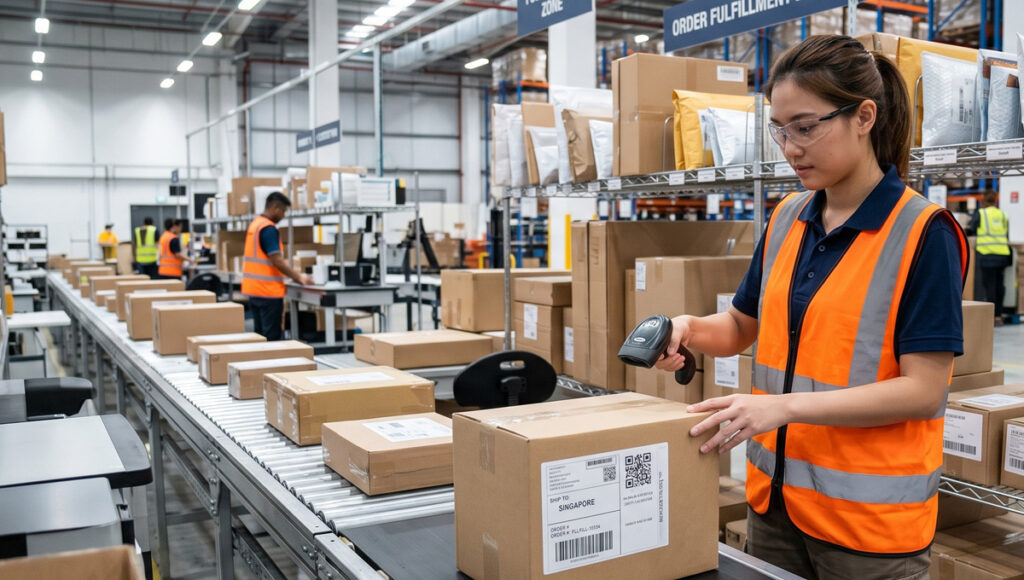
Online shopping has grown into one of the most dominant consumer behaviors of the past decade. What started as a convenient alternative to physical retail has become the preferred way people buy — and that shift has had a massive ripple effect on the warehousing and distribution industry. As online sales continue to climb, warehouses are being pushed to rethink nearly every aspect of how they operate, from their physical infrastructure to the way they manage orders, relocate facilities, and handle packaging.
Warehouse Expansion
One of the most immediate and visible responses to ecommerce growth is the need for more space. Larger order volumes mean larger inventory, and many distribution centers are finding that their current footprint simply isn’t enough to keep up. Some facilities are expanding their existing warehouses to accommodate this growth, while others — particularly those that can’t expand their physical location — are turning to bulk storage and cross-docking solutions instead.
Cross-docking, in particular, has become an attractive option for warehouses that need to move inventory quickly without holding it in long-term storage. However, approaches like these only work well when supported by strong organizational systems. Intelligent labeling becomes critical here — not just to keep a larger inventory sorted and accessible, but to ensure that workers on the floor and in transit know exactly which items need immediate movement and which ones can wait. Without that clarity, the efficiency gains from expansion can quickly be lost.
Fulfillment Adaptability
Ecommerce hasn’t just changed how much warehouses need to store — it’s changed what warehouses need to prioritize. For a long time, the main metric of warehouse success was throughput: how much inventory could be moved from one point to another in the shortest amount of time. That’s still important, but it’s no longer the whole picture.
Today, fulfillment adaptability has taken center stage. This refers to a warehouse’s ability to handle a wide range of order types and profiles efficiently — and to do so with enough flexibility to respond when things change. Ecommerce has given consumers the power to adjust orders, change delivery preferences, and set new expectations at a moment’s notice. A warehouse that can’t respond quickly to those changes risks frustrating customers and losing their business. Adaptability isn’t just a nice-to-have anymore — it’s a competitive requirement.
Warehouse Relocation
For some distribution companies, the answer to keeping up with demand isn’t expansion — it’s starting fresh in a better location. One of the defining features of modern ecommerce is speed. Consumers expect delivery within days, sometimes within hours, and that expectation has made proximity to major cities and urban centers a strategic priority for warehouses.
Older facilities, regardless of their size, often weren’t designed with today’s inventory goals in mind. They may lack the ceiling height needed for vertical stacking, the layout efficiency required for fast order picking, or the geographic positioning needed to support rapid last-mile delivery. Newer facilities, built with current demands in mind, offer clear advantages. Relocation also presents an opportunity to overhaul labeling and SKU systems from the ground up — reorganizing inventory around what moves fastest and what needs to ship soonest, rather than inheriting outdated structures from years past.
Packaging Expectations
Perhaps one of the less obvious but increasingly important shifts driven by ecommerce is the growing focus on the customer’s unboxing experience. It used to be enough to deliver a product intact. Today, how that product arrives — the quality of its packaging, its presentation, and the condition it’s in when it reaches the customer — is part of the overall brand experience.
This has put new pressure on warehouses to store inventory more carefully, maintain the integrity of packaging throughout the storage period, and be equipped to handle items with specific handling or storage requirements. Labels play a key role in this — communicating fragility, orientation, temperature sensitivity, and other handling instructions to workers at every stage. This is especially relevant for businesses running monthly subscription models, where packaging consistency and condition are directly tied to customer satisfaction and retention.
Staying Ahead of the Curve
Ecommerce has fundamentally changed what it means to run a warehouse efficiently. The days of simply receiving, storing, and shipping are long gone. Today’s distribution centers need to be larger and smarter, more flexible and better located, with tighter systems for labeling, inventory management, and quality control at every touchpoint.
As online shopping continues to grow, the warehouses that will thrive are the ones willing to continuously evolve — investing not just in space and equipment, but in the processes and organizational discipline needed to meet consumers exactly where they are.