


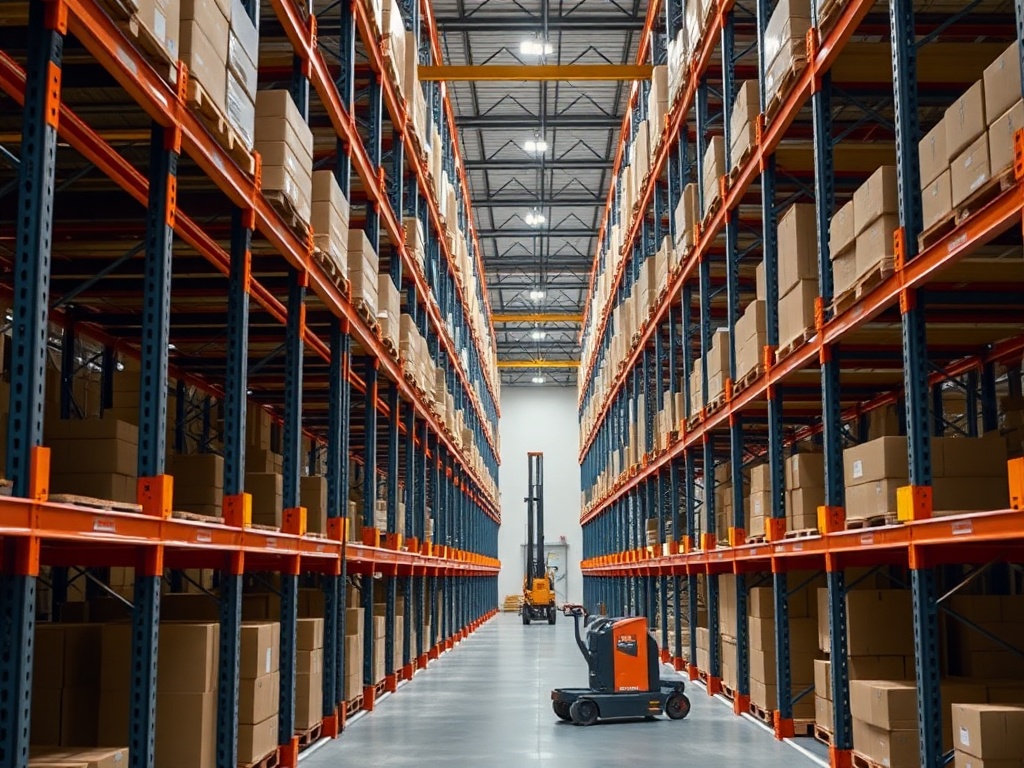
Very Narrow Aisle (VNA) Racking Singapore: A Practical Guide to Maximising Warehouse Height and Floor Space
Why Singapore Warehouses Are Running Out of Aisle Space
Singapore’s industrial land is among the most expensive in the world. For warehouse operators in Jurong, Tampines, Senoko, and Changi, every square metre of floor space represents real money — and wide picking aisles that made sense in the 1990s are now a luxury you can’t afford.
Very Narrow Aisle (VNA) racking is the system that changes the geometry of your warehouse. By compressing aisle widths from the standard 2.5–3.5 metres down to as little as 1.2–1.5 metres, VNA racking unlocks floor space that conventional racking simply surrenders to travel paths.
The trade-off? You need purpose-built VNA forklifts — turret trucks or reach trucks with lateral articulation — and the racking itself must be engineered to tighter tolerances because the margin for error during handling is zero.
This guide covers the VNA racking system, its components, Singapore regulatory requirements, and what operations managers need to know before committing to a VNA conversion.
What Is VNA Racking?
VNA racking is a high-density storage configuration where pallet racking is arranged in very narrow aisles served by specialised articulated forklifts. Unlike conventional racking where the aisle must accommodate the full turning circle of a standard counterbalance forklift, VNA aisles only need to fit the truck’s body plus a small lateral reach envelope.
Key VNA geometry:
– Aisle width: 1.2–1.8 metres (vs 2.5–3.5m for conventional)
– Rack height: up to 15–18 metres (leveraging full warehouse height)
– Storage density gain: 30–50% over conventional racking layouts
Types of VNA Racking Configurations
1. Standard VNA (Aisle-Confined)
The truck enters the aisle and remains confined within it for the full rack length. Mast rotates or sideshifts to service both sides of the aisle. This is the most common VNA configuration in Singapore warehouses.
2. VNA with Rail-Guided Turret Trucks
Truck wheels run on embedded rails within the aisle. Rails constrain lateral movement, allowing tighter tolerances and faster travel speeds without risk of rack impact.
3. Wire-Guided VNA
An induction wire is embedded in the floor. Turret trucks follow the wire automatically, reducing operator fatigue and improving accuracy on long runs.
Core Components of a VNA Racking System
Getting VNA right means getting each component right:
- Racking structure: Fixed-increment beam levels, minimum 6m height, engineered for vertical and horizontal loads under closer aisle constraints. Must comply with SS 573 (Singapore Standard for Design, Installation, and Operation of Static Racking Systems).
- Floor rails or wire guides: If fitted, must be flush with floor level to avoid forklift wheel contact issues and-trip hazards.
- Turret trucks (man-up and man-down): The defining VNA vehicle. Mast rotates up to 210°; forks extend laterally. Man-up models have a platform for the operator to travel with the load at height.
- Aisle impact protection: Given the confined space, rack ends and column protectors are non-negotiable. Column protectors and end-of-aisle protectors are mandatory at every aisle entry.
- Lighting: VNA aisles require dedicated aisle lighting at each level to support operator visibility at height. Under-lit VNA aisles are a documented hazard.
Regulatory and Compliance Requirements in Singapore
VNA installations in Singapore trigger obligations across multiple regulatory frameworks:
MOM WSH Act — Workplace Safety and Health
VNA racking introduces elevated work risks. Working at Height (WAH) protocols apply when operators ride man-up trucks above 2 metres. All VNA operators must be trained on the specific truck model and confined aisle dynamics. Refresher training must comply with MOM-approved forklift training requirements.
Under the WSH Act, employers must conduct a Risk Assessment (RA) for all VNA operations before commencement. Near-miss reporting for rack contact incidents is mandatory.
SS 573 — Racking Design Standard
SS 573:2012 (or current iteration) sets out requirements for racking design, structural adequacy, installation, and inspection. VNA racking installations must be:
– Designed by a qualified racking engineer with load calculations
– Installed by certified contractors
– Subject to initial inspection by a competent person before first use
– Subject to annual re-inspection
Operators should request the Racking Configuration Certificate from their supplier at installation.
BizSAFE Requirements
Warehouse operators handling VNA racking should hold BizSAFE Level 3 minimum. For operators with VNA configurations above 9m height, a Workplace Safety and Health (WSH) auditor may need to verify the RA.
SCDF Fire Code
VNA aisles reduce the open floor space within a warehouse, which affects fire evacuation route design. Under the SCDF Fire Code, all VNA warehouses must maintain:
– Minimum unobstructed evacuation route width of 1.5m
– Aisle configurations must not create dead-end picking corridors exceeding 10m
– Emergency lighting in all VNA aisles
NEA and SPRING Singapore
Where VNA systems are integrated with automated inventory tracking, operators should ensure system compliance under SPRING Singapore guidelines for warehouse management systems. While no specific NEA licence is required for VNA racking itself, any cold storage VNA installation (common in Changi Logistics hub) must also satisfy NEA cold chain standards.
VNA Racking vs Conventional Racking — A Practical Comparison
| Factor | Conventional Racking | VNA Racking |
|---|---|---|
| Aisle width | 2.5–3.5m | 1.2–1.8m |
| Rack height | Up to 9–12m | Up to 15–18m |
| Floor space utilisation | 40–50% | 60–75% |
| Capital cost | Lower | Higher (specialist equipment) |
| Forklift type | Standard counterbalance | Turret truck / VNA reach truck |
| Operator training | Standard forklift ticket | VNA-specific additional training |
| Maintenance cost | Lower | Higher (specialist technicians) |
| Best for | Low-to-medium SKUs, high variety | High-volume, limited SKU range |
Common VNA Racking Failures and How to Prevent Them
Rack Contact Damage
The most common VNA incident. Turret truck operators, particularly new ones, clip rack columns at aisle entries. Prevention:
– Install heavy-duty column protectors (minimum 150mm height, high-visibility yellow)
– Use rack guards at every rack end
– Implement a pre-shift aisle inspection checklist
– Fit slow-down markers at aisle entries
Overloading
VNA racks are designed for specific load configurations. Operators sometimes exceed stated load limits when mixing pallet sizes. Prevention:
– Prominently display rack load signs at each bay
– Conduct quarterly cycle counts to verify load compliance
– Never remove beam pins or modify beam levels without engineering sign-off
Turret Truck Mechanical Failure
Turret truck hydraulic systems and mast rotation mechanisms require more frequent servicing than standard forklifts. Prevention:
– Follow manufacturer servicing schedules (typically every 500–1,000 hours)
– Keep a spare truck for critical operations — VNA downtime cascades quickly
– Maintain a turret truck logbook at each unit
Inadequate Operator Training
An operator certified on a counterbalance forklift is not qualified to operate a turret truck. Sending an uncertified operator into a VNA aisle is a MOM violation and a serious safety risk. Prevention:
– Ensure all VNA operators hold MOM-approved VNA/turret truck certification
– Conduct monthly spot-checks on operator technique
– Implement a competency assessment programme
Is VNA Racking Right for Your Singapore Warehouse?
VNA racking makes economic sense when:
- Your warehouse has 12m or greater clear height that is not being utilised
- You have high pallet counts per SKU (deep replenishment cycles, not high variety)
- You can commit to dedicated turret truck investment (new units from Toyota, Hyster, or Combilift range from $65,000–$120,000 per truck)
- Your operations team can absorb additional training requirements
- Your floor load rating (check with JTC or HDB for your specific estate) supports the increased point loads from higher racks
VNA racking is not the right solution when:
– Your operation requires frequent case-pick or each-pick at multiple levels
– Your warehouse has low ceilings (under 10m clear)
– You have high labour turnover and limited training infrastructure
– Your floor is uneven or not designed for rail or wire guide installation
Sizing Up the Business Case in Singapore
A Singapore warehouse operator converting from conventional to VNA racking can typically expect:
- 30–50% increase in pallet positions within the same footprint
- Payback period of 2–4 years on turret truck and racking investment (against the alternative of relocating to a larger warehouse)
- Significant reduction in picking travel time per pallet retrieved
For a 5,000-pallet-position warehouse operating in Jurong at typical JTC rental rates, the difference between conventional and VNA layout could represent $180,000–$350,000 per year in avoided relocation or expansion cost.
Getting Started with VNA Racking in Your Facility
- Commission a racking survey — have a qualified racking engineer assess your current layout and identify the VNA conversion zone
- Conduct a Risk Assessment under MOM WSH Act requirements — document the RA before any equipment procurement
- Verify floor load capacity with your landlord or JTC/HDB (for industrial estate facilities)
- Select a racking supplier with SS 573 compliance certification and Singapore installation track record
- Procure or lease turret trucks — consider used units from reputable dealers to reduce capital outlay
- Train operators — enrol them in a MOM-approved VNA/turret truck training programme
- Schedule initial SS 573 inspection by a competent person before loading the racks
FAQ
What is the minimum aisle width for VNA racking in Singapore?
The minimum aisle width for VNA racking in Singapore is typically 1.2–1.5 metres, depending on the forklift model, load dimensions, and rack configuration. Rail-guided turret truck systems can achieve the tightest tolerances. All designs must comply with SS 573 structural requirements.
Do I need special licensing to operate a turret truck in a Singapore warehouse?
Yes. Turret truck operators require a MOM-approved forklift licence with VNA/turret truck endorsement. Standard counterbalance forklift tickets do not cover VNA operation. Training is available through BizSAFE-certified training centres in Singapore.
How often must VNA racking be inspected in Singapore?
Under SS 573, VNA racking must be inspected by a competent person at installation, annually, and after any significant impact event. Monthly operator-level checks (beam levels, column condition, load signs) should be conducted by your warehouse team and documented in your safety records.
Can VNA racking be used in HDB or JTC industrial estates?
Yes, but floor load specifications must be verified with HDB or JTC before installation. VNA configurations with racks above 12m generate significant point loads. Written confirmation from the estate manager or a structural engineer is required as part of the BizSAFE Level 3 RA documentation.
What fire safety requirements apply to VNA warehouses in Singapore?
Under the SCDF Fire Code, VNA warehouses must maintain clear evacuation routes (minimum 1.5m width), avoid dead-end corridors exceeding 10m, and install emergency lighting in all aisles. Rack heights above 12m may trigger additional hose reel and sprinkler coverage requirements. Consult your SCDF fire safety engineer during the planning stage.
Conclusion
VNA racking is one of the most powerful space-efficiency tools available to Singapore warehouse operators — but only when it is properly designed, correctly specified, and operated by trained personnel within a rigorous safety framework. The investment is significant, but so is the return when your existing footprint suddenly holds 40–50% more pallets without a single square metre of additional space.
If your warehouse has the ceiling height and your operation has the volume discipline, VNA racking is worth a serious engineering assessment.
Contact us at enquiry@yktoh.com or call +65 6542 3232 during office hours for a no-obligation consultation. and space utilisation assessment by reaching out via WhatsApp. We can usually have an engineer on-site within 5 working days.
Related Articles:
Selective Pallet Racking | Drive-In Racking | Mobile Racking


