


Quick answer
Mezzanine Floors & Multi-Tier Racking : Doubling Your Warehouse Capacity Without Relocation is important because when floor space is full, the answer is often to build up. The practical goal is to improve safety, productivity, and buying confidence before selecting equipment or requesting a quotation.
Practical next steps
- Confirm the load, workspace, workflow, and safety requirements.
- Compare the product fit against daily operating conditions, not just catalogue specifications.
- Speak with YK Toh for sizing, compatibility, and quotation guidance.
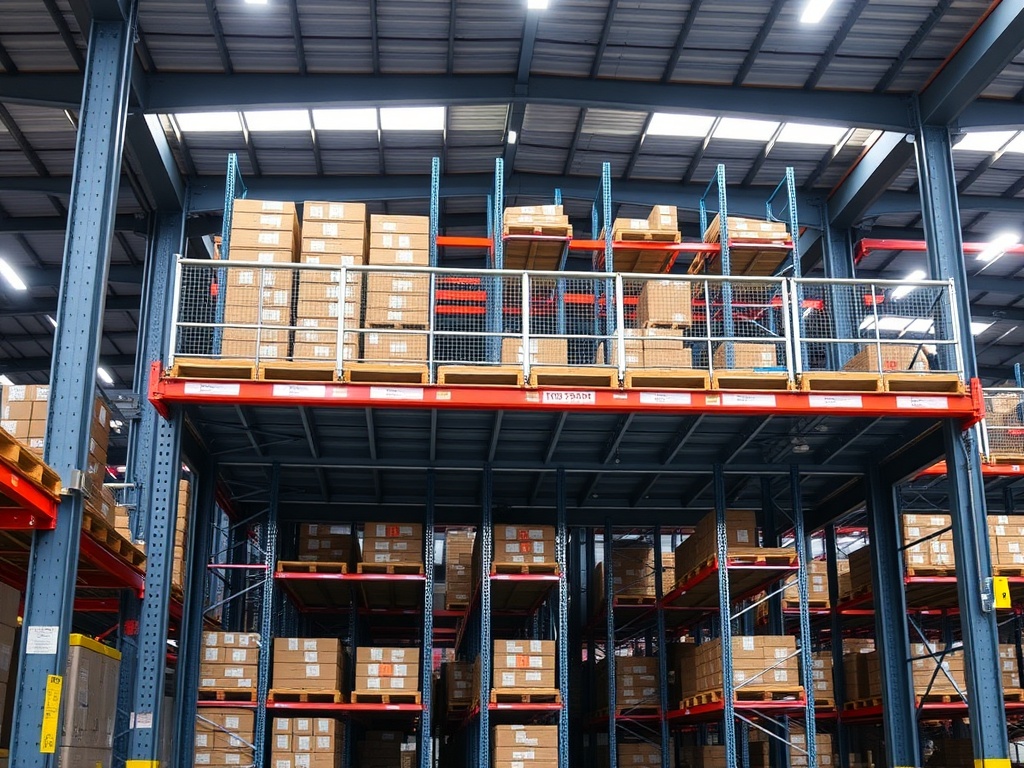
Mezzanine Floors & Multi-Tier Racking Singapore: Doubling Your Warehouse Capacity Without Relocation
Introduction
Singapore’s industrial land is finite and expensive. Renting a bigger warehouse — or relocating to accommodate growth — is often the most disruptive and costly option available. Yet every month, operators stack goods only two metres high and leave six, eight, or twelve metres of vertical clearance unused.
| Mezzanine Type | Load Capacity (kg/m2) | Typical Cost (SGD) | Best For |
|---|---|---|---|
| Steel Structural | 480 – 730 | $180 – $350/m2 | Heavy industrial storage, multi-tier racking |
| Concrete Deck | 600 – 1,000 | $300 – $500/m2 | High load requirements, fork truck traffic |
| Bar Grating | 300 – 480 | $150 – $280/m2 | Light duty, ventilation priority areas |
| Rack-Supported | Variable | $120 – $250/m2 | Integrated racking systems, cost-effective |
Mezzanine floors and multi-tier racking systems change that equation. Installed within your existing building envelope, these structures convert dead vertical space into usable operational floor area. A single-storey warehouse that nominally offers 6m clear height can become a two or three-level operation, effectively doubling or tripling your storage footprint without touching the lease.
This guide covers the practical planning considerations, compliance obligations, and commercial logic for Singapore warehouse operators evaluating mezzanine or multi-tier racking installations.
What Are Mezzanine Floors & Multi-Tier Racking?
These are two distinct but often complementary solutions for vertical space utilisation.
Mezzanine floors are free-standing or semi-integrated raised platforms constructed from structural steel. They function as an additional floor within the building, with their own flooring, access stairs, and sometimes pallet gates for loading from ground level. Mezzanines can support racking, workstations, or both.
Multi-tier racking integrates the racking structure itself as the building fabric. Each racking row becomes a raised aisle at height, with structural racking legs and beams forming the platform. The racking is the building. This approach is more common where the primary goal is additional pick face rather than full floor plate utilisation.
Both approaches fall under the same regulatory umbrella in Singapore and share similar planning considerations.
When Does a Mezzanine or Multi-Tier Racking Make Sense?
Vertical storage solutions are not always the right answer. They work best when:
- Clear height is sufficient — minimum 7.5–8m clear internal height is generally needed to justify a mezzanine without sacrificing ground-level operations
- Floor load capacity is adequate — JTC-built industrial units typically specify 5.0–7.5 kPa; a mezzanine adds substantial point loads that may require structural review
- SKU profile suits vertical movement — slower-moving, denser stock that does not require constant ground-level access
- Throughput is not highly speed-dependent — multi-level picking adds vertical travel time; high-velocity operations should model the productivity impact carefully
- Lease tenure supports the investment — mezzanines are capital-intensive; a lease of at least 3–5 years is typically the minimum to justify installation costs
Regulatory Requirements in Singapore
Building Plan Submission
Any mezzanine floor that increases the gross floor area (GFA) of an industrial unit may require building plan submission to the Competent Authority (currently the Building and Construction Authority, BCA). A structural PE (Professional Engineer) must be engaged to design and endorse the structure. Mezzanines that are temporary or demountable may fall under different approval pathways — check with BCA before proceeding.
Fire & Life Safety (SCDF)
Multi-level installations must comply with SCDF fire code requirements. Key considerations:
- Means of escape — Every level must have access to a protected stairway that leads directly to ground level. The travel distance from any point on the mezzanine to the nearest stair must fall within SCDF-prescribed limits.
- Fire suppression — Sprinkler coverage must extend to all storage levels. Rack-integrated mezzanines often require in-rack sprinklers at each tier.
- Emergency lighting and signage — All raised levels require emergency lighting and Exit signage per Singapore Standard SS 563 (or the relevant SCDF-approved standard).
Workplace Safety (MOM / WSH Act)
Elevated work platforms trigger the Workplace Safety and Health Act (WSHA) requirements for working at height. If operatives will pick from the mezzanine level, fall protection measures are mandatory — handrails, toe boards, and where necessary, personal fall arrest systems.
Operators must also ensure that any dock-level loading equipment (e.g., pallet jacks used to move loads onto the mezzanine) is rated for the application and that pedestrians on the mezzanine level are segregated from forklift traffic.
Structural Loading
JTC industrial units are designed to standard floor loads. Adding a mezzanine imposes concentrated loads on structural columns and the ground slab. A geotechnical and structural review is essential. In older JTC flatted factories, this review frequently reveals the need for additional under-slab reinforcement or pile foundations.
SS 573 (or the relevant structural steel design code in force) governs the design of the mezzanine frame itself.
BizSAFE
If a specialist contractor is engaged to fabricate and install the mezzanine structure, ensure they hold a valid BizSAFE Level 3 or above certification. This is both a safety safeguard and a procurement requirement for many JTC and private industrial property tenants.
Design Considerations for Singapore Operators
Flooring Options
The mezzanine deck surface is a significant design choice:
- Concrete slab on metal deck — most permanent feel, best acoustic performance, but heaviest and most expensive
- plywood on steel joists — lighter, faster to install, adequate for storage-only applications
- steel plate — used where fire resistance is not a primary concern; very durable
For Singapore’s humidity, ensure any wood-based deck material is treated for termite resistance.
Access & Material Handling
How goods move between levels is a critical design input:
- Stair + pallet jack — lowest cost, but slow and physically demanding for operators
- Goods lift (vertical reciprocating conveyor or VRC) — more affordable than a full passenger/freight elevator; often the sweet spot for Singapore mezzanine installations
- Conveyor — suitable for high-volume, uniform SKU operations (e.g., ecommerce fulfillment)
- Forklift loading via pallet gates — requires structurally rated loading bays at mezzanine level; structural cost is significant
Ground-level forklift access to upper tiers is generally not practical except in very low mezzanine configurations.
Column Grid & Aisle Width
Mezzanines interrupt the natural column grid of the host building. In JTC-designed industrial units, columns are typically on a 9m × 9m or similar grid. Mezzanine structural columns should align with or supplement the existing grid to minimise structural complexity. Aisle widths on the mezzanine level must accommodate the intended picking equipment — typically 2.5–3.5m for powered pallet jacks or reach trucks.
Cost Considerations
A structurally independent mezzanine floor in Singapore typically ranges from SGD 250–600 per square foot of floor area, depending on:
- Structural complexity (span, height, loading)
- Flooring type
- Access equipment included
- Whether the installation is temporary/demountable or permanent
At SGD 300 psf, a 2,000 sq ft mezzanine adds approximately SGD 600,000 to fit-out costs. Against Singapore industrial rents of SGD 3–6 psf per month for ground-level space, that investment can break even against 2–4 years of equivalent floor rental — and the mezzanine stays with the building if the lease permits.
Multi-tier racking is generally less expensive per square metre of additional pick face because the racking is the structure, but it constrains floor plan flexibility and requires careful integration with the host building’s structural system.
Common Mistakes to Avoid
- Underestimating structural review costs — A structural PE report and BCA submission can add SGD 20,000–50,000 to the project. Budget for it.
- Skipping the sprinkler extension — SCDF-compliant sprinkler installation across multiple levels is frequently the longest-lead item in a mezzanine project.
- Not planning for HVAC — Mezzanine levels in non-air-conditioned Singapore warehouses become extremely hot. Overhead fans, destratification fans, or extension of the existing HVAC system should be designed in from the start.
- Ignoring acoustic separation — Footfall noise from a steel-deck mezzanine propagates readily. Rubber floor matting or isolation clips reduce this meaningfully.
- Failing to future-proof access — Design the mezzanine with one more goods lift shaft or larger structural reserves than the current operation demands. Expansion is far cheaper during construction than retro-fitting.
Frequently Asked Questions
Do I need BCA building plan approval for a mezzanine floor in my Singapore warehouse?
Possibly. Mezzanines that increase the GFA of a unit typically require building plan submission. Demountable or relocatable mezzanines with minimal fixings may follow a different approval pathway. Engage a PE and check with BCA early — approval timelines can run 6–12 weeks.
What is the minimum ceiling height for a viable mezzanine installation in Singapore?
A general rule of thumb is a minimum clear height of 7.5–8m before a single-level mezzanine becomes viable. Less than this and the ground-level pick face becomes too compromised. For multi-tier racking (as opposed to a full mezzanine floor), 9m+ clear height is typically needed to accommodate two full levels.
How do JTC’s floor load specifications affect mezzanine installation?
JTC’s standard industrial floor load specification is typically 5.0–7.5 kPa. A fully loaded mezzanine with racking and stock can impose point loads well in excess of this on the slab. A structural review is mandatory before proceeding. In some cases, slab strengthening or additional piloti-style supports are required.
Can a mezzanine be installed in a leased industrial unit, or do I need to own the property?
Both are possible, but lease terms matter significantly. Most landlords will require consent for structural modifications and may require the mezzanine to be removed at lease end. A licence agreement for the additional GFA may also be required. Operators in JTC-managed properties should consult JTC’s guidelines on alterations and additions.
— If floor space is the constraint but a mezzanine feels like over-engineering, mobile racking systems offer another path to high-density vertical storage.
— Mezzanine planning should integrate with your broader warehouse layout. See our guide to space utilisation for the full picture.
— Any elevated storage installation must be designed, installed, and inspected to Singapore racking standards. See our guide to collapse risk prevention.
If you’re evaluating whether a mezzanine floor or multi-tier racking system makes sense for your Singapore operation, the first step is a clear picture of your existing building’s structural capacity and your genuine space requirement. Need help running that assessment? Reach out — we work with Singapore warehouse operators and logistics managers to scope, specify, and install vertical storage solutions that meet BCA, SCDF, and MOM requirements.
Contact us at enquiry@yktoh.com or call +65 6542 3232 during office hours for a no-obligation consultation.
Related Articles:
Mobile Racking | Selective Pallet Racking | High-Density Storage


