


Quick answer
Cold Storage Racking Solutions : A Practical Guide to Designing Compliant Cold Chain Storage is important because cold storage racking in Singapore must satisfy both structural and food safety requirements. The practical goal is to improve safety, productivity, and buying confidence before selecting equipment or requesting a quotation.
Practical next steps
- Confirm the load, workspace, workflow, and safety requirements.
- Compare the product fit against daily operating conditions, not just catalogue specifications.
- Speak with YK Toh for sizing, compatibility, and quotation guidance.
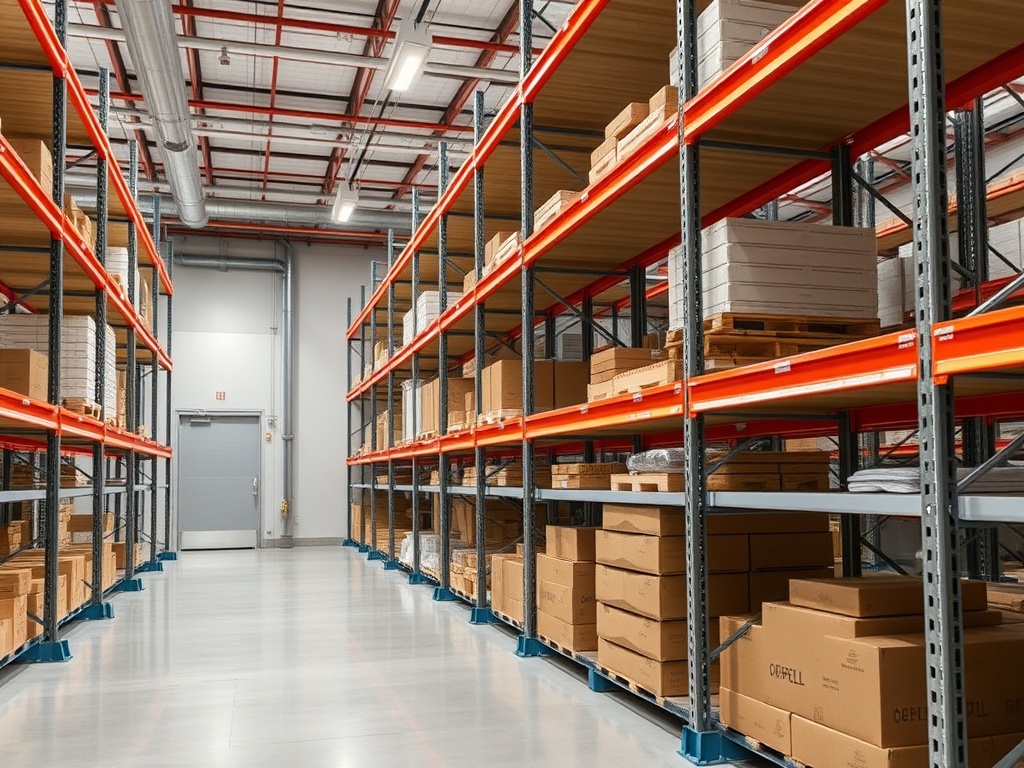
Cold Storage Racking Solutions Singapore: A Practical Guide to Designing Compliant Cold Chain Storage
Cold Storage Racking Solutions Singapore: A Practical Guide to Designing Compliant Cold Chain Storage
When space is at a premium and temperatures drop below freezing, not any racking system will do. Singapore’s cold chain sector – which includes major operators like SATS and CWT as well as smaller third-party logistics providers – faces a distinct set of storage challenges that tropical climate conditions compound significantly.
| Temperature Zone | Temperature Range | Typical Uses |
|---|---|---|
| Ambient / Dry Storage | 15C – 25C | General warehouse, packaged goods, non-perishables |
| Chilled | 0C – 5C | Dairy, fresh produce, beverages, pharmaceuticals |
| Frozen | -18C to -25C | Frozen food, ice cream, biological samples |
| Deep Freeze | -25C to -40C | Seafood, specialized food processing, vaccines |
| Cryogenic | -40C and below | Laboratory specimens, biotech, pharmaceuticals |
Cold storage racking is not simply standard pallet racking operated at low temperature. It requires specific material choices, structural considerations, layout planning, and compliance with Singapore standards that most suppliers either overlook or undersell. This guide walks through what matters, in the order that matters.
Why Cold Storage Racking Demands a Different Approach
Thermal Expansion and Structural Integrity
When racking steel operates at -25°C versus room temperature, material ductility decreases and the risk of brittle fracture increases. Standard racking components – especially connectors, beam clips, and base plates – can behave differently under sustained cold load. In Singapore’s context, this is compounded by high ambient humidity: condensation forms on racking when cold rooms are opened for loading and unloading cycles, accelerating corrosion if the wrong coating is specified.
Floor Conditions in Singapore Cold Stores
JTC Corporation specifies minimum floor flatness and levelness tolerances for industrial units that house cold storage. Uneven settling or surface irregularities create asymmetric load paths in drive-in or mobile racking systems, which are already sensitive to misalignment. A floor survey before racking installation is not optional in a Singapore cold chain context – it is a prerequisite for a safe, durable installation.
Operator Safety in Low-Temperature Environments
MOM’s WSH (Workplace Safety and Health) Act places additional duties on operators to manage thermal stress, slip resistance, and PPE suitability in cold environments. Picker productivity also drops significantly below 0°C; racking layout directly affects how much walking, climbing, and thermal exposure workers endure per pick cycle. These are operational variables that must be designed into the racking layout, not treated as afterthoughts.
Racking System Types for Cold Storage – What Works in Singapore
Selective Pallet Racking in Cold Storage
Selective racking remains the most versatile option for cold stores that handle a wide SKU range with lower turnover. It allows direct forklift access to any pallet position without moving others – critical when goods are picked individually rather than in bulk.
For cold storage use, selective racking components should specify:
- Hot-dipped galvanised or epoxy-polyester powder-coated frames and beams – superior corrosion resistance versus standard painted finishes
- Stainless steel or galvanised decking – wire mesh decking is often preferred for airflow, reducing condensation pooling on pallets
- Frame bolts rated for low-temperature service (verify with supplier that bolt grade meets SS 573 Annex requirements)
Selective racking is well-suited to cold stores operating at 0°C to +5°C (chilled goods such as fresh produce, dairy, and pharmaceutical products) where product velocity is moderate.
Drive-In Racking for High-Dolume Cold Storage
Drive-in racking achieves the highest density in cold storage because it eliminates aisles between racks. For pallet positions that are filled and retrieved infrequently – bulk frozen goods in -18°C or -25°C environments – drive-in is often the economically rational choice.
The trade-off: LIFO (last-in, first-out) is the natural operational flow for drive-in. In food cold chains where FIFO (first-in, first-out) is a regulatory expectation under Singapore Food Agency guidelines, drive-in must be managed carefully with batch labelling and slot control. One wrong pallet pulled from the wrong lane creates a rotation failure that is difficult to detect until a stocktake.
Floor rail systems in drive-in cold storage must be checked for ice build-up in Singapore’s humid conditions. Anti-slip treatments on rails and regular housekeeping schedules are essential WSH controls.
Push-Back Racking for FIFO Cold Chain
Push-back racking offers a middle ground: higher density than selective, with near-FIFO capability depending on lane depth. Rails mounted on sloping carts allow pallets to be pushed back as new pallets are loaded from the front. In a two-deep or three-deep configuration, a cold store can achieve reasonable stock rotation without sacrificing as much floor space as selective racking requires.
Push-back performs best in cold stores operating at -18°C to 0°C where SKUs are batch-picked rather than individual picks.
Pallet Live Storage (Dynamic Racking) in Cold Environments
Pallet live storage – gravity-fed roller lanes with a slight incline – is gaining adoption in Singapore cold chain operations that require high throughput with FIFO rotation. Each lane is loaded from the rear and pallets flow forward by gravity to the pick face, where a forklift or pallet jack removes the front pallet.
In cold storage, roller bearings and wheel assemblies must be rated for the operating temperature. Standard nylon-composite rollers can become brittle below -10°C; stainless steel or cold-rated polymer rollers are the correct specification. Lane speed must also be calibrated – too fast and pallets arrive at the pick face with damaging impact; too slow and throughput suffers.
Pallet live storage works best at medium-to-high velocity cold storage with a limited SKU range, typically operating at 0°C to +5°C or -18°C.
Key Compliance Requirements for Singapore Cold Storage Racking
SS 573:2020 and Cold Store Applications
SS 573:2020 – the Singapore Standard for steel static storage systems – applies to racking installations regardless of operating temperature. However, cold storage imposes additional load cases that the standard requires designers to account for:
- Clause 7.3.2 requires that racking structures be designed for their intended operating environment, including temperature
- Annex B provides guidance on corrosion allowances and material toughness requirements relevant to cold service
- Clause 9 mandates that rack capacity labels (load signs) be displayed at each rack bay, updated to reflect any storage configuration changes
When specifying cold storage racking, ensure the supplier provides design calculations stamped by a Professional Engineer (PE) registered with the Professional Engineers Board of Singapore. This is a hard requirement for any racking installation exceeding the thresholds in the Workplace Safety and Health (Racking) Regulations under MOM’s WSH Act.
Fire Safety and Cold Storage
SCDF’s Fire Code prescribes minimum provisions for cold storage facilities, including fire detection systems, emergency lighting, and compartmentation requirements that interact with racking layout. Deep racking configurations in cold stores can create fire detection blind spots – sprinkler system design must account for racking height and cold temperature ratings of sprinkler heads.
Singapore’s Fire Safety Act also requires that any cold storage facility using flammable refrigerants (such as ammonia-based systems in larger cold stores) maintain a Hazardous Substances licence from SCDF. Racking layouts must maintain the minimum clearance distances from refrigerant plant rooms as specified in the Fire Code.
BizSAFE and Cold Chain WSH Obligations
Cold storage operators targeting BizSAFE Level 3 certification or above must demonstrate a risk assessment covering racking operations, cold environment hazards, and emergency procedures. Enterprise Singapore’s productivity grants (such as the Productivity Solutions Grant) can co-fund WSH-related equipment upgrades, including racking safety accessories like column protectors, rack grounding, and load signs – all of which reduce the WSH risk profile and support BizSAFE documentation.
Common Mistakes in Singapore Cold Storage Racking Spec
- Specifying standard epoxy coating instead of cryogenic-rated coating – leads to coating embrittlement and rust under sustained cold-thermal cycling
- Ignoring the thermal bridge effect – uninsulated rack frames penetrating cold room walls create condensation and ice buildup that degrades floor surfaces and rack bases
- Over-specifying density at the expense of access – drive-in racking that maximises pallet positions but makes individual pallet retrieval nearly impossible generates hidden labour costs that negate the space savings
- No pallet quality enforcement – heat-treated (ISPM 15) pallets with moisture-resistant treatment perform better in cold storage; non-compliant pallets warp, shed splinters, and compromise racking beam interfaces
- Skipping the Professional Engineer design sign-off – this is not optional for racking exceeding the thresholds in MOM’s WSH (Racking) Regulations
FAQ – Cold Storage Racking in Singapore
Q: What racking system is best for a Singapore cold store operating at -18°C?
A: Drive-in racking offers the highest density for slow-moving bulk frozen goods at -18°C. However, if FIFO rotation is required or SKU variety is high, a selective system or push-back racking is more appropriate despite the lower density. For high-velocity frozen goods with a narrow SKU range, pallet live storage (gravity flow) delivers the best throughput-to-density balance.
Q: Does SS 573 apply to cold storage racking in Singapore?
A: Yes. SS 573:2020 applies to all steel static storage systems in Singapore. Cold storage imposes additional design considerations – particularly around material toughness at low temperature and corrosion in humid conditions – that a PE-registered designer must account for in the structural calculations. Ask your supplier for a copy of the design calculations and confirm they are SS 573-compliant before installation.
Q: What floor load specifications apply to JTC cold storage units?
A: JTC Corporation’s standard industrial floor specification for mid-storey and ground-floor industrial units typically requires a minimum distributed load capacity of 30 kN/m2, with higher specifications for heavy racking applications. For cold storage racking with dense configurations, a dedicated floor survey and, where necessary, a slab upgrade should be completed before racking installation. Consult JTC’s published design standards or your PE for project-specific requirements.
Q: How does humidity affect cold storage racking in Singapore?
A: Singapore’s high ambient humidity means that every time a cold room door opens, warm moist air enters and condenses on cold surfaces – including racking components, pallet decks, and floor surfaces. This accelerates corrosion on unprotected steel and creates ice buildup on floor rails and rack bases. Specify hot-dipped galvanised or cryogenic-rated powder coating for all steel components, and implement a regular housekeeping protocol to manage condensation and ice accumulation.
Q: Can Enterprise Singapore grants help fund cold storage racking upgrades?
A: Enterprise Singapore’s Productivity Solutions Grant (PSG) supports companies adopting solutions that improve productivity, including equipment upgrades with WSH benefits. Cold storage racking safety accessories – such as column protectors, rack grounding systems, load signs, and anti-collapse barriers – may be eligible under PSG. BizSAFE-certified companies have a clearer pathway to demonstrating WSH compliance, which strengthens grant applications.
Compare high-density mobile racking systems for cold chain expansion
SS 573-compliant rack capacity labelling requirements
FIFO vs LIFO: rotation strategies for Singapore cold chain operators
Designing or upgrading a cold storage racking system in Singapore means navigating temperature ratings, structural standards, WSH obligations, and fire code requirements simultaneously. Contact us at enquiry@yktoh.com or call +65 6542 3232 during office hours for a no-obligation consultation. We can provide PE-stamped calculations, SS 573 compliance documentation, and BizSAFE-relevant WSH recommendations as standard.
Cold chain infrastructure is a long-term investment. Get the racking right the first time.
Slot 14 | 2026-04-01 | Singapore warehouse market
Related Articles:


