Electric Tug Singapore: What To Check Before Replacing Manual Push Or Forklift Movement
Before replacing manual push or a forklift route with an electric tug, first check whether the load already sits on wheels, whether the route is repeated often, whether stopping control matters, and whether the real problem is operator strain rather than lift height.
Check whether the load already rolls on wheels, whether the route repeats often, and whether the real problem is push-pull strain and route control rather than lift height.
Quick Answer
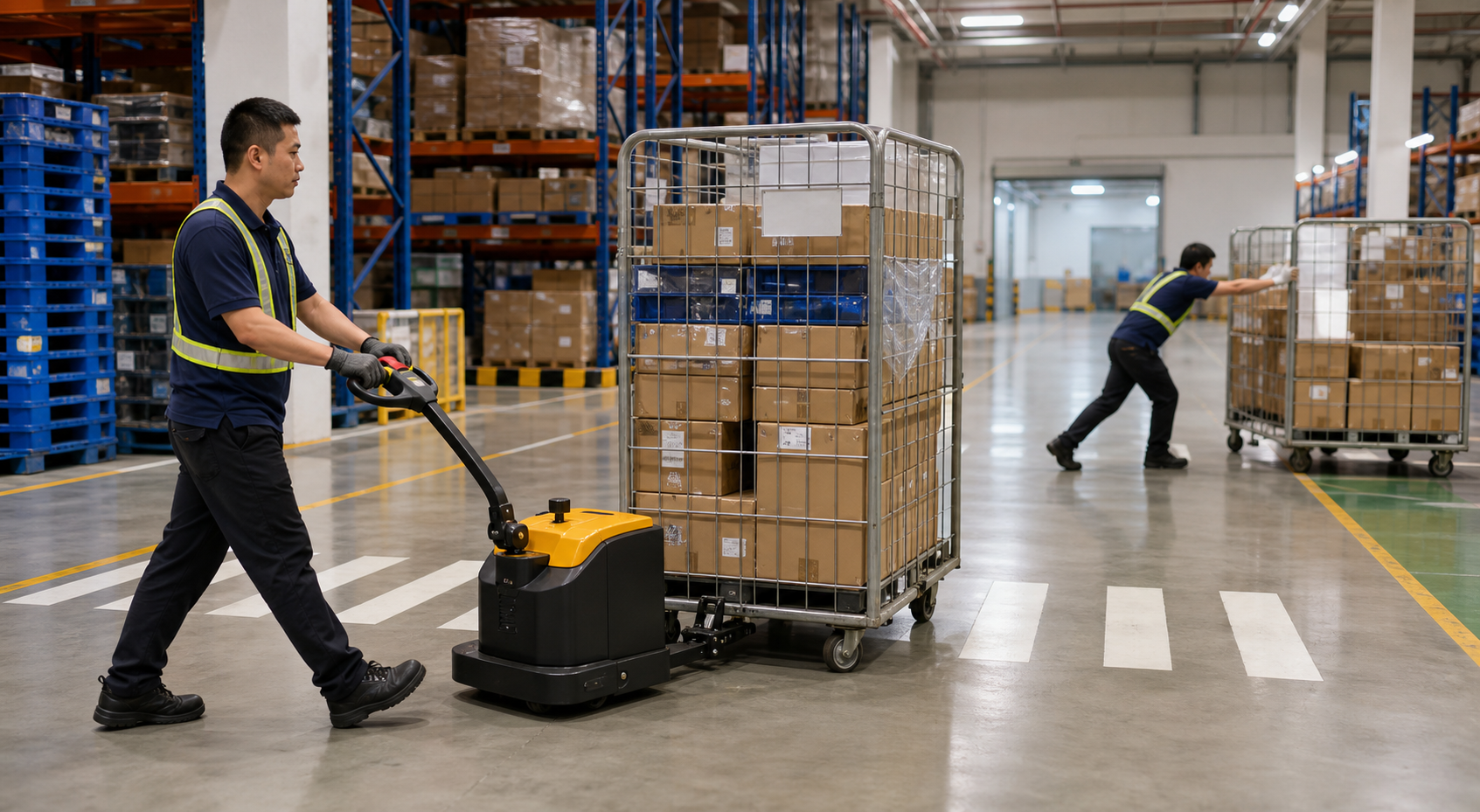
An electric tug is usually the better route when the load already rolls on castors, trolleys, cages, carts, dollies, bins or mobile equipment and the site needs safer, more controlled movement without depending on repeated heavy push-pull effort.
1. Start With The Load Interface
The first question is not capacity. It is:
Is the load already on wheels, or does it still need forks and lift?
If the load already rolls on wheels, an electric tug may be the cleaner route.
If the load sits on a pallet and only needs floor-level pallet transfer, a pallet truck may still be the better fit.
If the job needs lift, stacking, or rack placement, a forklift or reach-truck route is still more relevant.
2. Check Whether The Real Problem Is Push-Pull Strain
Manual movement often stays in place longer than it should because the route is technically possible. The better question is whether it still makes sense for the people doing it every day.
Check for:
- repeated heavy manual pushing or pulling
- awkward starts and stops
- operator fatigue across the shift
- tight turns where control is difficult
- routes where more than one person is needed to move one wheeled load
- delays because the load is slow to reposition safely
If those issues are already visible, the site problem may be movement control, not labour discipline.
3. Review The Route, Not Just The Load Weight
Two loads with the same weight can point to different answers if the route conditions are different.
Check:
- travel distance
- turning points
- floor condition
- slope or ramp sections
- thresholds and transitions
- shared pedestrian traffic
- doorway width and route clearance
- how often the same movement repeats each shift
An electric tug becomes easier to justify when the route repeats many times and the site needs more controlled movement rather than raw lift capability.
4. Confirm Whether A Forklift Is Solving The Wrong Problem
Some sites use forklifts around wheeled loads simply because no better route was reviewed earlier.
That can be the wrong fit when:
- the load already rolls on its own wheels
- the route does not need lift height
- the machine is being used mainly for towing or repositioning
- the site needs more precise low-speed control
- the route is busy, narrow, or shared with foot traffic
The issue is not that a forklift cannot move the load. The issue is whether it is the cleanest and safest route for that specific movement job.
5. Common Situations Where An Electric Tug Fits Better
Typical Singapore situations include:
- logistics and 3PL cart or cage movement
- warehouse trolley trains and wheeled rack transfer
- production carts and mobile equipment movement
- hospital, facility, laundry or waste cart handling
- retail back-of-house cage or roll-container movement
- manufacturing routes where operators keep pushing heavy wheeled loads between work zones
These are usually movement-control problems first, not storage or lift problems.
6. What Buyers Should Check Before Requesting A Recommendation
Before asking for an electric tug recommendation, prepare:
- type of wheeled load
- estimated load weight
- wheel or castor condition
- route distance
- slope or ramp details
- tightest turn or doorway
- floor condition
- whether one or more loads move together
- stopping and parking requirement
- how many trips happen per shift
The wheel condition matters. A route with damaged castors or poor rolling resistance may still need mechanical review even if an electric tug is the right direction.
7. Manual Push Vs Electric Tug Vs Forklift
| Decision factor | Manual push | Electric tug | Forklift |
|---|---|---|---|
| Best load type | Light to moderate wheeled load | Heavy or repeated wheeled load | Palletised or lifted load |
| Main job | Push or pull by labour | Controlled towing or pushing | Lift, move, stack |
| Vertical lift | No | No | Yes |
| Best route issue solved | Occasional simple movement | Repeated strain and control problem | Height and pallet handling problem |
| Operator effort | Highest | Lower | Different machine class and duty |
| Shared-traffic control | Basic | Better low-speed route control | Depends on route and task |
8. Labour Pressure And Healthier Daily Movement
Where manpower is tighter and operators are covering more movement work each day, the route decision becomes a workforce decision as well.
If the same wheeled load route creates visible strain, slow handling, inconsistent control, or frustration during busy periods, the site may need a powered tug route before it needs a bigger lift machine.
This is also why the electric tug route can sit between manual handling and broader automation planning. It can reduce repeated effort without forcing the site into a full forklift-first answer where lift is not actually the issue.
9. What To Send Y K TOH
For a faster recommendation, send:
- photos or video of the route
- photos of the load and its wheels
- estimated load weight
- route distance
- floor and slope details
- turning or doorway constraints
- how many moves happen each day
- whether the current route is manual push, pallet truck, or forklift-assisted
That gives a better starting point than asking only by tonnage.
FAQ
Is an electric tug the same as a forklift?
No. An electric tug is mainly for towing or pushing wheeled loads under control. A forklift is used when the load must be lifted, stacked, or handled on forks.
Can an electric tug replace manual push everywhere?
Not everywhere. It suits repeated wheeled-load movement where operator strain and route control are the real issues. It is not the answer for every pallet or lifting task.
When is an electric tug better than a pallet truck?
When the load already rolls on wheels and the site problem is controlled towing or pushing rather than lifting a pallet slightly from the floor.
What if the route includes ramps or poor floors?
Those conditions should be checked early. Route condition affects whether the tug route is suitable and what supporting details need review.
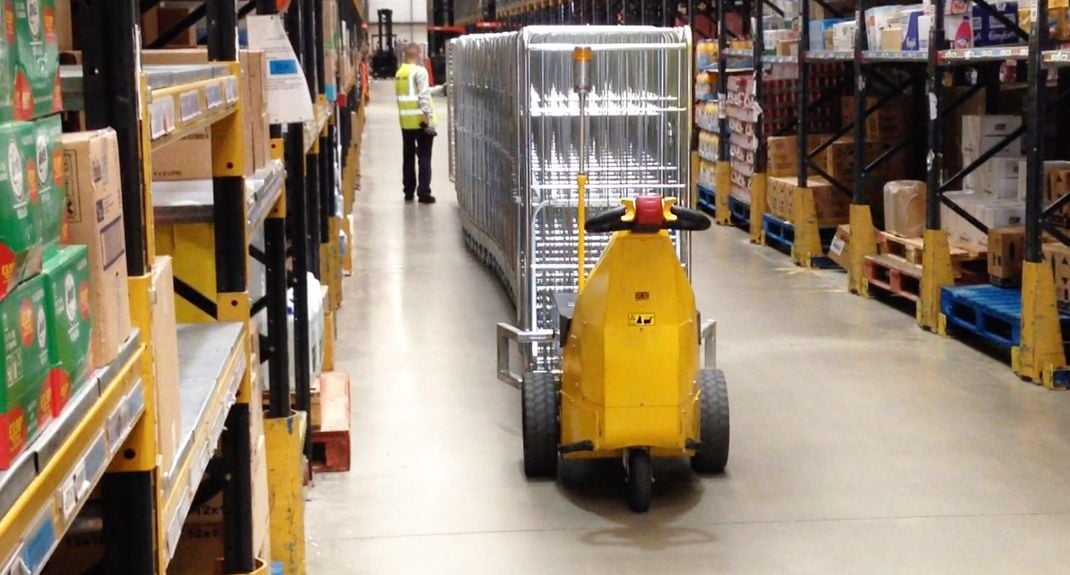
Official image source: MasterMover logistics and warehousing.
Related Y K TOH routes
Ask Y K TOH to review the actual route
Send route photos, wheel condition, load weight, floor details and current movement method so the recommendation starts from the site problem, not only the catalogue.