Electric Tug Vs Pallet Truck Vs Forklift Singapore: Which Route Fits The Load And Site?
Choose an electric tug when the load already sits on wheels and the real problem is controlled towing or pushing. Choose a pallet truck when the load sits on a pallet and only needs floor-level movement. Choose a forklift when the load needs lifting, stacking, or placement into storage at height.
Use the site condition, load interface, operator effort and working route to decide the equipment or protection family before narrowing the model.
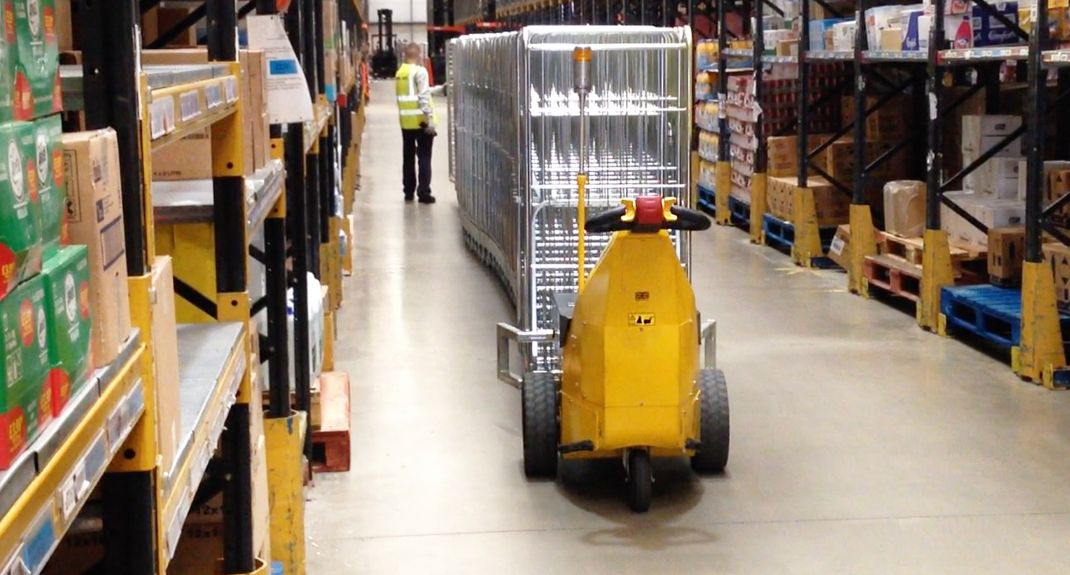
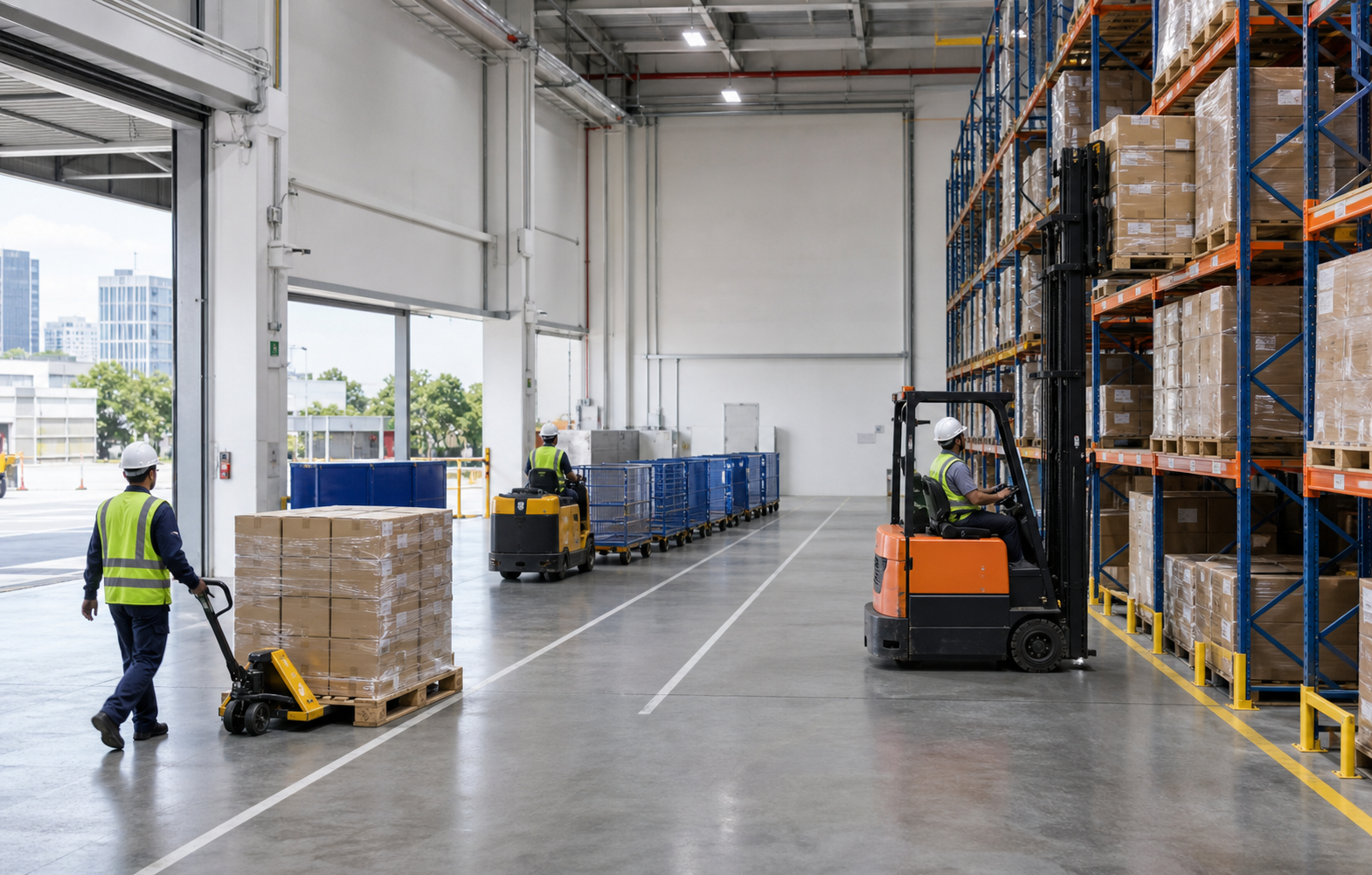
Hero image source: MasterMover logistics and warehousing.
Quick answer
These three routes solve different handling problems. The most common mistake is comparing them as if they are interchangeable. They are not. The right choice depends on how the load interfaces with the equipment, how far it needs to move, whether it must lift, and what the site conditions actually allow.
What each route is for
Electric tug
An electric tug is for controlled movement of wheeled loads such as cages, dollies, carts, trolleys, racks, or mobile equipment. It is usually the better route when the issue is push or pull strain, route control, or repeated towing of heavy rolling loads.
Pallet truck
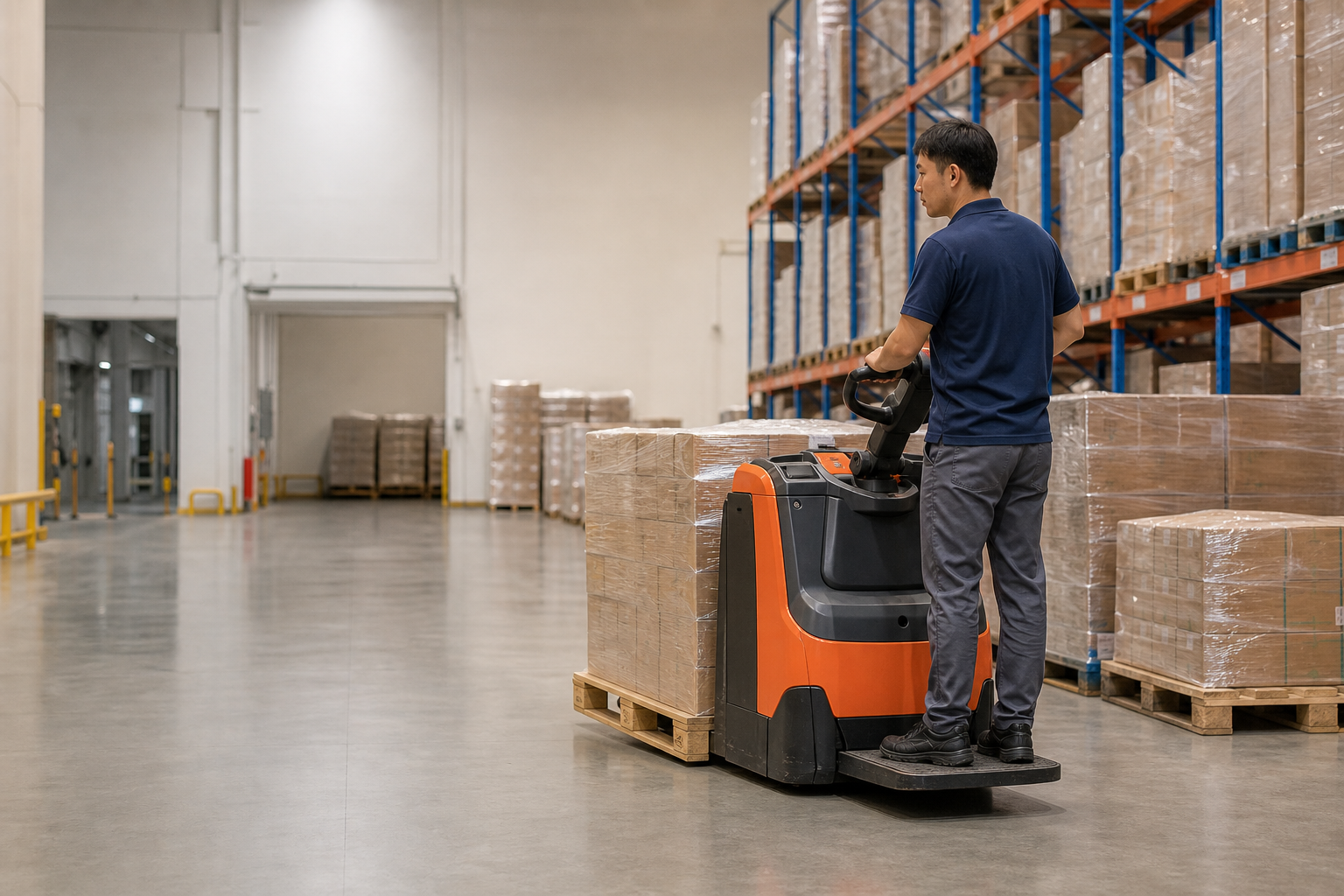
A pallet truck is for palletised loads at floor level. It lifts the pallet slightly and moves it across the route. It is usually the better route when the load is already on a pallet and the job is simple transport rather than stack placement.
Forklift
A forklift is for pallet handling that requires lift, stack access, or more substantial material handling capability. If the task includes placing loads into racking, lifting them above floor level, or handling heavier warehouse traffic with vertical movement, the forklift route becomes more relevant.
Start with the load interface
The first question is not capacity. It is:
Is the load on wheels, on forks, or does it need lifting?
If the load is already on wheels, an electric tug may be the cleanest route.
If the load is on a pallet and only needs floor-level movement, a pallet truck may be enough.
If the load needs to be lifted or stacked, you are already in forklift territory.
That single distinction removes a lot of confusion.
Comparison table
| Decision factor | Electric tug | Pallet truck | Forklift |
|---|---|---|---|
| Load type | Wheeled load | Palletised load | Palletised or handled load needing lift |
| Main job | Tow / push / control | Move pallet at floor level | Lift, move, stack |
| Vertical lift | No | Minimal pallet lift only | Yes |
| Best route issue solved | Push-pull strain on rolling loads | Simple pallet transfer | Full warehouse handling and lift requirement |
| Typical site question | Can the load roll safely and consistently? | Can the pallet be moved simply at floor level? | Is mast lift or rack access required? |
| Traffic and space review | Important | Important | Critical |
| Operator/training burden | Depends on route and model | Lower than forklift route | Higher than floor-level routes |
When an electric tug is the better route
Choose an electric tug when:
- the load is already on castors or wheels
- the operator is manually pushing or pulling heavy rolling loads
- route control matters more than lift
- the same towing route repeats many times
- there is a need to reduce physical strain around wheeled movement
Typical examples:
- roll cages
- mobile racks
- production carts
- wheeled bins
- trolleys
- dollies
- mobile equipment platforms
This is where the MasterMover route becomes commercially useful. It solves a movement problem that a pallet truck does not solve cleanly and that a forklift may overcomplicate.
When a pallet truck is the better route
Choose a pallet truck when:
- the load is on a pallet
- the route stays at floor level
- the movement is short or moderate
- the operation does not need stacking height
- the site wants a simpler pallet movement route
Typical examples:
- receiving pallets into a staging lane
- dispatch transfer between floor positions
- short replenishment movement
- warehouse support movement where stack height is not the issue
A pallet truck is not the right route for wheeled carts, and it is not the full answer if the real problem is stacking into racking.
When a forklift is the better route
Choose a forklift when:
- the load must be lifted above floor level
- the task includes rack placement or retrieval
- the operator needs more than simple floor transfer
- the site depends on a mast-handling route
Typical examples:
- pallet storage into racking
- higher-volume load handling with lift requirements
- warehouse putaway and retrieval
- handling routes where floor transfer alone is not enough
If the job requires lift, a tug or pallet truck may only treat the symptom, not the route.
Common wrong-route mistakes
Using a forklift when the real issue is cart towing
If the load already rolls on its own wheels, a forklift may be more machine than the route actually needs. The real issue may be control, towing strain, or repeated push-pull work.
Using a pallet truck when the route needs stacking
A pallet truck can move the pallet, but it cannot solve a rack-access or lift-height problem.
Comparing tugs and pallet trucks as if they serve the same load
They usually do not. One is for wheeled loads. One is for pallets.
Labour strain, fatigue, and healthy work environment
Many Singapore warehouse, logistics, and industrial teams are under pressure from manpower shortage, higher labour overhead, and faster turnover. In that environment, a route that is technically possible may still be the wrong route if it keeps depending on repeated heavy effort, awkward control, or long daily travel that wears operators down over time.
This is where the equipment decision becomes part of workplace health, not just throughput. If a route creates repeated strain, fatigue, or higher injury exposure, the hidden cost shows up in slower movement, inconsistent handling, more operator frustration, and more difficulty retaining people for the job.
Choosing between an electric tug, pallet truck, and forklift should therefore include one more practical question:
Which route gives the site a healthier and more sustainable handling pattern for the people doing the work every day?
For some operations, the better route is the one that reduces repeated push-pull effort. For others, it is the route that avoids using a lift machine for a task that is really about towing, or avoids forcing a floor-level tool to handle a lift problem it was never meant to solve.
In some sites, this powered-handling decision also becomes a transition point toward later route redesign and more automated material-flow planning, especially where labour availability and overhead continue to tighten.
Site questions that matter before choosing
Before comparing routes, confirm:
- what the load actually sits on
- load weight and dimensions
- route distance
- turning space
- floor condition
- slope or ramp presence
- pedestrian traffic
- whether lifting height is required
- how many times the movement repeats each day
The more repeated the movement, the more important the route design becomes.
What to send Y K TOH
For a faster recommendation, send:
- photos or video of the route
- load type
- whether the load is wheeled or palletised
- approximate weight
- route distance
- floor condition and slope details
- whether lift height is needed
- how often the move happens per shift
That allows Y K TOH to narrow the route before talking about specific equipment.
FAQ
Can an electric tug replace a forklift?
Not in every case. An electric tug is for controlled movement of wheeled loads. A forklift is still the more relevant route when lift and stacking are part of the job.
Is a pallet truck enough for warehouse handling?
It can be enough for floor-level pallet transfer. It is not the full answer if the route also needs stacking or higher-level storage handling.
When is an electric tug better than a pallet truck?
When the load already rolls on wheels and the problem is pushing, pulling, or controlling the route rather than lifting a pallet.
What is the best route for a mixed site?
Mixed sites often need more than one route. A warehouse may use forklifts for putaway, pallet trucks for floor transfer, and electric tugs for wheeled cage or cart movement.
Next step
If you are comparing an electric tug, pallet truck, and forklift in Singapore, start by confirming the load interface and the route constraint. Y K TOH can help review whether the site problem is really towing, pallet transfer, or lifting before narrowing the equipment route.
Related routes:
- MasterMover Electric Tugs Singapore
- Warehouse Equipment & Material Handling
- Pallet Truck category
Related Y K TOH routes
Ask Y K TOH to review the site route
Send photos, route details, load information and the current handling or protection issue so the recommendation starts from the site problem, not only the catalogue.