Manual Vs Electric Pallet Truck Singapore: How To Choose The Right Option
Choose a manual pallet truck when the route is short, the floor is simple, the load frequency is moderate, and you want the lowest-cost way to move palletised goods at floor level. Move to an electric pallet truck when operator effort, route length, slope, multi-shift use, or daily throughput starts to slow the operation down.
Use the site condition, load interface, operator effort and working route to decide the equipment or protection family before narrowing the model.
Quick answer
The wrong comparison is not cheap vs expensive. The right comparison is simple route vs repeated route. If the same pallet movement happens many times a day, the handling method can become a labour, fatigue, and traffic problem long before it becomes a product problem.
What each option is really for
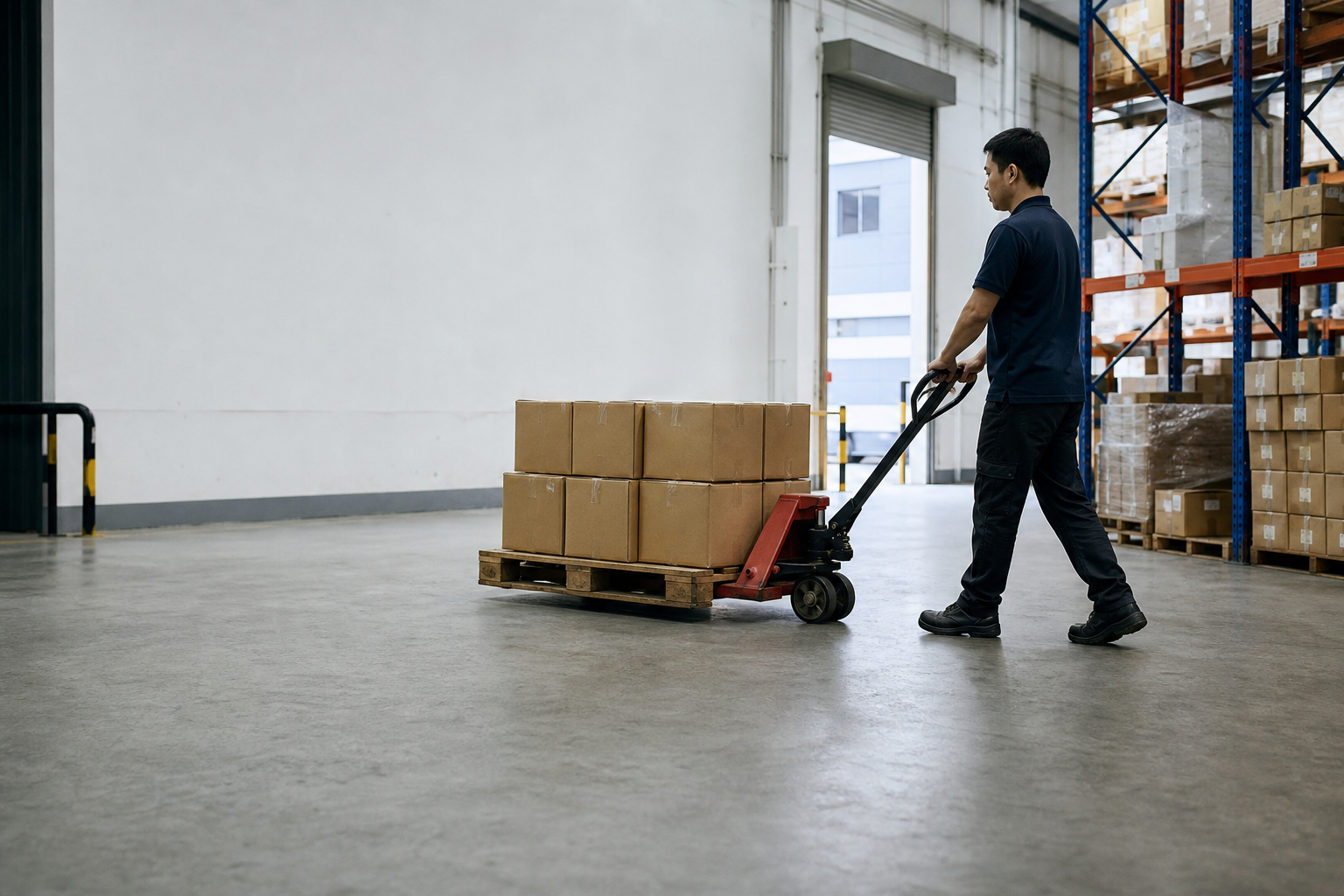
A manual pallet truck is the basic warehouse workhorse. It lifts the pallet slightly off the floor and lets the operator move it by push and pull effort. It is usually the better fit for short moves, low-to-medium volume work, and small receiving, staging, or dispatch areas where the route is flat and uncomplicated.
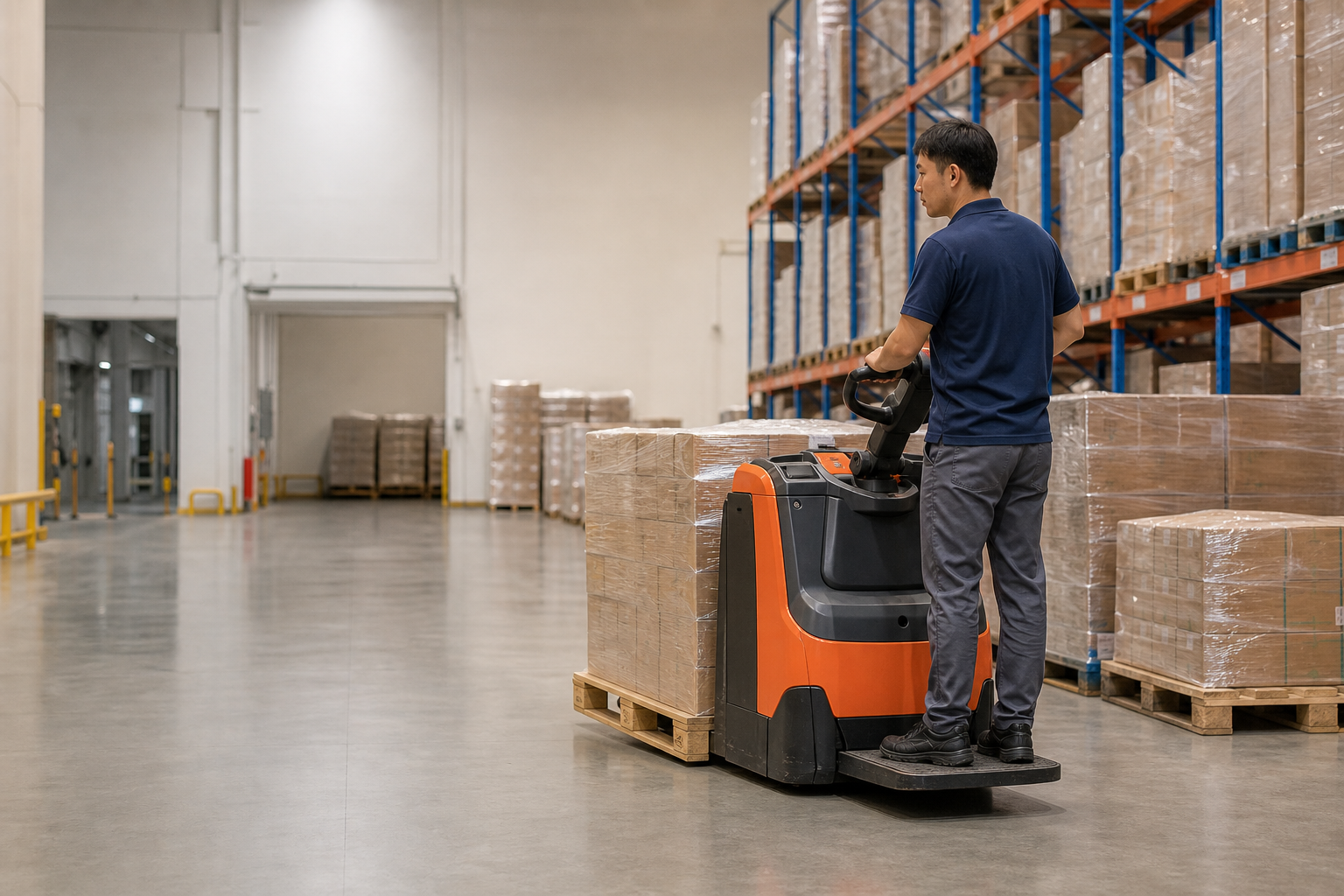
An electric pallet truck keeps the same basic pallet-handling job, but reduces the effort needed to travel, start, stop, and control the load. It is usually the better fit when the operator covers longer distances, moves heavier pallets more often, works across longer shifts, or needs more controlled travel in a busier operation.
Neither route replaces every other type of material handling equipment. If you need stacking height, rack access, or mast lift, you are already moving into stacker, reach truck, or forklift territory.
When a manual pallet truck is the better fit
Use a manual pallet truck when:
- the route is short
- the floor is flat and in good condition
- pallets are moved occasionally rather than continuously
- the load is heavy but still manageable at low travel frequency
- there is limited budget for powered handling
- charging, battery care, and powered-equipment upkeep would add unnecessary complexity
A manual pallet truck often works well in:
- receiving corners
- short dispatch routes
- back-of-house retail storage
- light industrial stores
- low-volume warehouse support areas
If the operator only needs to move pallets a few times per hour, a manual pallet truck may remain the most practical choice.
When an electric pallet truck is the better fit
Move to an electric pallet truck when:
- the route is repeated many times a day
- the operator travels longer distances across the warehouse
- the floor includes ramps, slight slopes, or rougher sections that increase effort
- the business runs busy or multi-shift pallet movement
- operator fatigue is becoming visible
- you want more consistent travel and control in tighter traffic conditions
An electric pallet truck is often a better fit for:
- warehouse replenishment routes
- busy loading and dispatch lanes
- distribution and fulfilment operations
- production-support movement between zones
- repetitive daily pallet transfer where labour strain is building up
The more often the same movement repeats, the stronger the case becomes for powered support.
Manual vs electric pallet truck comparison
| Decision factor | Manual pallet truck | Electric pallet truck |
|---|---|---|
| Operator effort | Higher | Lower |
| Best route length | Short | Short to medium, especially repeated routes |
| Shift intensity | Low to moderate | Moderate to high |
| Floor and slope tolerance | Works best on simple flat floors | Better where repeated travel or mild gradients increase strain |
| Control on repeated travel | Basic | More consistent |
| Upkeep | Lower complexity | Battery and powered-equipment upkeep required |
| Budget entry point | Lower | Higher |
| Best use case | Simple daily pallet movement | Repeated pallet movement with rising labour demand |
Common Singapore warehouse situations
1. Small store or back-room route
If the route is only a short distance between receiving and storage, a manual pallet truck is often enough. This is especially true when the space is tight and the pallet volume is not high all day.
2. Busy warehouse replenishment route
If operators are repeating the same movement many times across a longer path, the electric route becomes easier to justify. The gain is usually better control and lower strain, not just speed.
3. Loading and dispatch pressure
When a team is moving pallets repeatedly during receiving peaks or dispatch windows, manual handling can become the bottleneck. A powered pallet truck may help stabilise the route if the issue is frequent floor-level movement rather than lifting to height.
4. Mixed-use site with ramps or rough transitions
If the floor has transitions, imperfect surfaces, or repeated travel across longer internal routes, the practical difference between manual and electric handling becomes more noticeable. Site condition matters as much as pallet weight.
5. Logistics teams facing labour shortage and higher turnover
This is becoming a more common workplace situation in Singapore logistics and warehouse operations. Many teams are working with tighter manpower, faster turnover, and lower tolerance for repetitive strain-heavy movement work than they had 10 to 20 years ago.
In that environment, the decision is not only about whether a manual pallet truck can do the job. It is also about whether the route still makes sense for the people doing it every day. If a team keeps struggling to retain operators for repeated pallet movement, an electric pallet truck may become a practical route decision even before the business reaches a full high-volume automation stage.
It can also become the first practical step toward a wider handling upgrade. For some sites, moving from manual handling to electric pallet trucks is not the final answer. It is the transition point that prepares the operation for later powered-route planning, fleet redesign, or more automated material-flow options such as AGV or AMR systems when labour pressure and operating cost continue to rise.
What to check before choosing
Before choosing a pallet truck route, confirm:
- pallet size and estimated load weight
- average travel distance
- how many moves happen per hour or per shift
- whether the route includes slopes, thresholds, or rough surfaces
- aisle width and turning space
- whether the operator also needs stacking or only floor-level movement
- whether the site can support battery charging and routine upkeep
These details matter more than the headline capacity on a catalogue page.
When a pallet truck is not the right next step
A pallet truck may not be the right route if:
- you need vertical lift into racks
- the pallet must be placed at height
- the aisle layout demands a different class of equipment
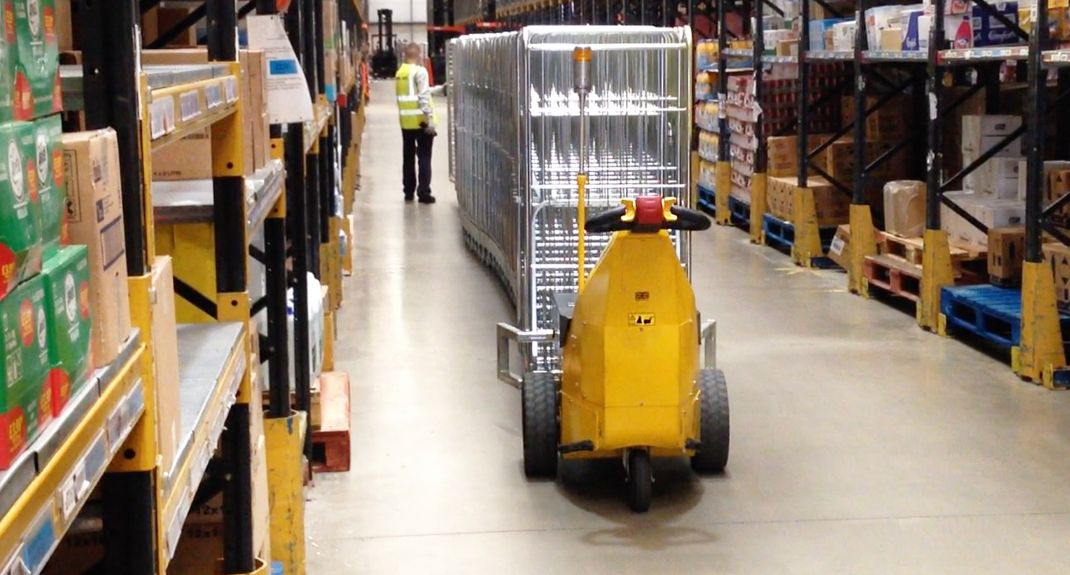
- the route is really about wheeled carts or cages rather than pallets
In those cases, Y K TOH may need to review whether the right route is a stacker, reach truck, forklift, or electric tug instead.
What to send Y K TOH for a faster recommendation
To shorten the selection process, send:
- pallet dimensions
- estimated pallet weight
- photos of the route
- travel distance
- floor condition
- whether the site has slopes or ramp sections
- how often the movement happens each day
- whether the operator only moves pallets or also needs to stack them
That gives a clearer starting point than capacity alone.
FAQ
Is an electric pallet truck always better than a manual pallet truck?
No. It is better when the route is repeated enough to justify powered movement. For short and simple pallet movement, a manual pallet truck may still be the more practical choice.
Is a pallet truck the same as a forklift?
No. A pallet truck is mainly for floor-level pallet movement. A forklift is used when you need lifting height, rack access, or a different handling profile.
Does a heavier pallet automatically mean I need an electric pallet truck?
Not always. Pallet weight matters, but so do route length, floor condition, and movement frequency. A short, occasional move can point to a different answer than a long, repeated route with the same load.
Can one pallet truck type suit every warehouse?
No. The right route depends on the pallet, the route, the operator, and the daily handling pattern.
Next step
If you are comparing manual and electric pallet trucks for a Singapore warehouse, start with the route rather than the catalogue. Y K TOH can help review the pallet size, travel path, floor condition, and daily movement pattern before narrowing the recommendation.
Related routes:
- Warehouse Equipment & Material Handling
- Pallet Truck category
- By Categories
Related Y K TOH routes
Ask Y K TOH to review the site route
Send photos, route details, load information and the current handling or protection issue so the recommendation starts from the site problem, not only the catalogue.