


Quick answer
Working at Height in Warehouses: WAH Regulations, Risk Controls & Practical Compliance is important because working at height is one of the leading causes of workplace fatalities in Singapore warehouses. The practical goal is to improve safety, productivity, and buying confidence before selecting equipment or requesting a quotation.
Practical next steps
- Confirm the load, workspace, workflow, and safety requirements.
- Compare the product fit against daily operating conditions, not just catalogue specifications.
- Speak with YK Toh for sizing, compatibility, and quotation guidance.
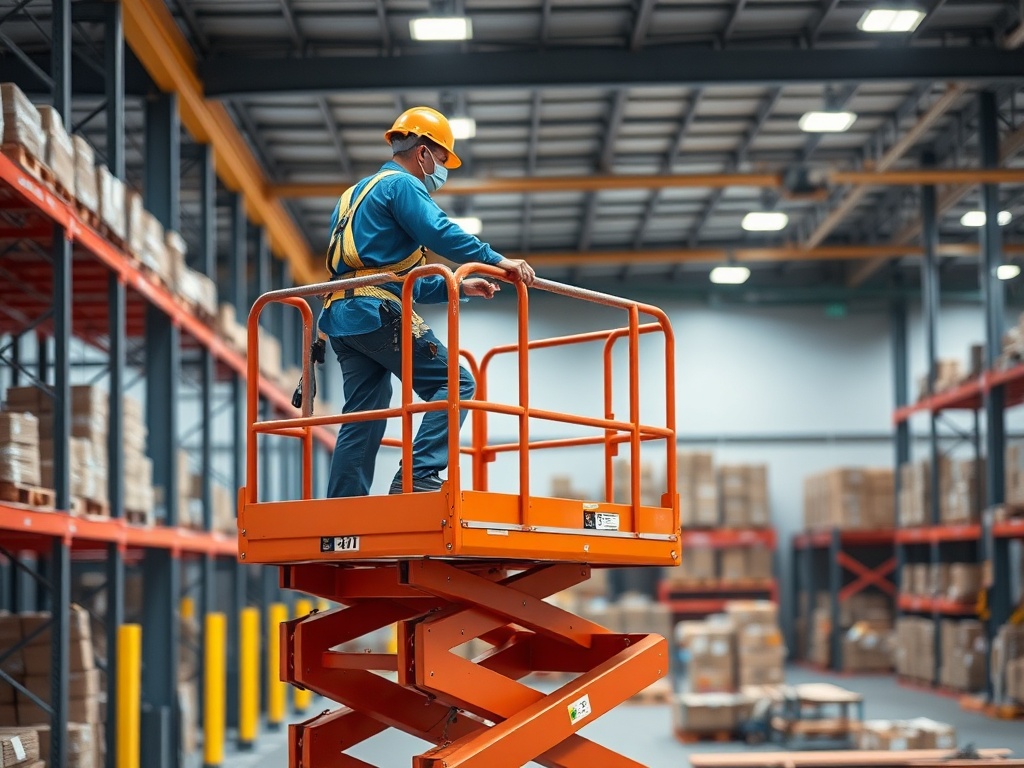
Working at Height in Singapore Warehouses: WAH Regulations, Risk Controls & Practical Compliance
Working at height (WAH) remains one of the leading causes of workplace fatalities and serious injuries in Singapore’s warehousing sector. The Workplace Safety and Health Act (WSHA) places clear legal obligations on warehouse operators — and non-compliance carries real consequences, both human and financial. This guide covers what Singapore warehouse managers and operators need to know to get WAH compliance right.
| Equipment Item | Inspection Frequency | Key Checks |
|---|---|---|
| Full-body harness | Before each use + annual | Buckle function, strap integrity, stitching, leg loops |
| Lanyard / energy absorber | Before each use | No cuts/fraying, hook gates close properly, label legible |
| Mobile scaffold towers | Weekly + after relocation | Base stability, lockable castors, guardrails intact, platform planking |
| Step ladders | Pre-use | Feet caps intact, rungs not bent, spreader mechanism works |
| Cherry picker / MEWP | Daily pre-use inspection | Emergency lowering, platform overload indicator, outrigger function |
| Anchor points (fixed) | Annual load test | Corrosion, mounting integrity, load test certificate valid |
What “Working at Height” Means in a Warehouse Context
In Singapore, work at height is defined under the Workplace Safety and Health (Work at Heights) Regulations 2013 as any work where a person could fall and injure themselves — generally at 2 metres or more above ground level. In a warehouse, common WAH scenarios include:
- Order picking at racking levels above 2 m — very common in selective pallet racking, narrow aisle, and VNA setups
- Mezzanine floor operations — picking, packing, or inventory work on elevated platforms
- Racking maintenance and inspection — accessing beam levels, safety mesh, or rack hardware at height
- Installing or adjusting beam levels — changing beam positions in adjustable pallet racking systems
- Fitting ceiling-mounted equipment — CCTV, lighting, or ventilation installations above storage areas
Anyone performing these tasks — employees, contractors, or temp workers — is covered by WAH regulations.
The Legal Framework: MOM, WSHA & BizSAFE
Singapore’s WAH requirements are governed primarily by:
- Workplace Safety and Health Act (WSHA 2008) — the overarching legislation
- WSH (Work at Heights) Regulations 2013 — specific rules for WAH activities
- MOM (Ministry of Manpower) — enforcement authority, publishes approved codes of practice and guidance notes
- BizSAFE — a tiered certification programme (BizSAFE Level 1–5) that many warehouse operators must achieve as a baseline safety standard
Under WSHA, every employer and principal has a duty to ensure the safety, health, and welfare of workers — including contractors working on their premises. This is not delegable. If a contractor’s worker is injured in a WAH incident on your site, you share legal responsibility.
Risk Assessment: The Starting Point
Before any WAH task begins, a formal risk assessment is required. For Singapore warehouses, a WAH risk assessment should cover:
- Fall from height — probability and consequence
- Striking objects below — if tools or materials fall from height
- Equipment failure — ladder collapse, scaffold failure, harness degradation
- Environmental hazards — wet floors, uneven surfaces, exposed edges
- Human factors — fatigue, inadequate training, rushing
Risk assessments must be documented and reviewed whenever conditions change — such as when a new racking configuration is installed or a different type of equipment is brought in.
Hierarchy of Controls: What Works
Singapore’s WAH regulations follow the recognised hierarchy of controls. Apply controls in this order:
1. Elimination (Best Option)
Remove the need to work at height entirely. Can you bring the work to ground level? Can you use a mobile elevated work platform (MEWP) with the operator remaining at ground level? Can rack beam adjustments be done with a beam ascender tool that eliminates the need to climb?
2. Prevention Controls
If elimination isn’t possible, prevent falls. This includes:
– Full-body harness and lanyard — anchored to a structurally sound anchor point (must be load-tested)
– Safety nets — where practicable, installed below WAH zones to arrest falls
– Guardrails — at mezzanine edges, racking end-of-aisle open sides, and any platform with a drop of 2 m+
– Mobile access platforms — order pickers, cherry pickers, and scissor lifts (low-level and high-level) — must be regularly inspected and certified
3. Administrative Controls
- Written WAH procedures and permits
- Competency training records (WAH certification from MOM-approved training provider)
- Signage restricting access to WAH zones
- Barricades and cones marking drop zones below active WAH areas
4. PPE
PPE is the last line of defence. It includes:
– Full-body harness (EN 361 or equivalent)
– Shock-absorbing lanyard (EN 355)
– Anchor straps (EN 795)
– Hard hat (EN 397) — mandatory for all personnel in WAH zones
– Safety footwear with ankle support
Note: Under MOM regulations, PPE alone is not sufficient as a primary fall prevention measure. It must be used in conjunction with higher-level controls.
Equipment Inspection & Certification Requirements
Singapore’s WAH regulations require that all access equipment is:
– Inspected before first use on any given day
– Thoroughly examined by a competent person at regular intervals (frequency depends on equipment type — e.g., MEWPs every 6–12 months)
– Removed from service if defective — no “use until it breaks” tolerance
Common equipment needing regular inspection:
– Ladders (step ladders and extension ladders) — check for bent rungs, cracked side rails, missing rubber feet
– Order pickers and cherry pickers — pre-shift inspection checklist mandatory
– Boom lifts and scissor lifts — thorough examination records must be kept
– Harnesses and lanyards — inspect webbing for cuts, fraying, UV degradation; check buckles for deformation; check stitching
Training: MOM-Approved WAH Competency
All workers who perform WAH tasks must hold a WAH competency certificate from a MOM-approved training provider. The course covers:
– Legal responsibilities under WSHA
– Hazard identification and risk assessment
– Fall prevention and arrest systems
– Proper use of PPE (donning, doffing, inspection)
– Emergency rescue procedures
Refresher training is required every 3 years. Warehouse managers should maintain a training matrix showing which workers are certified, when their certification expires, and when they are scheduled for refresher training.
WAH Permit System
For higher-risk WAH activities, many warehouse operators implement a WAH permit system. A permit must be raised before work commences and must specify:
– The task and location
– The names of workers authorised to perform the work
– The safety equipment to be used
– The time period (start and end)
– The rescue plan in case of a fall
– Authorisation signature from a competent person (e.g., safety officer or warehouse manager)
The permit is cancelled upon completion or if conditions change.
Common WAH Violations in Singapore Warehouses
Based on MOM enforcement data and WSH Council publications, the most common violations include:
- Missing edge protection on mezzanine floors and elevated platforms — one of the most frequent findings during MOM inspections
- Unsecured ladders — ladders not tied off or footed, or used on uneven surfaces
- Overloaded racking beam levels — creating instability if workers access them at height
- Missing harness anchor points — no suitable anchor points provided for workers using fall arrest systems
- Untrained workers — WAH tasks performed by workers without valid MOM-approved certification
- Expired or damaged PPE — harnesses and lanyards past their inspection date or showing visible damage
Cost of Non-Compliance
Non-compliance with WAH regulations can result in:
– MOM composition fines — typically $5,000–$10,000 per violation for minor offences
– Court prosecution for serious offences — fines up to $500,000 and/or imprisonment for up to 2 years for individuals
– Work stoppage — MOM can issue a Stop-Work Order, halting warehouse operations until corrective action is taken
– BizSAFE downgrading — a serious WAH incident can cause a company to lose its BizSAFE certification, affecting tender eligibility
– Reputational damage — particularly for companies serving JTC or HDB industrial tenants, where safety records are scrutinised in lease and contract renewals
Building a Sustainable WAH Culture
Beyond compliance, leading Singapore warehouse operators are embedding WAH safety into their operational culture:
- Pre-shift WAH briefings — even 2 minutes at the start of a shift reminding teams of the WAH hazards specific to that day’s tasks
- Supervisor presence — supervisors should physically observe workers performing WAH tasks, not just trust paperwork
- Near-miss reporting — encourage reporting of WAH near-misses (e.g., a harness that nearly slipped, a ladder that shifted) without blame, so systemic issues surface before an injury occurs
- Regular racking inspections — under SS 573, racking should be inspected annually by a competent person, and any damaged components replaced immediately before the rack is used at height
Frequently Asked Questions
What is the minimum height threshold for WAH regulations to apply in Singapore warehouses?
Under Singapore’s WSH (Work at Heights) Regulations 2013, work at height is generally defined as any work where a person could fall 2 metres or more. However, MOM may apply the regulations to lower heights if the risk of serious injury is present.
Do temporary workers and contractors need their own WAH certification?
Yes. WAH competency certification is individual — every worker performing WAH tasks must hold a valid MOM-approved certificate, regardless of employment status. The host warehouse is jointly responsible for ensuring all persons on-site are appropriately trained and equipped.
What must be included in a WAH emergency rescue plan?
A WAH rescue plan must detail how a fallen worker will be retrieved promptly — within 15–20 minutes ideally, to reduce suspension trauma risk. The plan should identify rescue equipment available (rescue winch, step ladder, etc.), assign rescue roles to specific named individuals, and include first aid arrangements. Rescue plans must be in place before WAH work commences — not after an incident occurs.
Can warehouse racking be used as an anchor point for fall arrest equipment?
Only if the racking system has been specifically designed and certified as an anchor point by a qualified engineer. Standard pallet racking uprights are not rated as anchor points and must not be used as such. Dedicated anchor points should be installed on mezzanine floors or in areas where regular WAH tasks occur.
How often should WAH equipment like harnesses and lanyards be inspected?
Harnesses and lanyards should be inspected by the user before every use and by a competent person at least every 6 months. They must be removed from service immediately if any defect is found — cut webbing, damaged buckles, frayed stitching, or expired service life (typically 5–10 years depending on manufacturer specifications).
Contact us at enquiry@yktoh.com or call +65 6542 3232 during office hours for a no-obligation consultation.
Related Articles:
Fire Evacuation Planning | Racking Collapse Prevention | Manual Handling & Ergonomics


