


Quick answer
Cantilever Racking : Store Long Goods, Pipes & Timber Without the Headache is important because storing long, awkward, irregular loads is a constant challenge in Singapore warehouses. The practical goal is to improve safety, productivity, and buying confidence before selecting equipment or requesting a quotation.
Practical next steps
- Confirm the load, workspace, workflow, and safety requirements.
- Compare the product fit against daily operating conditions, not just catalogue specifications.
- Speak with YK Toh for sizing, compatibility, and quotation guidance.
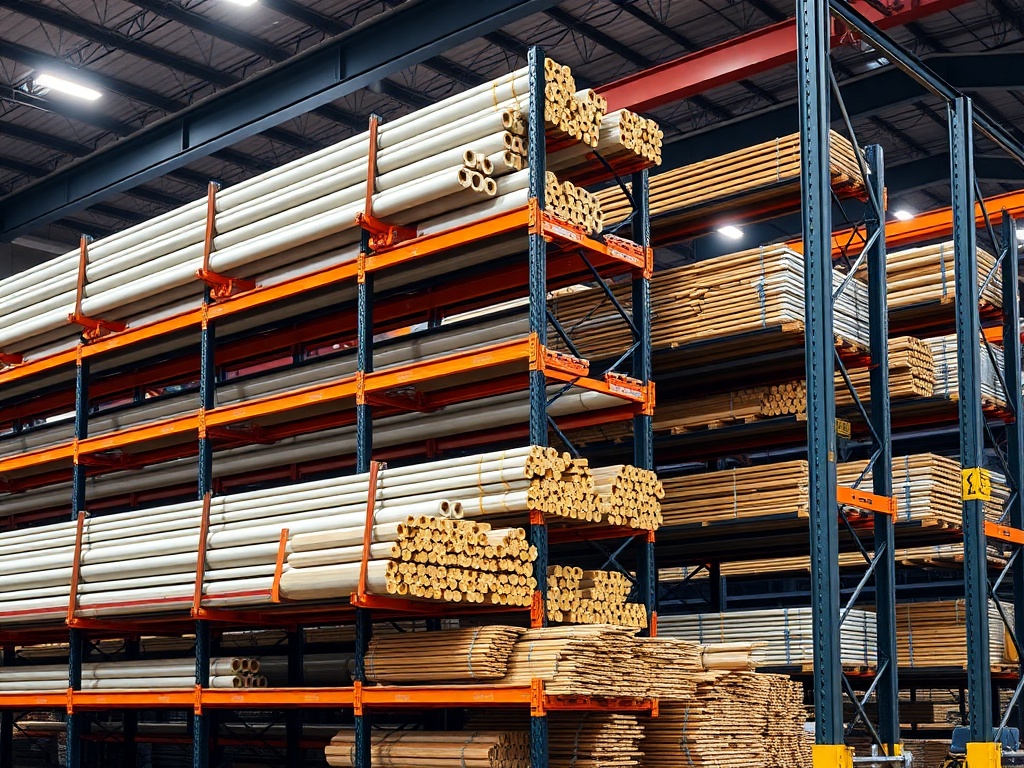
Cantilever Racking Singapore: Store Long Goods, Pipes & Timber Without the Headache
Introduction
If you’ve ever tried storing a 4-metre steel bar in a selective pallet rack system, you already know the problem: standard racking is built for boxes and pallets, not for long, awkward, irregular loads. The result is wasted vertical space, unsafe stacking, or long goods simply left on the floor — eating up floor space you don’t have to spare.
Cantilever racking solves this specifically. In Singapore’s tightly constrained industrial landscape — whether you’re operating out of a JTC flatted factory or a purpose-built logistics warehouse — the ability to store long, unwieldy inventory efficiently isn’t a nice-to-have. It’s an operational necessity for hardware traders, steel merchants, building material suppliers, and timber yards.
This guide covers what cantilever racking is, how to specify the right system for Singapore conditions, where the BizSAFE framework applies, and what most buyers overlook when they spec a system for the first time.
What Is Cantilever Racking?
Cantilever racking is a steel storage system designed around a central column (upright) with arms extending outward — on one or both sides. Loads are placed directly onto the arms, not inside beam levels, which means there is no front column obstruction getting in the way of long product.
This open-front design means:
– Single- or double-sided configurations depending on aisle access
– Arms can be fixed or adjustable to handle varying load diameters and lengths
– Bases can be heavy-duty for steel and machinery, or lighter for timber and boards
In Singapore, cantilever racking is most commonly specified for:
– Steel bars, rods, and sections (MS, GI, SS)
– Pipes (GI, PVC, HDPE, ductile iron)
– Timber planks, boards, and sheet materials
– Aluminum extrusions and profiles
– Structural beams and hollow sections
Why Standard Pallet Racking Falls Short for Long Goods
Selective pallet racking — the most common system in Singapore warehouses — works well for palletised goods of consistent dimensions. But long goods create specific problems:
Vertical space is wasted. A 6-metre steel bar stored in a beam-level pallet rack uses only the height of one beam level, even though it could extend well above and below.
Floor stacking takes over. When racking can’t accommodate long product, operators resort to floor stacking. This kills floor space utilisation, creates manual handling hazards, and makes stock rotation near-impossible.
Unsafe stock placement. Long bars stacked horizontally on the floor are a trip hazard and are prone to rolling — a serious risk under the MOM Workplace Safety and Health Act.
FIFO is difficult. First-In-First-Out inventory rotation requires product to be accessible from one end. Beam-based systems often force last-in-first-out unless the layout is carefully planned — and long goods are particularly difficult to rotate safely.
Cantilever racking addresses all four problems at once.
Types of Cantilever Racking for Singapore Operations
Single-Sided Cantilever
Loads are stored on one side only. Typically placed against a wall or at the end of an aisle. Suitable for narrower spaces or when one-direction access is sufficient.
Common use in Singapore: Hardware shops, small steel stockholders, narrow JTC factory units.
Double-Sided Cantilever
Arms extend from a central column on both sides. Requires wider aisles for loading and retrieval but delivers maximum storage density per floor area.
Common use in Singapore: Mid-to-large steel merchants, pipe distributors, timber yards with forklift access.
Adjustable Arm Systems
Arms are pitched, bolted, orwelded at preset angles, but the arm height is adjustable along the column. This allows a single system to handle varying diameters of pipe or bundles of different sizes without reconfiguration.
Closed-Base vs Open-Base
- Closed-base: A full steel base plate welded to the column base. More stable for heavy static loads — preferred for steel storage.
- Open-base: Column mounts to a base plate or脚下 with anchor bolts only. Allows forklift access from below — useful for storing long sheets and plates that need to be lifted over the base.
For Singapore’s heavy steel and structural steel sector, closed-base is more common. For timber yards where forklift cross-access matters, open-base is preferred.
Sizing & Load Specifications: What to Spec for Singapore Conditions
Singapore warehouses typically operate with ceiling heights of 6–9 metres in JTC flatted factories, and up to 12+ metres in purpose-built logistics facilities. When specifying cantilever racking:
| Parameter | Typical Singapore Spec |
|---|---|
| Column height | 3m – 6m (adjustable per bay) |
| Arm length (single-sided) | 600mm – 1,500mm per arm |
| Arm length (double-sided) | 600mm – 1,200mm per side |
| Upright section | HEA or IPE steel, hot-dip galvanised or powder-coated |
| Maximum arm capacity | 200 kg – 1,500 kg per arm (system capacity varies) |
| Overall bay width | 1,500mm – 3,600mm depending on arm count and length |
| Floor anchor | Chemical anchors or expansion bolts (取决于地面 type) |
For steel merchants storing heavy MS sections, spec a system with minimum 800 kg/arm capacity and hot-dip galvanised uprights to resist rust in humid conditions.
For timber yards storing kiln-dried boards, a lighter system (200–400 kg/arm) may suffice, but verify the rack is designed for the dynamic loads of forklift loading cycles — not just static load.
BizSAFE Considerations for Cantilever Racking
Under Singapore’s MOM Workplace Safety and Health Act, employers are responsible for ensuring racking systems are safe for use and regularly inspected. Cantilever racking falls squarely within scope because:
- Forklift loading and retrieval creates dynamic loads on the rack structure
- Overloading arms is a recognised collapse cause
- Upright damage from forklift impact is a common incident trigger
BizSAFE Level 1 or 2 companies (most warehouse operators in Singapore) should ensure:
– Rack installation is carried out by a competent person or trained racking installer per SS 573
– Initial racking inspection is completed before first use
– A racking inspection log is maintained (recommended: 3-monthly visual inspections, annual expert inspection)
– Load signs are posted on each bay showing maximum capacity — this is both a safety and a BizSAFE documentation requirement
If your company is pursuing BizSAFE Level 3 or 4 certification, your risk assessment (RA) and safe work procedure (SWP) for racking operations should specifically address:
– Forklift-to-rack proximity during loading/unloading
– Prohibition of manual stock retrieval from height without appropriate access equipment
– Maximum stack heights for long goods that extend beyond arm length
SCDF requirements for fire clearance also apply if your cantilever racking system affects aisle widths or blocks sprinkler heads — coordinate with your fire safety engineer before installation.
Common Mistakes When Specifying Cantilever Racking in Singapore
1. Underspecifying Arm Capacity
Buyers often focus on column height and forget arm capacity. A 10-metre steel bar can weigh 80–120 kg per linear metre. If your arms are rated at 200 kg each, two support points give you 400 kg capacity — enough for roughly 4 metres of bar. Know your actual load weight before specifying.
2. Ignoring Floor Condition
Chemical anchors require the concrete floor to be in good condition with adequate compressive strength. In older JTC buildings, the floor slab may have been repaired multiple times. A structural survey before installation is money well spent.
3. Not Planning for Forklift Type
Reach trucks, counterbalance forklifts, and side loaders all have different turning circles and lift heights. Double-sided cantilever in a narrow aisle with a standard counterbalance forklift is a frequent layout error.
4. No Column Protection
Forklift impact to uprights is the leading cause of cantilever racking damage. Specify column guards or end-of-aisle bumpers at minimum. This is a cheap addition that prevents expensive structural failure.
5. Skipping the Load Plan
Before purchasing, get your supplier to produce a marked-up layout plan showing aisle widths, forklift turning circles, and load per bay. A reputable Singapore racking supplier will provide this as standard. If they won’t, walk away.
Cost Guide: What to Expect for Cantilever Racking in Singapore
Pricing varies significantly by specification. Indicative range for a double-sided cantilever bay (3m high, 1,200mm arm length, 500 kg/arm capacity):
| Configuration | Indicative Price Range (SGD, before GST) |
|---|---|
| Entry-level (light-duty, 200 kg/arm) | $800 – $1,500 per bay |
| Mid-range (500 kg/arm, galvanised) | $1,500 – $3,000 per bay |
| Heavy-duty (1,000+ kg/arm, closed-base) | $3,000 – $6,000 per bay |
| Turnkey (supply + install + load plan) | Add 15–25% to equipment cost |
Prices are indicative and depend on quantity, site conditions, and delivery location. For JTC tenants, confirm whether installation requires JTC’s prior approval.
Maintenance: Keeping Your Cantilever Racking Compliant
Under SS 573 and MOM WSH guidelines, racking systems require:
- Pre-use visual check by trained warehouse staff (forklift operators, supervisors)
- 3-monthly documented inspection by a competent person — looking for upright deflection, arm deformation, base plate damage, missing fasteners
- Annual expert inspection by a qualified racking engineer
- Post-incident inspection after any forklift impact, even minor ones
Keep inspection records in your site safety file. BizSAFE auditors will look for these during certification reviews.
Frequently Asked Questions
Q: Can cantilever racking be used for storing pallets as well as long goods?
A: Technically yes, but it’s not the primary application. Cantilever racking is designed for non-standard, long, or irregular loads. For pallet storage, selective pallet racking or drive-in racking is more space-efficient and cost-effective. Using cantilever racking for pallets is a misuse of the system and can create safety risks.
Q: What is the minimum aisle width needed for a double-sided cantilever racking system?
A: This depends on your forklift type and the length of your longest product. As a rule of thumb, allow a minimum clear aisle of 3.5–4.0 metres for standard counterbalance forklifts accessing double-sided cantilever. For side loaders or very long products (6m+), you may need 5–6 metres. Always obtain a site-specific layout plan from your racking supplier before finalising your layout.
Q: Does cantilever racking require fire safety clearance from SCDF?
A: In most standard installations, cantilever racking itself does not require SCDF approval — but if the racking installation materially changes your warehouse layout (affecting sprinkler coverage, fire hose reel positions, or emergency exit widths), you may need to notify or obtain clearance from SCDF. Consult a fire safety engineer (MSE/FSE) for any significant layout change.
Q: How do I know if my cantilever racking system is overloaded?
A: Every bay should have a posted load sign indicating maximum load per arm and maximum load per bay. If loads are placed on the arms without reference to these signs — or if you observe any visible deflection in the arms or uprights — stop loading immediately and call a competent racking inspector. Visible deformation is a structural warning, not a cosmetic issue.
Q: Are there Singapore standards that govern cantilever racking design and installation?
A: Yes. SS 573 is the Singapore Standard for the design of steel racking systems, and it applies to cantilever racking. Additionally, EN 15512 is the European norm commonly referenced by Singapore racking manufacturers for structural design. Ensure your supplier certifies compliance with at least one of these standards.
Next Steps
If you’re evaluating cantilever racking for your Singapore warehouse, the most important first step is to get an accurate load and product dimensional analysis from your operations team. Without knowing your actual load weights, lengths, and retrieval frequency, any racking specification is a guess.
From there, a reputable Singapore racking supplier should provide:
1. A site survey (or accept your site measurements)
2. A structural load plan with bay-by-bay capacities
3. A layout showing aisle widths and forklift routes
4. Compliance documentation (SS 573, EN 15512, BizSAFE alignment)
Contact us at enquiry@yktoh.com or call +65 6542 3232 during office hours for a no-obligation consultation.
This article is for informational purposes and does not constitute engineering advice. For specific installations, consult a qualified racking engineer and your MOM-registered workplace safety officer.
Related Articles:
Selective Pallet Racking | Drive-In Racking | Mobile Racking


