Quick answer
Cantilever Racking for Long Goods: A Buyer's Guide is important because cantilever racking solves the storage problem for long, awkward goods in Singapore warehouses. The practical goal is to improve safety, productivity, and buying confidence before selecting equipment or requesting a quotation.
Practical next steps
- Confirm the load, workspace, workflow, and safety requirements.
- Compare the product fit against daily operating conditions, not just catalogue specifications.
- Speak with YK Toh for sizing, compatibility, and quotation guidance.
There is a category of warehouse storage problem that standard pallet racking simply cannot solve: the problem of the long load. Pipes that are three metres long. Timber planks stretching to four or five metres. Steel bars, aluminium extrusions, furniture frames, decking boards, carpet rolls. These items do not fit neatly onto a standard pallet, and they do not stack conveniently on the floor. They need a storage system designed around their geometry not the other way around.
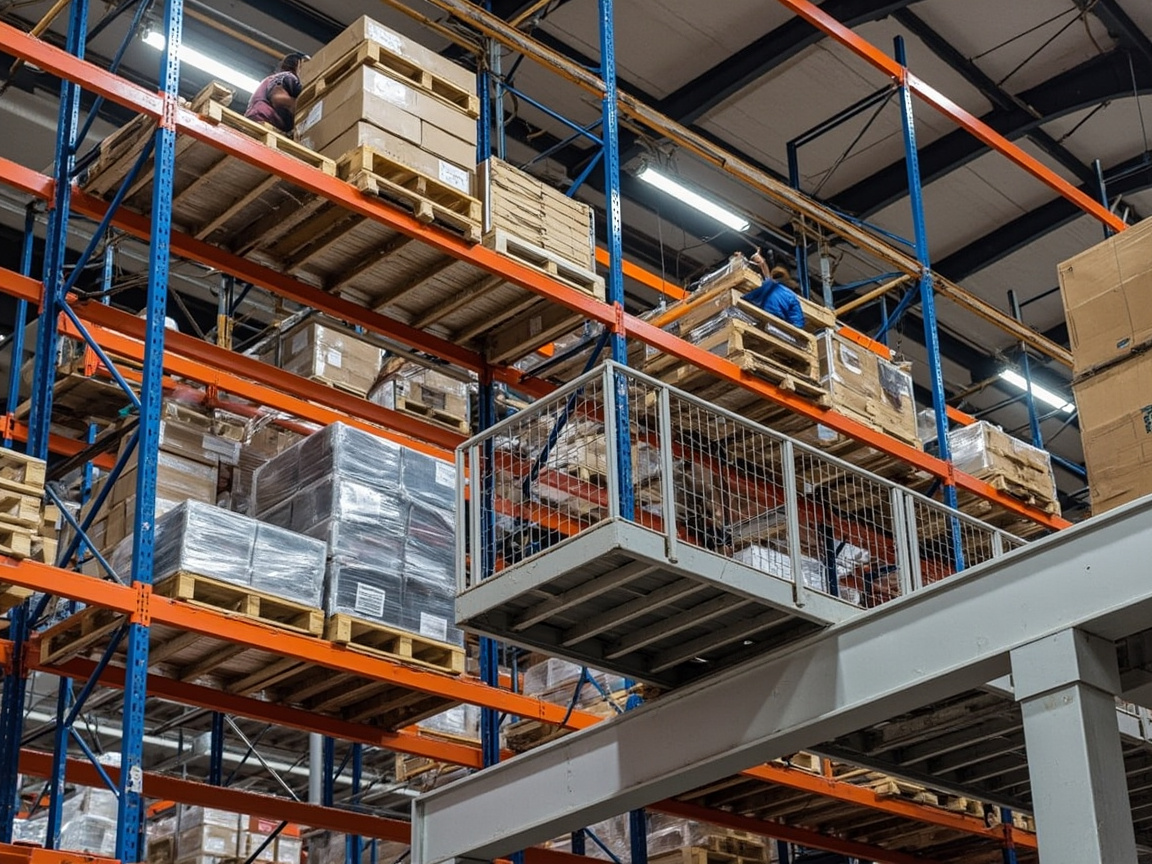 That system is cantilever racking.
In Singapore’s industrial ecosystem, cantilever racking serves a surprisingly wide range of businesses: the steel stockholders in Jurong, the plumbing and hardware distributors in Ubi, the furniture manufacturers in Woodland, the construction material suppliers feeding infrastructure projects across the island. If your warehouse handles long, awkward, or irregular-shaped goods, this is the racking system you need to understand.
Cantilever racking is a storage system characterised by arms that extend outward from a central vertical column or upright without any front obstruction. Unlike conventional pallet racking, where the load rests on beams between two uprights, cantilever racking loads rest on arms that project from one or both sides of the upright frame.
The defining structural advantage is clearance: because there is no beam or cross-member in front of the load, long goods can overhang the storage arm without hitting anything. This makes cantilever racking uniquely suited to products that are long, bulky, or irregular in shape.
Cantilever racking systems come in two structural forms: structural (built from hot-rolled steel sections for heavy industrial loads) and storage (lighter cold-formed steel for medium-duty applications). The choice depends on load weight and operational context.
That system is cantilever racking.
In Singapore’s industrial ecosystem, cantilever racking serves a surprisingly wide range of businesses: the steel stockholders in Jurong, the plumbing and hardware distributors in Ubi, the furniture manufacturers in Woodland, the construction material suppliers feeding infrastructure projects across the island. If your warehouse handles long, awkward, or irregular-shaped goods, this is the racking system you need to understand.
Cantilever racking is a storage system characterised by arms that extend outward from a central vertical column or upright without any front obstruction. Unlike conventional pallet racking, where the load rests on beams between two uprights, cantilever racking loads rest on arms that project from one or both sides of the upright frame.
The defining structural advantage is clearance: because there is no beam or cross-member in front of the load, long goods can overhang the storage arm without hitting anything. This makes cantilever racking uniquely suited to products that are long, bulky, or irregular in shape.
Cantilever racking systems come in two structural forms: structural (built from hot-rolled steel sections for heavy industrial loads) and storage (lighter cold-formed steel for medium-duty applications). The choice depends on load weight and operational context.
The basic components of a cantilever racking system are:
Uprights. Vertical columns, typically perforated with adjustment holes up and down the length. Upright height determines how many arm levels the rack can have.
Arms. Horizontal projections from the upright, adjustable in height along the upright’s perforation pattern. Arms carry the load and can be inclined (sloping slightly upward toward the outer end) to prevent loads from sliding off.
Base. The foot of the upright, which anchors the system to the floor. Bases are typically bolted to the concrete floor slab.
Bracing. Horizontal or diagonal bracing between uprights provides lateral stability particularly important when the rack is loaded with heavy long goods that create significant horizontal force on the uprights.
Centre or side loading. Single-sided cantilever racks have arms extending from one side only typically positioned against a wall. Double-sided racks have arms on both sides, allowing access from a central aisle.
The forklift or manual handling approach is straightforward: loads are lifted onto the arms from the side aisle, where there is complete unobstructed access. For very long goods, a forklift with extended forks or a specialist long-load handler is used.
Singapore’s ongoing construction activity whether public housing, metro infrastructure, or commercial development generates significant demand for steel products stored by steel stockholders and fabricators. Steel bars, beams, channels, and plate stock are all handled and stored on cantilever racking in facilities across Jurong, Tuas, and the Penjuru industrial corridor.
Pipes PVC, HDPE, galvanised steel, ductile iron are the quintessential cantilever racking product. They are long, cylindrical, and awkward. Cantilever arms with pipe cradles (curved arm accessories) are purpose-designed for this application. Singapore plumbing and hardware distributors rely on cantilever racking in their warehouse and trade counters.
Timber merchants, woodworking shops, and furniture manufacturers store plank goods, sheet materials, and long wood components on cantilever racks. Timber storage requires good ventilation cantilever racking’s open structure promotes airflow around stored goods, which is important for air-dried or chemically treated timber products.
Furniture components chair legs, table frames, cabinet sides, shelving boards are frequently long and irregular. Cantilever racking provides organised, accessible storage for these items in Singapore furniture warehouses and manufacturing back-of-house operations.
Cable drums, conduit lengths, and electrical trunking are additional long-goods applications where cantilever racking sees regular use in Singapore’s electrical equipment distribution sector.
Arm capacity ratings typically range from 100 kg to 500 kg per arm, depending on the arm’s length and the upright’s rating. Calculate your heaviest single load item and ensure the arm capacity exceeds it with appropriate margin.
Cantilever racks are specified by the height of the upright column and the effective arm length. Arm lengths typically range from 600 mm to 1,500 mm per side. Know your available floor space and ceiling height before selecting a configuration.
The distance between upright pairs determines how much load can be supported across a single bay. Wider bay spacing reduces the number of uprights but reduces per-bay capacity. Engineering specifications from your supplier should be matched to your load profile.
Cantilever racks, when loaded, generate significant lateral forces. Proper floor anchoring typically using chemical anchors or sleeve anchors drilled into the concrete slab is essential. The floor must be in good condition and adequate thickness for anchoring. This is a point where a site survey by a qualified supplier is non-negotiable.
Single-sided cantilever racks have arms extending from one side of the upright only. They are designed to be placed against a wall or at the perimeter of a warehouse. They use less floor space per metre of storage and are the lower-cost option where back-to-back access is not required.
Double-sided cantilever racks have arms on both sides of the upright, accessible from a central aisle. They require more floor space per installation but provide the highest storage density per square metre of floor area in long-goods applications. For open-plan warehouses where maximum capacity is the priority, double-sided is the standard choice.
For most Singapore long-goods warehouses, a combination of single-sided racks against perimeter walls and double-sided racks in the main floor area provides the most space-efficient layout.
1. Can cantilever racking handle very heavy loads like steel beams? Yes, structural cantilever racking systems are engineered for heavy industrial loads. Hot-rolled structural steel uprights and arms can support loads of several tonnes per bay. When storing extremely heavy long goods (full-length structural steel beams, for example), a specialist structural cantilever system with reinforced uprights and heavy-gauge arms is required. Do not use light-duty or medium-duty cantilever systems for structural steel applications.
2. What forklift equipment is needed for cantilever racking? A standard counterbalance forklift with extended forks (typically 2,400 mm or longer) can handle most cantilever racking applications. For very long loads exceeding standard forklift reach, a sideloader a forklift that loads from the side rather than the front may be appropriate. Some Singapore steel stockholders use sideloaders specifically for this reason.
3. Are cantilever racks adjustable? Yes, one of the key advantages of cantilever racking is that arm heights can be adjusted vertically along the upright perforation pattern, typically in 50 mm or 100 mm increments. This allows the rack to accommodate different load heights and item sizes without requiring a complete reconfiguration. As your product range changes, the rack adapts.
If your warehouse handles long, awkward, or irregular goods, cantilever racking is not an optional upgrade it is the fundamental storage infrastructure that determines whether your operation runs efficiently or wastes hours of handling time every week. The open-front design solves problems that pallet racking cannot touch, and the adjustability of arm heights means the system can evolve with your product range.
For Singapore operators whether you are a steel stockist in Jurong, a plumbing distributor in Ubi, or a furniture manufacturer in Woodlands cantilever racking from a supplier who understands your industry is a direct investment in operational efficiency.
> Get a cantilever racking quote for your Singapore warehouse contact WAREHOUSE123 at +65 6542 3232.
> The Complete Guide to Warehouse Storage Racking in Singapore > The Complete Guide to Warehouse Storage Racking in Singapore
Frequently Asked Questions
What is the best racking solution for my Singapore warehouse? The right system depends on your SKU profile, throughput requirements, floor area, and ceiling height. Selective pallet racking suits most general warehouses; high-density systems like drive-in or shuttle racking suit high-volume, low-SKU operations. See our complete guide to all racking types.
How often should racking be inspected in Singapore? Under Singapore Standard SS 549, a competent person should inspect warehouse racking at least once per year. Daily visual checks by trained warehouse staff are recommended. Download our free racking inspection checklist.
Does WAREHOUSE123 offer installation? Yes. WAREHOUSE123 provides full installation, site assessment, and post-installation certification for all racking systems. Call +65 6542 3232.