Parking Barriers and Column Protection for Safer Car Parks in Singapore
Car parks, basement ramps and loading areas need protection where vehicles turn, stop and pass close to columns, walkways, walls and equipment. This guide routes those risk points to MPM flexible protection options supplied by Y K TOH in Singapore.
Quick answer: for parking areas, start by separating the risk points: exposed columns, ramp turns, bay ends, wheel-stop positions, pedestrian walkways and loading-bay traffic. Then match each point to the right MPM column protection, traffic barrier, guard rail or wheel stop.
The goal is not to place barriers everywhere. The goal is to protect the points most likely to take impact while keeping vehicle movement, cleaning access and pedestrian routes usable.
Where parking-area impact usually happens
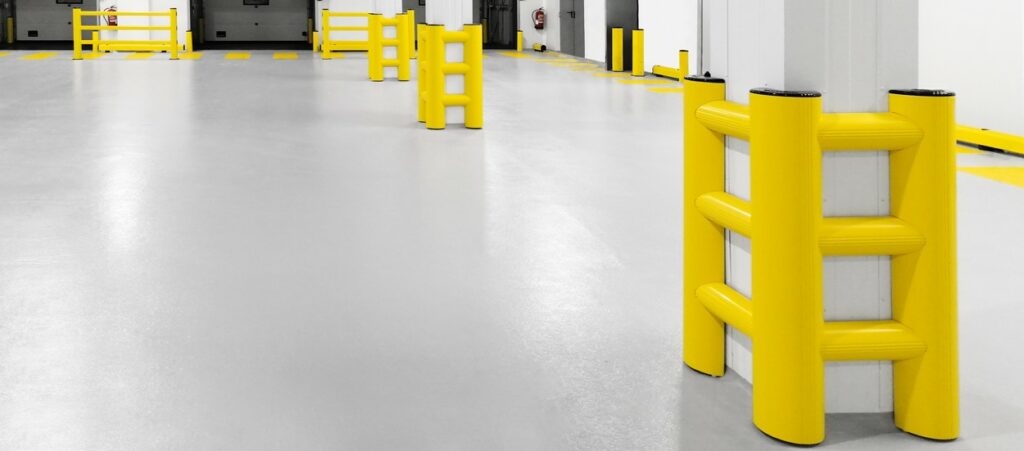
Columns and pillars
Cars, vans and forklifts often turn close to columns. A visible flexible protector helps absorb contact and makes the hazard easier to see.
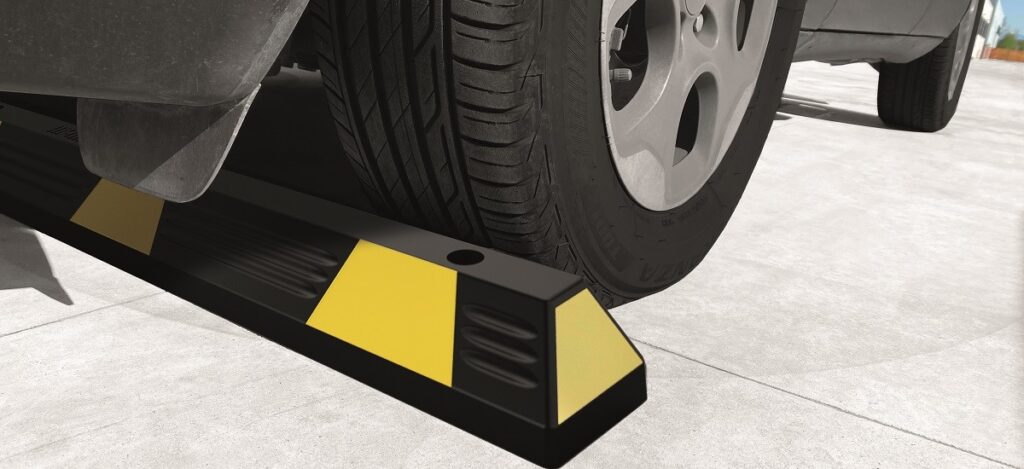
Bay ends and walls
Wheel stops and low barriers help define where vehicles should stop before touching walls, pipes or equipment.
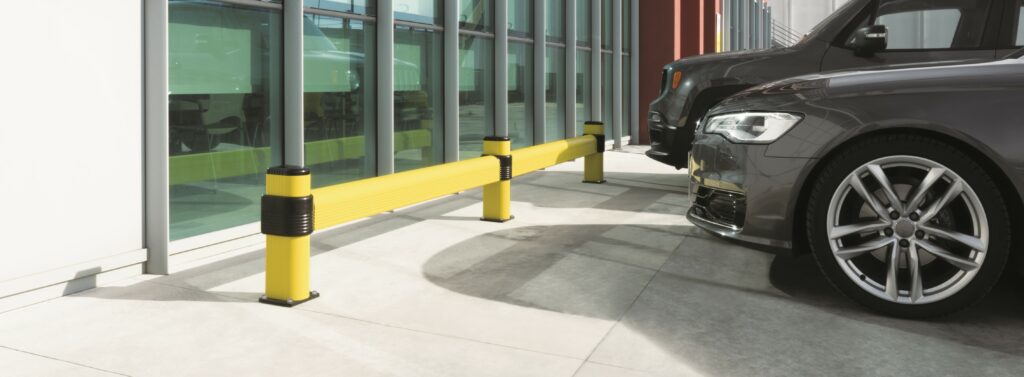
Ramp and corner routes
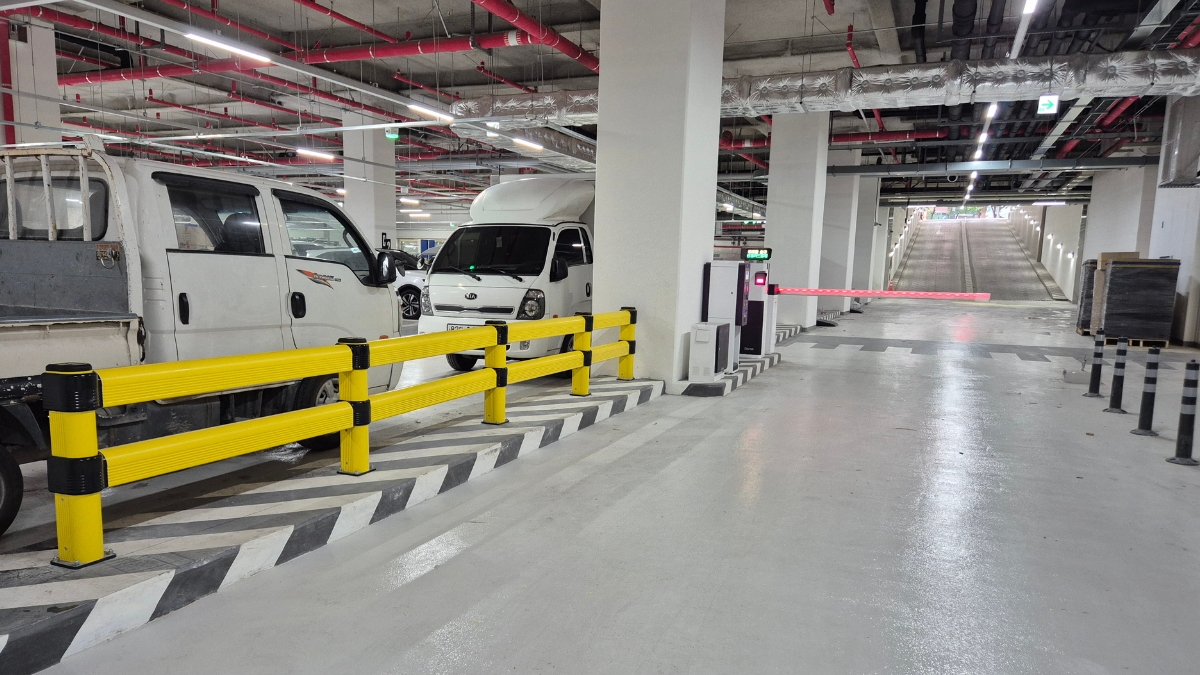
Traffic barriers and guard rails help separate repeated vehicle movement from exposed edges or walkway zones.
Pedestrian boundaries
Where people walk beside cars, barriers should guide movement without blocking doors, fire routes or cleaning access.
1. Protect exposed columns first
Columns are often the first protection point to review because they are fixed, repeated hazards. MPM column protection such as MPM HUG TOWER can help make the pillar more visible and reduce impact at common contact points.
- Use for basement parking columns, warehouse car-park pillars and exposed structural posts.
- Check column size, number of exposed sides, vehicle route and available floor fixing area.
- Keep access around services, doors, walkways and emergency routes clear.
2. Use barriers where vehicles repeatedly move close to assets
For traffic edges, loading-bay approach routes and vehicle circulation lanes, flexible MPM barriers such as MPM LINK LM and MPM LINK SINGLE can help define the protected line.
- Use around ramp turns, utility areas, equipment edges and vehicle circulation paths.
- Review vehicle type, approach angle, impact frequency and route width before choosing barrier height and layout.
- Do not block safe turning, drainage, maintenance panels or pedestrian escape routes.
3. Add wheel stops where parking position matters
Wheel stops are useful when the stopping point needs to be repeated across parking bays. MPM wheel stops such as MPM CAR STOP and MPM TRUCK STOP help guide parking position before the vehicle reaches walls, columns or equipment.
- Use for bay ends, wall-side parking, service rooms, plant areas and defined truck stopping zones.
- Check vehicle type, wheel size, bay depth, pedestrian walkway position and fixing surface.
- Use the correct route for cars, vans or trucks instead of treating every bay the same.
Parking barrier selection table
| Site point | Main risk | MPM route to review | What Y K TOH needs |
|---|---|---|---|
| Car-park column | Side impact during turning or parking | Column protection | Column size, exposed sides, photos and vehicle route. |
| Ramp or corner | Repeated vehicle contact near a route edge | Traffic barrier or guard rail | Route width, vehicle type, turning direction and fixing surface. |
| Parking bay end | Vehicle moves too far forward | Car stop or truck stop | Bay depth, vehicle type, wall or asset position and walkway position. |
| Pedestrian walkway edge | People and vehicles share a close route | Pedestrian safety barrier | Walkway width, access points, emergency route and visibility needs. |
What to send before asking for a recommendation
- Photos of the car park, ramp, loading area or impact marks.
- Column dimensions and number of exposed sides.
- Vehicle type: car, van, truck, forklift or mixed traffic.
- Approximate route width, turning direction and bay depth.
- Floor condition and whether the area is indoor, outdoor or semi-sheltered.
- Any walkway, fire route, drainage or maintenance access that must stay open.
Principal-source basis
This Y K TOH guide is based on the parking-area protection route described by our principal MPM, then rewritten for Singapore facility, warehouse and car-park buyers. The original MPM article highlights column protections, anti-vehicle barriers and wheel stops for parking-area use.
Need help choosing the right MPM parking protection?
Send site photos, vehicle route details and the impact point you want to protect. Y K TOH can help route the enquiry to column protection, traffic barriers, guard rails, wheel stops or a mixed protection layout.
Claim safety: final product choice, fixing method and site layout must be reviewed against actual site conditions. This article is routing guidance, not engineering certification or traffic-safety approval.