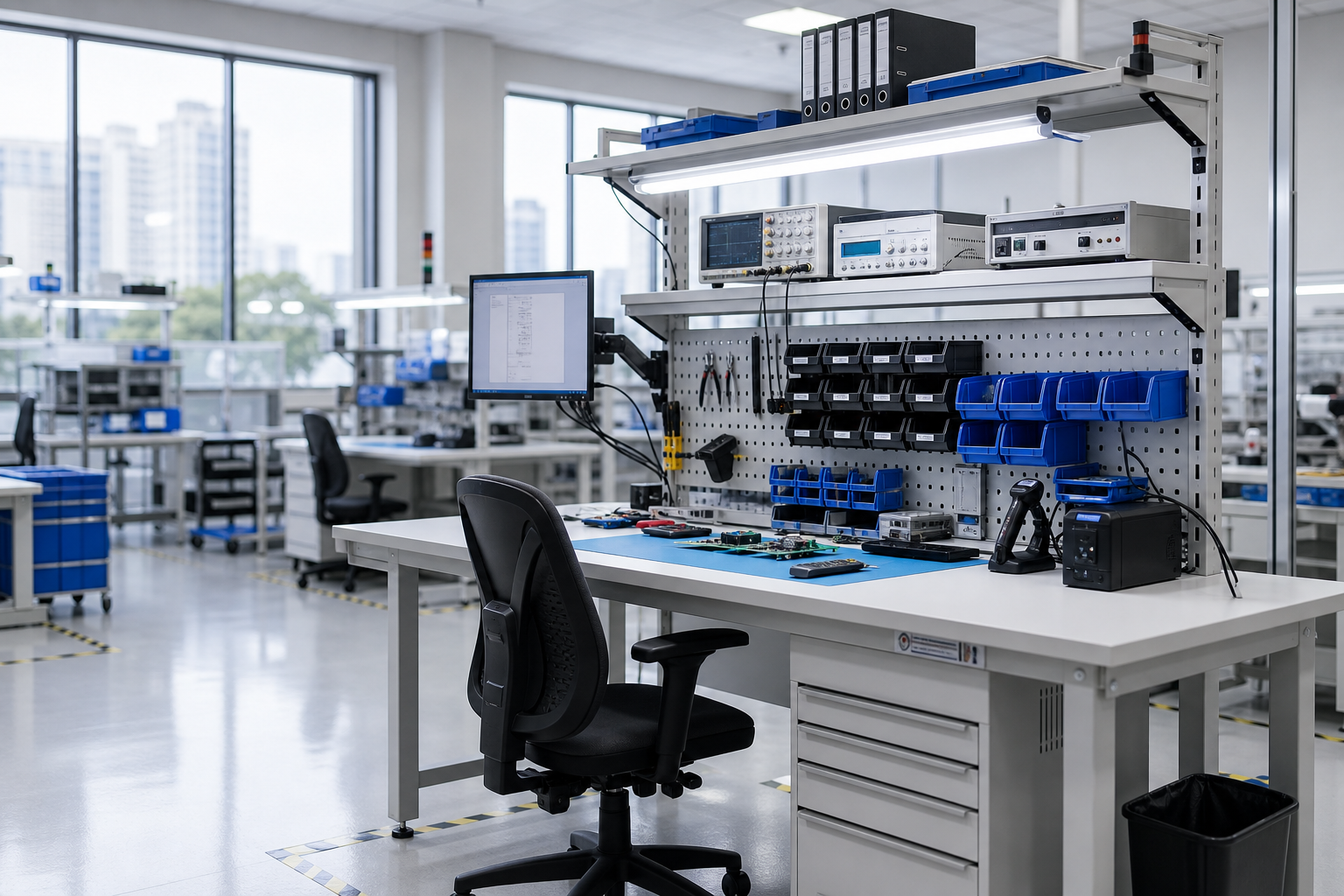
Treston Workstation Cleaning and ESD Care Guide for Singapore Work Areas
Use this guide when maintaining Treston benches, trolleys, drawer units, chairs, castors and ESD-aware work areas. It turns the manufacturer care guidance into a practical Y K TOH checklist for procurement, facilities, production and electronics teams.
Quick answer
Clean Treston workstations with a planned routine, soft cloths and suitable detergents. Focus on high-touch points, avoid abrasive tools, avoid over-dosing chemicals, dry surfaces properly and treat ESD furniture separately because wax, coating residues, strong solvents and dirty castors can affect ESD performance.
What to clean first
For production, packing, repair, electronics and technical work areas, start with the parts that operators touch repeatedly or that affect movement.
Work surfaces
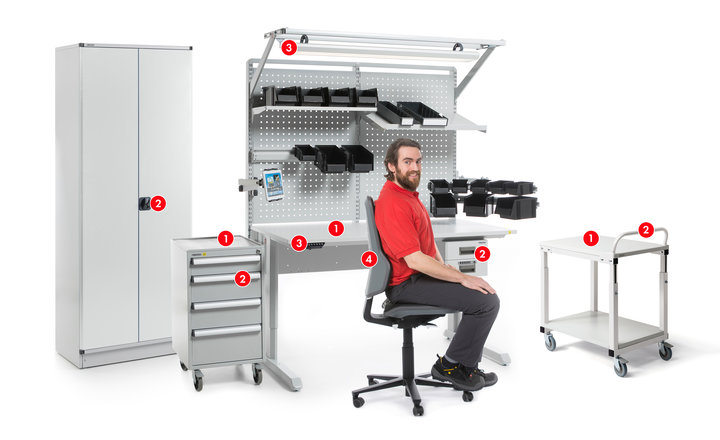
Bench tops, trolley tops and drawer-unit tops collect dust, oil, packaging residue and component handling marks.
Hands-on controls
Handles, push buttons, hand cranks, height-adjustment controls and armrests need regular attention.
Movement points
Castors on trolleys, drawer units and mobile benches should be cleaned because dirt can affect rolling and, for ESD routes, resistance behaviour.
Maintenance routine for busy work areas
A simple rhythm is usually better than occasional aggressive cleaning. Adjust the frequency for cleanrooms, electronics, food-area support, oil exposure and shift work.
Before cleaning
- Move loose tools, parts and paperwork away from the surface.
- Check that the cleaner suits the worktop, chair, metal, plastic or ESD surface.
- Use gloves and prepare soft cloths or microfiber wipes.
During cleaning
- Work from top to bottom and from cleaner areas toward dirtier areas.
- Use the correct dilution and do not assume stronger dosing gives a better result.
- Use only soft wiping tools. Do not use abrasive pads or brushes on finished surfaces.
After cleaning
- Wipe dry or leave only slight moisture where the product instructions allow it.
- Remove persistent marks with a suitable special cleaner, not a random solvent.
- Log unusual stains, coating damage, castor problems or ESD concerns for review.
Extra care for ESD furniture
ESD workstations need a tighter cleaning boundary because surface residue and physical damage can interfere with the protective route.
Do use
- ESD-specified cleaning detergents for ESD-protected furniture.
- Soft cloths or wipes that do not scratch the surface.
- Regular cleaning, because dirt is a common reason surface resistance can change.
- Castor cleaning when the workstation, trolley or drawer unit is mobile.
Do not use
- Wax cleaners or products that leave a coating layer.
- Strong solvents unless the product documentation specifically allows them.
- Abrasive tools, hard brushes or sharp objects on ESD surfaces.
- Unverified chemicals in an EPA or sensitive electronics area.
If the workstation is used in an ESD-sensitive area, send the workstation model, worktop type, current cleaner, cleaning frequency, photos and any required documents before changing detergents or cleaning method.
Cleaner and disinfectant review
Treston notes that common workstation materials are used across tops, frames, accessories, chairs and rubber or plastic parts. The practical issue is matching the chemical to the material and work area.
| Cleaning situation | Start with | Check before use |
|---|---|---|
| Normal maintenance cleaning | General neutral detergent and soft cloth routine. | Surface material, dilution, drying method and cleaning frequency. |
| Disinfection requirement | Common actives may include alcohol, hydrogen peroxide, acetic acid, chlorine or non-ionic surfactants. | Product label, exposure time, material compatibility and whether residues affect the work area. |
| ESD protected furniture | ESD-specified detergent and soft wipes. | No wax, no coating residue, no strong solvent and no abrasive cleaning tool. |
| Persistent stains or oil marks | Specific cleaner matched to the stain and surface. | Spot test, product document, ventilation and whether the cleaner can damage laminate, coating, plastic, rubber or upholstery. |
What to send before buying or replacing
Use this guide together with Y K TOH product routes when the cleaning issue points to worn surfaces, wrong workstation type, accessories, storage, chairs, trolleys or MRO support.
This Y K TOH guide is based on Treston workstation care themes and is written for local buyer routing. Always follow the latest product label, safety data sheet, site rules and manufacturer documentation before applying a chemical to a specific workstation, chair, trolley, castor or ESD surface.
Need help matching cleaner, worktop or ESD requirement?
Send photos of the workstation, surface material, cleaning product, site condition and any ESD or document requirement. Y K TOH can route the enquiry to the correct workstation, MRO or product-support path.