Quick answer
Simple Troubleshooting on Forklift for Beginners is important because in every business that runs with a warehouse, forklift is an important element of the whole operations. The practical goal is to improve safety, productivity, and buying confidence before selecting equipment or requesting a quotation.
Practical next steps
- Confirm the load, workspace, workflow, and safety requirements.
- Compare the product fit against daily operating conditions, not just catalogue specifications.
- Speak with YK Toh for sizing, compatibility, and quotation guidance.
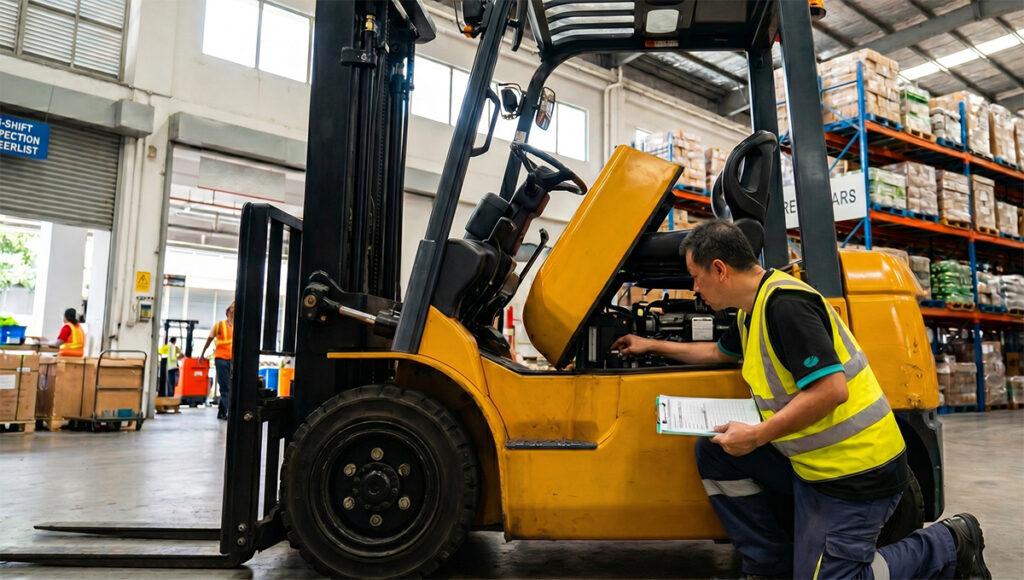
In any warehouse, a forklift is essential to daily operations. Its performance directly affects how quickly and efficiently tasks get done — which is why keeping it in good working condition isn’t optional. Unplanned breakdowns are costly, so scheduling regular maintenance and catching problems early is key.
Not every forklift operator is trained in repairs, and that’s understandable. But some warning signs are simple enough for anyone to spot. Knowing what to look for in three areas — the mast, the steering, and the startup — can save you from bigger, more expensive problems down the line.
The mast is usually the first place problems show up. If it’s slow to raise or lower, difficult to tilt, or not responding the way it should, the most likely cause is low hydraulic fluid. Check the fluid level and top it up if needed — the lower the fluid, the less responsive and precise the mast becomes. If the fluid level is fine, the hydraulic pump filter may be clogged and just needs cleaning. Anything beyond that should be handled by a qualified technician.
Steering problems are also fairly common. If the steering feels stiff or doesn’t respond smoothly when changing direction, the steering fluid is likely the issue. A top-up or fluid replacement usually does the trick, though it’s generally safer to have a service provider take care of this one.
When a forklift has trouble starting, check the battery first — make sure it’s charged and in good condition. If the battery is fine, move on to the coolant. Low coolant leads to overheating, which is a common reason forklifts fail to start.
These are simple checks that any operator can do regularly. Making them part of a routine inspection goes a long way in keeping your forklift — and your operations — running without interruption.