


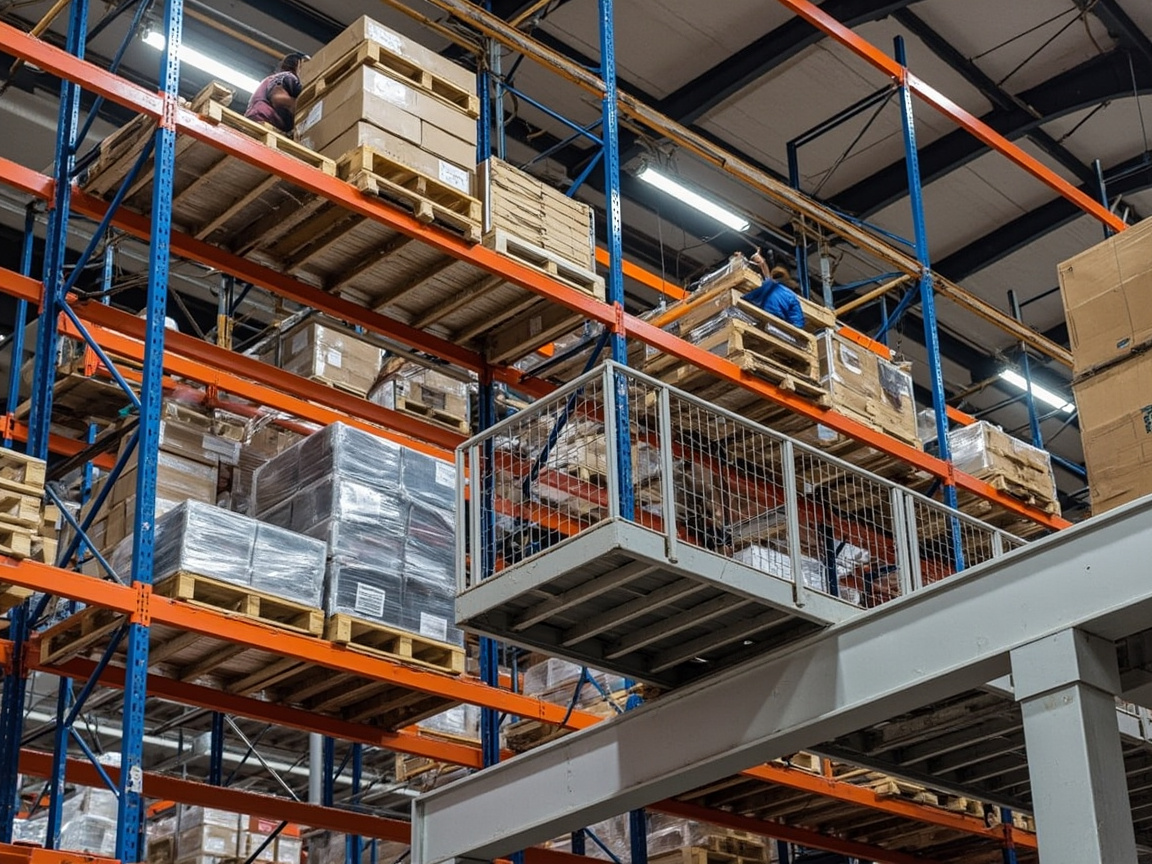
Singapore’s position as a global food hub depends on a cold chain that works without interruption. Every day, temperature-controlled warehouses handling frozen seafood, dairy, ready-to-eat meals, and pharmaceutical products rely on racking systems that were specified, installed, and maintained to operate safely in conditions far more demanding than a standard warehouse.
If your business is involved in food manufacturing, cold chain logistics, or any form of temperature-controlled storage in Singapore, the racking requirements are non-negotiable. This guide covers what you need to know from material selection to regulatory compliance to layout planning.
The most fundamental difference between cold store racking and ambient racking is temperature itself. At -18°C or below, steel behaves differently. Standard components designed for room-temperature use will not necessarily perform reliably in sustained cold.
Beyond material performance, the operational context changes completely. Forklifts in cold stores must be cold-rated standard electric forklifts are not designed for use below -10°C without modification. Racking layouts must account for the larger turning circles of cold-rated reach trucks. The speed of all operations is slower: cold-rated equipment typically operates at reduced maximum speeds for safety reasons.
Humidity is another factor that surprises many people moving from ambient to cold chain storage. When warm, moist air enters a cold store, condensation forms on every surface racks, pallets, product packaging. Over time, this moisture accelerates corrosion on unprotected steel and can compromise packaging integrity. The racking system must be designed with this in mind from the outset.
One often-overlooked difference is that cold store racking typically operates with a smaller maintenance window. You can’t easily drain a cold room to repair racking without significant product disruption and energy cost. This makes initial specification quality and damage prevention (through rack protection systems, for instance) far more important in cold chain environments.
Not all steel racking is created equal for cold store use. The two primary material considerations are the steel grade and the corrosion protection coating.
For temperatures above 0°C (chilled storage), standard galvanized steel with a powder coat or epoxy finish is typically sufficient, provided the coating is applied correctly and meets relevant food safety standards. The key requirement is that the coating must be non-toxic, smooth, and free from areas where moisture and bacteria can accumulate.
For sub-zero storage (frozen goods, typically -18°C to -25°C), more robust specifications apply. Many operators specify hot-dip galvanised components for rack uprights and beams in deep-freeze environments. Hot-dip galvanising provides a thicker, more durable zinc coating than electro-galvanising and performs better in environments where condensation and frost accumulation are constant.
Rack base plates and footplates in cold stores should be designed to prevent water pooling. Standing water in a cold store is both a food safety hazard and a corrosion accelerant. Adjustable base plates that sit above floor level, rather than flush-mounted plates that create pooling points, are preferred in modern cold chain installations.
Anti-condensation coatings are available for racking in chilled environments where temperature differentials cause persistent condensation on rack surfaces. These coatings reduce droplet formation and are particularly relevant in the high-humidity environments common in Singapore’s climate-controlled cold stores.
The Singapore Food Agency (SFA) regulates food storage under the Sale of Food Act and the Food Manufacturing Establishments (FME) licensing framework. Any facility that stores food including cold chain warehouses must meet standards that directly affect racking specification and maintenance.
From a HACCP (Hazard Analysis Critical Control Points) perspective, racking in food facilities has three primary compliance touchpoints:
Harbourage prevention. Racking must have no sharp edges, crevices, or concealed spaces where pests (insects, rodents) can nest or hide. Open-frame designs with clean sightlines are preferred. Hollow tubular sections that could trap moisture and organic material should be avoided or permanently sealed.
Ease of cleaning. Racking should be positioned to allow full access for cleaning crews and, where applicable, industrial wash-down procedures. Rack-to-wall and rack-to-rack spacing must allow for this access. In practice, a minimum gap of 600mm between rack faces and walls is commonly required for effective cleaning.
Traceability support. Racking layouts should support the facility’s traceability system whether that’s a barcode-based WMS, a FIFO-driven rotation system, or a lot-tracking spreadsheet. Racking that makes locating specific pallets difficult undermines the traceability system regardless of what software sits on top of it.
WAREHOUSE123 has worked with SFA-licensed food manufacturers across Singapore and understands the documentation and specification requirements that apply to food-grade racking installations.
High-density racking layouts are common in cold chain operations because cold storage space is among the most expensive warehouse space in Singapore. Every cubic metre of usable storage reduces the cost per pallet stored.
Drive-In Racking is the most space-efficient option for cold stores storing large quantities of the same or similar product. Pallets are stored on rails rather than beams, and the reach truck drives into the lane to deposit and retrieve pallets. The key limitation is that Drive-In is best suited to LIFO (last-in, first-out) operation which is acceptable for frozen goods with long shelf lives but problematic for chilled products with shorter expiry windows.
Shuttle Racking addresses the FIFO limitation by using a motorised shuttle that moves pallets in and out of the lane automatically. The reach truck places the pallet at the lane entrance; the shuttle handles the internal movement. This reduces the number of times a forklift must enter the cold store and allows true FIFO operation important for products with lot-based expiry requirements. The shuttle itself operates within the cold store and must be rated for the temperature.
Selective Pallet Racking remains the most common racking type in cold stores where SKU variety is high and fast access to any individual pallet is required. While it doesn’t achieve the same density as Drive-In or Shuttle, it offers the best access characteristics. Many cold stores use a hybrid approach: Selective Pallet Racking for fast-moving SKUs and fast-changing lots, Drive-In or Shuttle for slow-moving bulk reserve stock.
Forklift selection for cold store racking operations is not optional. Standard electric forklifts are rated for use in environments down to approximately -5°C. Below that, cold-rated variants with enclosed cabs, heated motors, and cold-lubricant specifications are required.
In Singapore, the most common cold-rated MHE for cold store racking operations is the cold store reach truck essentially a standard reach truck with a fully enclosed operator cab, heated compartments for electronics, and specialist tyres designed to maintain grip on potentially wet cold store floors.
When planning a cold store racking layout, the reach truck’s exact turning radius and lift height capabilities must be matched to the rack specification. Rack aisle widths that work for a standard reach truck may be dangerously tight for a cold-rated model with an enclosed cab. Failure to account for this at the planning stage results in either unsafe aisle widths or expensive re-layout work after installation.
Battery life is another practical consideration. Cold store electric forklifts drain battery charge faster in sub-zero conditions than in ambient environments. Racking layouts that require excessive travel distances between picking locations compound this problem, reducing effective shift productivity and increasing the number of spare batteries required.
1. What coating is required for racking in a Singapore cold store operating at -18°C?
For deep-freeze applications at -18°C and below, hot-dip galvanising is the recommended minimum standard for structural rack components. Supplementary powder coating or epoxy coating may be applied over the galvanising for additional protection and to meet food-safety surface finish requirements. Standard electro-galvanising alone is generally insufficient for sustained deep-freeze operation.
2. How does condensation affect racking in Singapore’s humid cold stores?
Singapore’s ambient humidity is consistently high, which means condensation is a constant challenge when cold stores are opened for loading and unloading. Racking with anti-condensation coatings, adequate spacing from walls to allow air circulation, and base plate designs that prevent water pooling all help manage this. Regular maintenance and inspection of rack coatings is essential any damage to the coating layer exposes bare steel to accelerated corrosion.
3. Can I use my existing ambient warehouse racking if I convert the space to cold storage?
This depends on the racking’s current condition, coating specification, and the target cold store temperature. In most cases, ambient racking cannot simply be transferred to a cold store without assessment by a qualified engineer. The racking would need to be evaluated for cold-temperature material suitability, coating compliance with SFA food safety requirements, and compatibility with cold-rated MHE. In practice, purpose-specified cold store racking is almost always the better investment.
Get cold chain racking advice for your Singapore facility — WAREHOUSE123 +65 6542 3232.
Frequently Asked Questions
What is the best racking solution for my Singapore warehouse?
The right system depends on your SKU profile, throughput requirements, floor area, and ceiling height. Selective pallet racking suits most general warehouses; high-density systems like drive-in or shuttle racking suit high-volume, low-SKU operations. See our complete guide to all racking types.
How often should racking be inspected in Singapore?
Under Singapore Standard SS 549, a competent person should inspect warehouse racking at least once per year. Daily visual checks by trained warehouse staff are recommended. Download our free racking inspection checklist.
Does WAREHOUSE123 offer installation?
Yes. WAREHOUSE123 provides full installation, site assessment, and post-installation certification for all racking systems. Call +65 6542 3232.


