


Quick answer
Manual Handling Ergonomics in Warehouses: A Practical Guide to Cutting Injuries and Boosting Productivity is important because manual handling injuries account for a significant proportion of warehouse injuries in Singapore. The practical goal is to improve safety, productivity, and buying confidence before selecting equipment or requesting a quotation.
Practical next steps
- Confirm the load, workspace, workflow, and safety requirements.
- Compare the product fit against daily operating conditions, not just catalogue specifications.
- Speak with YK Toh for sizing, compatibility, and quotation guidance.
| Ergonomic Risk Factor | Risk Level | Control Measure |
|---|---|---|
| Lifting loads above shoulder height | High | Use lift aids, lower stacking heights, install overhead hoists |
| Twisting while lifting | High | Position bins directly in front; use turntables at workstations |
| Sustained static postures (> 30 sec) | Medium | Install sit-stand workstations; enforce micro-breaks every 30 min |
| Repetitive motions > 10 lifts/min | High | Introduce job rotation; use conveyor or chute systems |
| Floor-level lifting (< knee height) | Critical | Use pallet inverters; raise pick positions with lift tables |
| Inadequate lighting in racking aisles | Medium | Install LED aisle lighting; maintain min 100 lux at floor level |
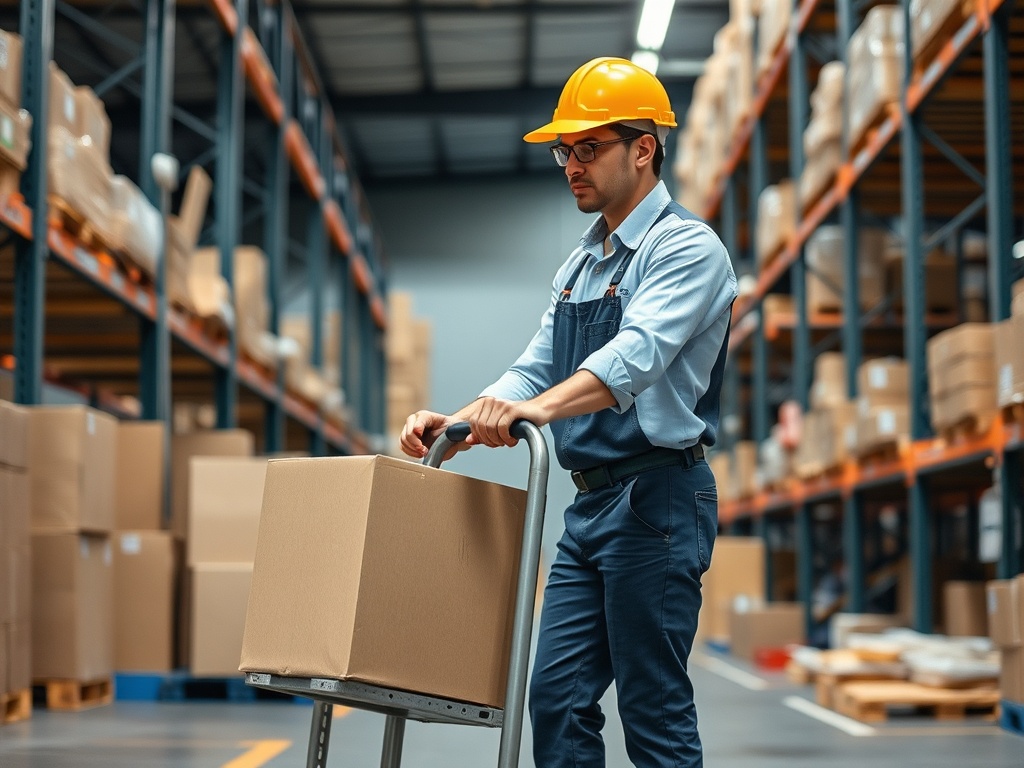
Manual Handling Ergonomics in Singapore Warehouses: A Practical Guide to Cutting Injuries and Boosting Productivity
Article Body
Why Manual Handling Remains Singapore’s Biggest Warehouse Injury Risk
Despite advances in automation and mechanised handling, manual lifting still accounts for a significant proportion of workplace injuries in Singapore’s logistics and warehousing sector. MOM’s annual workplace safety reports consistently rank musculoskeletal disorders (MSDs), strains, and sprains among the top incident categories for warehouse operations – and the majority are preventable with the right ergonomic interventions.
The stakes are real: a single serious manual handling injury can trigger BizSAFE investigations, temporary operational shutdowns, and compensation claims under the Work Injury Compensation Act (WICA). For SME warehouse operators, even one disabling incident can disrupt operations for weeks.
This guide breaks down what actually works – not theory, but ergonomic controls and practical systems that Singapore warehouse managers can implement without overhauling their entire operation.
Understanding the Ergonomic Risk Factors in Warehouse Operations
Ergonomic injuries in warehouses typically arise from four categories of risk:
1. Awkward Postures
Lifting from floor level, twisting while carrying, reaching above shoulder height, or bending repeatedly all place disproportionate stress on the spine, discs, and supporting muscles. In narrow-aisle racking environments common across JTC-flatted industrial buildings, these postures are often unavoidable without deliberate design intervention.
2. High Force Loads
Palletised goods in Singapore’s trade and distribution sector frequently exceed what a single operator can safely lift. Overloaded cartons, undersized pallets, and inconsistent pack weights amplify injury risk – particularly during receiving and put-away when operators may not have visual confirmation of load weight.
3. Repetitive Motion
Pick-and-pack operations, particularly in e-commerce fulfilment roles, require repeated lifting, reaching, and placing motions. Without task rotation or ergonomic work station design, cumulative trauma disorders develop over months – often before any symptoms are reported.
4. Environmental Factors
Non-air-conditioned warehouse environments in Singapore’s tropical climate compound ergonomic risk. Heat stress reduces operator alertness and muscle fatigue tolerance, increasing the likelihood of poor lifting technique. Research published in the Annals of Work Exposures and Health confirms that heat exposure significantly elevates MSD risk in physically demanding roles.
MOM and WSH Act Requirements for Manual Handling in Singapore Warehouses
The Workplace Safety and Health Act (WSH Act) places a legal duty on employers and principal contractors to ensure safe manual handling as far as reasonably practicable. MOM’s guidelines on manual handling risk assessment require warehouse operators to:
- Conduct task-specific ergonomic risk assessments for all manual handling activities
- Identify and implement risk controls before assigning workers to high-risk tasks
- Provide adequate information, instruction, training, and supervision
- Review risk assessments when tasks change or incident data indicates a problem
For operators in JTC or HDB industrial premises, these requirements are non-negotiable for lease compliance and BizSAFE certification renewal.
BizSAFE Alignment
Manual handling risk assessments are a core requirement for BizSAFE Level 3 (Risk Management Audit) and above. A failed ergonomic risk assessment can jeopardise your BizSAFE certification, which many Singapore logistics contracts now require as a pre-qualification.
Practical Ergonomic Controls That Actually Reduce Injuries
Theory without implementation is worthless. Here are the controls that Singapore warehouse operators consistently report as effective:
1. Engineering Controls – Change the Task, Not the Worker
- Height-adjustable workstations at picking stations eliminate repeated bending
- Pallet lifts and scissor lifts at receiving docks bring loads to waist height before manual handling
- Gravity flow racking (carton flow / roller lanes) reduces reach distances in pick zones
- Electric pallet jacks and stackers replace manual pushing and lifting for loads over 15 kg
- Ergonomic handles on hand trucks and pallet jacks reduce grip force requirements
2. Administrative Controls – Change the Way Work is Organised
- Task rotation schedules that alternate operators between high-effort and lower-effort roles every 2-3 hours
- Pre-shift warm-up routines of 5-10 minutes of dynamic stretching – research supports this as MSD-preventive
- Load visibility systems: barcode or RFID-enabled receiving that flags overweight or irregular cartons before they reach the picking zone
- Written lifting procedures for tasks identified as high-risk in your ergonomic risk assessment
- Regular micro-breaks programmed into pick-rate targets – enforcing unrealistic pick speeds is a known MSD driver
3. Personal Protective Equipment (PPE) as a Last Line of Defence
- Anti-fatigue matting at static workstations (packing, sorting) reduces lower-limb strain
- Back support belts are controversial in the occupational health literature – MOM and WSH guidance does not recommend them as a primary control, but they may supplement a broader ergonomic programme
- Cut-resistant gloves for handling sharp-edged cartons or desheeting operations
?? SS 573 Note: Racking and storage systems designed and installed to Singapore Standard SS 573 reduce the need for manual reaching and climbing – a frequently overlooked ergonomic benefit of compliant racking.
Training Your Team: The Foundation of Any Ergonomic Programme
Equipment alone does not prevent injuries. Operator behaviour is the final control layer. Effective manual handling training in Singapore warehouses should cover:
- LimbLift / Safe Lifting technique: keep loads close to the body, bend at the knees, avoid twisting
- Recognition of MSD early warning signs: tingling, stiffness, aching – and the reporting procedure
- Correct use of handling aids: never force an operator to use equipment they haven’t been trained on
- Heat stress awareness: recognising the symptoms of heat exhaustion and knowing when to stop
Under MOM’s WSH (Incident Reporting) Regulations, employers must investigate manual handling incidents and near-miss reports and implement corrective actions. A near-miss reporting culture – encouraged through BizSAFE Step 2 activities – is one of the strongest predictors of long-term injury reduction.
Building an Ergonomic Risk Assessment for Your Warehouse
Follow this four-step process aligned with MOM’s risk assessment methodology:
- Hazard Identification – Walk the warehouse and list every manual handling task. Focus on: receiving, put-away, picking, packing, despatch, and any task involving loads over 10 kg or repetitive motions over 10 lifts per hour.
- Risk Evaluation – For each task, score: frequency, load weight, posture awkwardness, and duration. High scores on any dimension warrant immediate controls.
- Control Implementation – Prioritise engineering controls first, then administrative, then PPE. Refer to MOM’s hierarchy of controls.
- Monitor and Review – Review after any manual handling incident, after any change to racking layout or workflow, and at minimum annually.
FAQ
Q: What is the maximum weight a worker can manually lift in a Singapore warehouse?
A: Singapore’s WSH Act does not prescribe a specific weight limit for manual lifting. MOM’s guidance follows international ergonomics standards – typically, loads over 25 kg for occasional lifts and over 15 kg for frequent or repetitive lifts should be mechanised or team-lifted. Operators must not be asked to lift loads they cannot safely handle; if they raise concerns, those concerns must be taken seriously and investigated.
Q: Does BizSAFE certification require manual handling risk assessments?
A: Yes. BizSAFE Level 3 and above requires a documented Risk Management Audit that covers all significant workplace hazards, including manual handling. Failure to have adequate manual handling risk assessments is a common finding in BizSAFE audits for warehouse operators.
Q: How can I reduce manual handling injuries without buying expensive equipment?
A: Administrative controls are your most immediately implementable option: task rotation to reduce cumulative exposure, pre-shift stretching routines, enforcing micro-breaks, reviewing pick-rate targets to eliminate speed pressure, and training operators in safe lifting technique. These cost very little but require consistent management commitment to enforce.
Q: Are back support belts recommended for warehouse workers in Singapore?
A: MOM and WSH guidance do not recommend back belts as a standalone injury prevention measure. The evidence base for their effectiveness is weak. They should not replace engineering controls (lifting aids, height-adjustable workstations) or administrative controls (task rotation, training). Belts may have a limited role as a supplementary measure in specific circumstances under occupational health guidance.
Q: How does heat affect manual handling injury risk in Singapore warehouses?
A: Tropical heat accelerates muscle fatigue, reduces proprioception (body awareness), and impairs judgment – all of which increase the likelihood of poor lifting technique and MSDs. MOM’s Guidelines on Occupational Heat Stress require employers to provide adequate hydration, rest breaks in cool areas, and ventilation. In non-air-conditioned warehouses, heat management is a manual handling safety issue.
– Compare electric vs manual pallet stackers for reducing manual handling in your warehouse.
– Learn how compliant racking design (SS 573) reduces unsafe manual handling conditions.
– BizSAFE compliance guide for Singapore warehouse operators: what auditors actually check.
Ready to reduce manual handling injuries and strengthen your WSH compliance posture? Our team supports Singapore warehouse operators with ergonomic risk assessments, BizSAFE documentation, and racking solutions designed to reduce manual handling at source. Contact us at enquiry@yktoh.com or call +65 6542 3232 during office hours for a no-obligation consultation.
Related Articles:


